Full Article
about Rasines
Upper Asón Valley
Hide article Read full article
At half past seven in the morning, when the mist still sits low over the meadows, Rasines sounds like distant cowbells and tractor wheels crunching along gravel. The sun takes its time to reach the valley floor. Until it does, the dark tiled roofs hold on to the damp sheen left by the night.
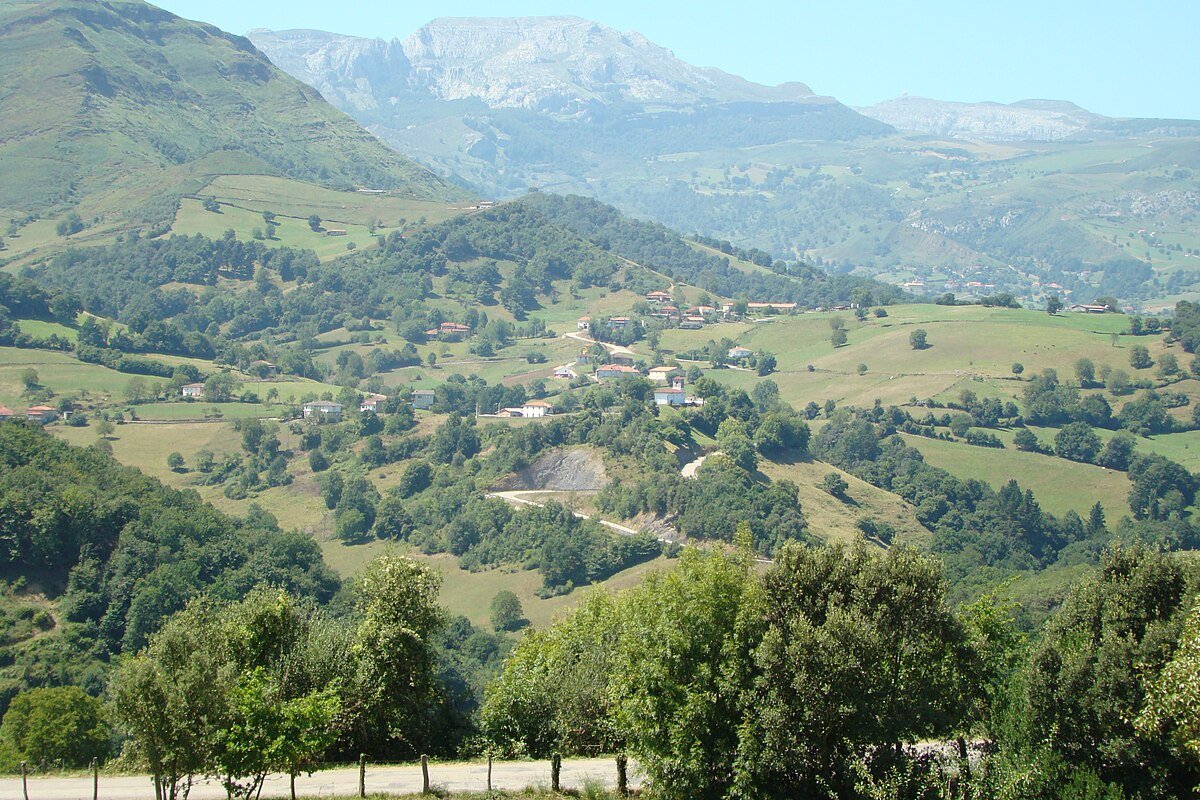
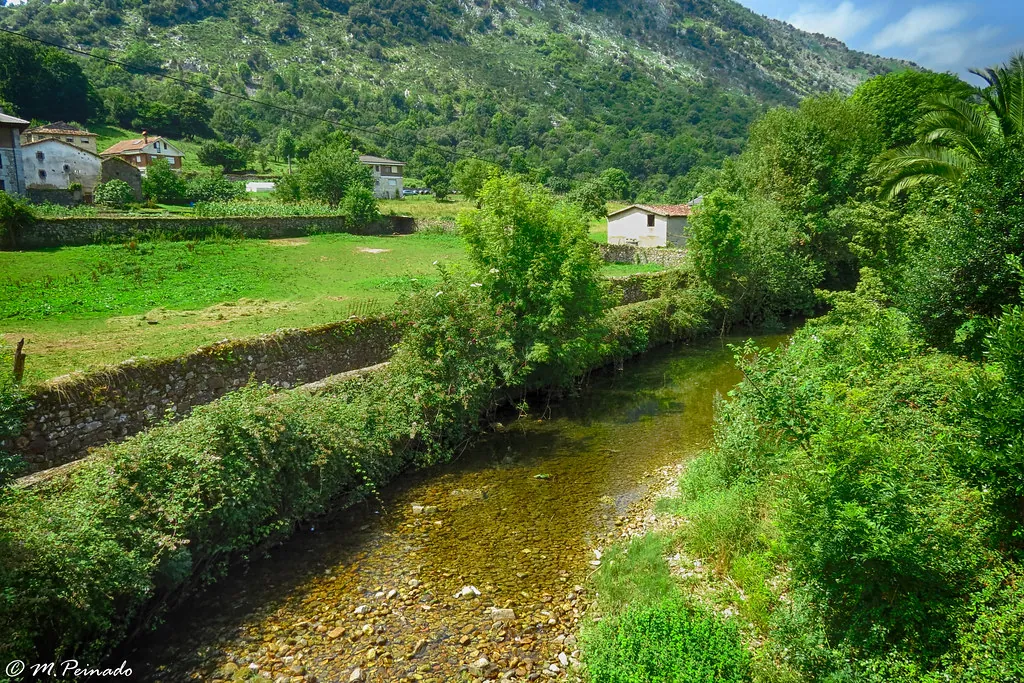
Houses stand apart from one another, separated by fields enclosed with stone walls and hedges. Between them run narrow lanes that seem better suited to livestock than to cars. The municipality of Rasines spreads itself across the Asón-Agüera valley in a series of neighbourhoods set at some distance from each other. There is no single centre where everything happens. Instead, it unfolds in fragments: homes, farms and small clusters appearing among green fields and patches of woodland.
A walk from the church
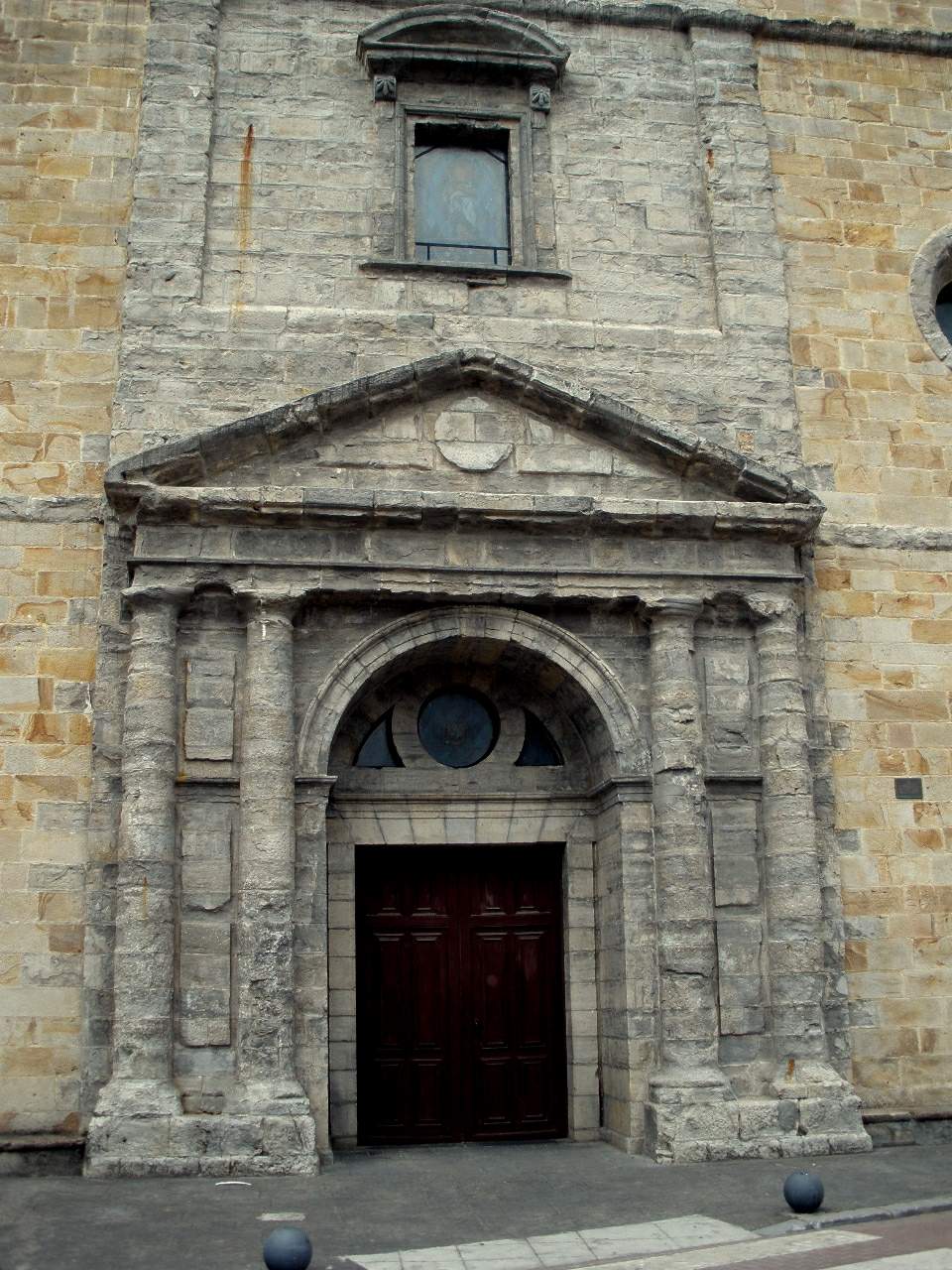
In what functions as a central point stands the church of San Martín. The current building is generally dated to around the 16th century. Thick walls and stone darkened by the valley’s humidity give it a solid, weathered presence. A simple bell tower rises just above the nearby rooftops.
Around it are a few short streets and some older houses with wooden balconies. By mid-morning, everyday sounds take over: stable doors opening, the metallic clatter of a trailer somewhere nearby. People pass through, often recognising each other, exchanging brief greetings without breaking stride.
The texture of a working landscape
Much of Rasines is defined by its scattered stone houses. Many still follow a traditional layout, with a stable on the ground floor and a hayloft above. As the day warms slightly, the smell of dry grass drifts out through gaps in the wood, mixing with the damp scent rising from the surrounding fields.
Pens, stone enclosures and gravel tracks speak clearly about how life has been organised here over generations. This is practical construction, shaped by the need to work the land and withstand long winters and frequent rain.
Light and perspective
Getting around Rasines usually means driving and stopping at different points along the way. Between neighbourhoods, rural tracks carry tractors, cyclists and the occasional neighbour walking at an unhurried pace. From small rises in the land, the shape of the Asón valley opens up: rectangular meadows, patches of eucalyptus or oak, and further off, the mountains that enclose the basin.
On clear days, the light shifts quickly. By late afternoon, as the sun drops towards the west, the slopes deepen into darker greens. The valley floor begins to fall into shadow while the higher ground still catches the last of it.
A practical rhythm
Livestock farming sets the tempo here. Early in the day, it is common to see lorries collecting milk from local farms. The fields closest to the houses are managed with that purpose in mind: tall grass in spring, cut for hay in summer.
Around many homes, there are also small vegetable plots. Apple and cherry trees appear here and there, particularly near the older neighbourhoods, adding another layer to this working landscape.
When to go and what to know
Rasines does not function like a compact village where everything lies within a short walk. The distances between neighbourhoods make a car almost essential if you want to understand the place as a whole.
With only an hour or two, start around the church and then follow one of the local roads that connect the nearby areas. Stopping along a track between fields and walking for ten or fifteen minutes often reveals more than staying put.
After rain, which is frequent here, some of the tracks can become slippery mud; wear shoes with good grip. When parking, be careful not to block entrances to fields or routes used by livestock. These paths are part of everyday work.
What tends to linger are smaller impressions: the low sound of cowbells at dusk, the cool damp air rising from the river as evening falls, or the slow arrival of sunlight on winter mornings. Simple details, closely tied to this corner of inland Cantabria.