Full Article
about Valle de Villaverde
Border with the Basque Country
Ocultar artículo Leer artículo completo
A map that looks wrong
Look at any road atlas of northern Spain and Valle de Villaverde appears to have been scribbled in as an afterthought. The village sits 420 metres above sea level, yet the map colour insists it belongs to Cantabria while every neighbouring municipality is painted Basque yellow. The only vehicular access is a single-lane road that wriggles through Biscay for 12 kilometres before depositing you, bewildered, back inside Cantabrian jurisdiction. Children here learn early that posting a letter means a 20-minute drive into Vizcaya to find the nearest Spanish postbox.
The administrative oddity is more than pub-quiz fodder. It dictates the rhythm of daily life. Police arrive from Ramales de la Victoria, half an hour away; doctors are Basque but invoices are issued in euros, not the Basque Country’s quasi-independent tax system. Even the FEVE narrow-gauge train refuses to stop on Sundays, leaving the valley to the buzz of grasshoppers and the clack of bolo palma balls in the 1950s bowling alley.
Green geometry
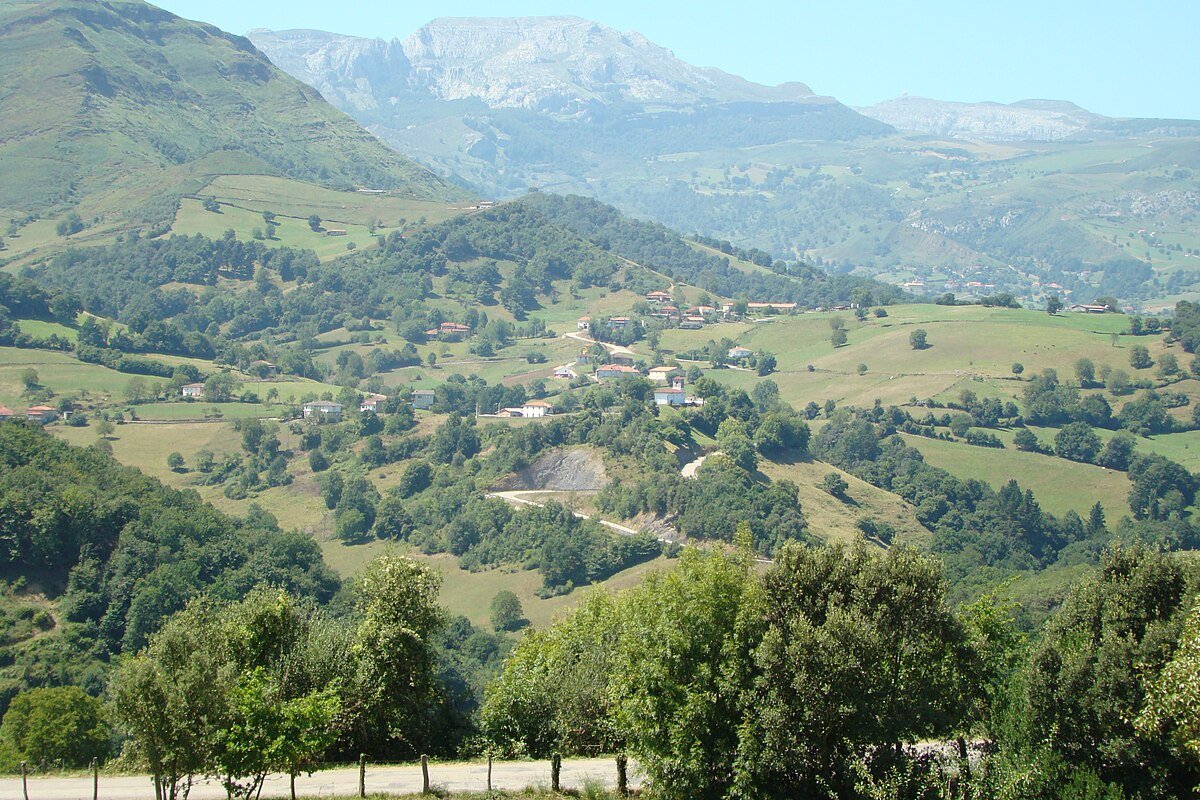
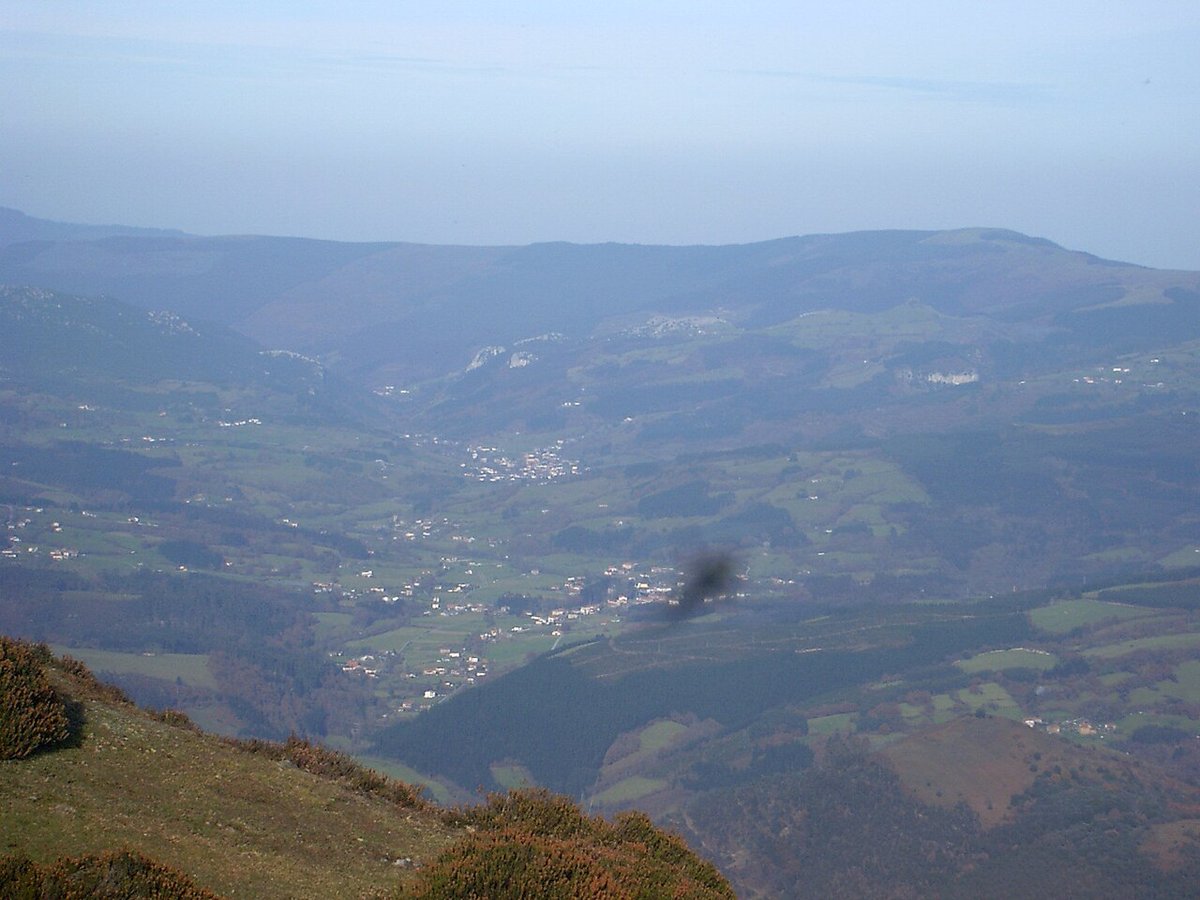
Forget the word “valley” if you imagine a neat U-shaped glen with a postcard village at the bottom. Valle de Villaverde is a scattergram of stone houses across six kilometres of upland pasture. The highest hamlet, La Muela, grazes 620 metres; the lowest, La Matanza, sits at 380 metres. Between them lie hay meadows so steep that tractors are anchored by winches during the July cut. Oaks and chestnuts occupy the northern slopes; the south-facing banks are shaved to a golfer’s green and dotted with the white commas of grazing Cantabrian cows.
Altitude makes the weather fickle. Morning fog can trap the valley until noon even while the coast 35 kilometres away basks in 25 °C sunshine. Carry a jacket in August: when the breeze swings to the north, the temperature drops ten degrees before you’ve finished your coffee. Winter brings proper snow at least twice a year, and the access road is chained-up territory from December to March. Spring, by contrast, arrives late but exuberant: orchids in the damp hollows, cowslips along the sheep tracks, and enough wild garlic to scent the whole hillside.
Walking without waymarks
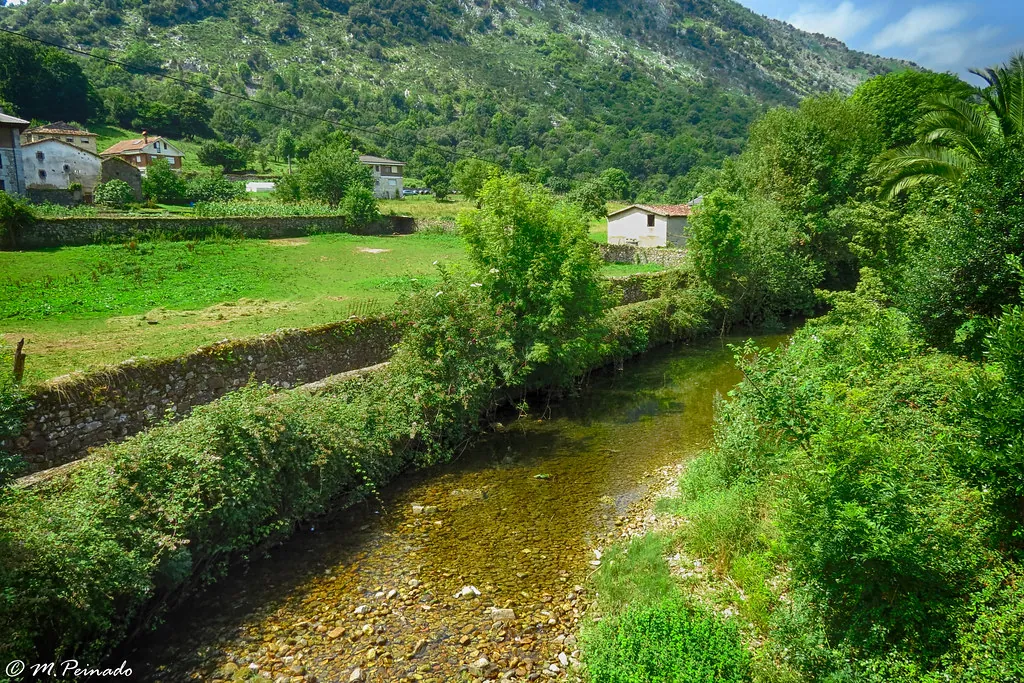
There are no ticket booths, no colour-coded arrows, no “ selfie stations”. What you get instead is a lattice of traditional cart tracks that linked the hamlets long before tarmac. A rewarding circuit starts at the church, drops to the stone bridge over the Asón, then climbs 200 metres through holm oak to the ridge above La Muela. The path is clear but unsigned; if you meet a farmer on a quad bike you’re going the right way. Round trip: 5 km, 90 minutes, boots advised after rain unless you enjoy the squelch of cow-mud between toes.
Serious hikers can continue west along the watershed until the view opens across the entire Ason gorge, but carry water and a map—the trail fragments into sheep trods that peter out on limestone pavement. Mountain-rescue call-outs are rare but usually involve British walkers who trusted Google’s dotted line and discovered it led straight through a private potato patch.
What passes for entertainment
Evening amusement centres on the bolera, a wooden shed next to the school whose floor is polished by decades of palm-oil and rubber soles. Locals play bolo palma: a heavier, straighter version of skittles where the ball is hurled underarm and the nine pins are reset by whoever lost the last frame. Visitors are welcome; ask for Manolo el de la Posada and he’ll lend you a glove. Games start at nine, finish when the last cider runs dry. Entry is free, drinks are €2 a bottle, and the only soundtrack is the coo of pigeons roosting in the rafters.
If you arrive on the second weekend of August you’ll collide with the fiesta patronal: one brass band, a paella pan three metres wide, and a disco that packs up politely at two in the morning. Any other week, silence is the main attraction. There is no cash machine, no souvenir shop, no artisan ice-cream parlour. The single grocery opens 09:00-13:00, shuts for siesta, and may or may not reopen depending on how many customers showed up.
Where to sleep and eat
Accommodation totals 34 beds, so book before you leave the motorway. Posada Calera occupies a nineteenth-century water-mill beside the river; rooms have beams, stone walls and the occasional house-martin nesting outside the window. Dinner is a fixed three-course menu—think chickpea stew followed by grilled pork, washed down with young Rioja—priced at €18 including bread and dessert. Vegetarians get eggs with pisto; vegans should mention it when reserving because the kitchen buys produce daily.
Breakfast across the lane at Bar Sol offers churros thick enough to use as walking sticks and hot chocolate that tastes like molten After Eights. On Sundays half the valley squeezes around the four outdoor tables, so arrive before eleven or be prepared to hover with the Sunday papers. For picnic supplies stock up in Ramales: the local shop’s ham is excellent but choice is limited to whatever the owner sliced that morning.
Getting here, getting out
The simplest route from Britain is Santander ferry (twice weekly from Portsmouth, 24 hours), then a 50-minute drive west on the CA-241 via Guriezo. Petrol heads: fill up at the A-8 junction; the last pump is 25 kilometres away. Drivers who relish bend practice will enjoy the inland route from Burgos, but add an hour for trucks and wandering calves. Car hire is essential unless you fancy the twice-daily FEVE train that deposits you at Villaverde de Trucíos station—still in Biscay—leaving a 3 km uphill slog to the village proper. Taxi? Pre-book from Ampuero; there are none on the rank.
Leaving is deliberately slower than arriving. The valley’s one-road status means you retrace your tyre tracks past the same meadows, the same hawk hovering over the cutting. By the time you descend into civilisation—phone signal reappears with a polite ping at Km 8—you realise the map wasn’t wrong after all. It was simply warning you that some administrative accidents make the best excuses to switch the engine off and forget what day it is.