Full Article
about Bárcena de Pie de Concha
Historic gateway to the plateau
Ocultar artículo Leer artículo completo
The stone archway is barely wider than a Transit van. Beyond it, the lane narrows further, hemmed by granite houses that have watched passers-by since before the Reformation. Bárcena de Pie de Concha doesn't announce itself with souvenir flags or a visitor centre; it simply lets you in through a medieval keyhole and leaves you to work out what to do next.
A Valley That Still Belongs to Cows
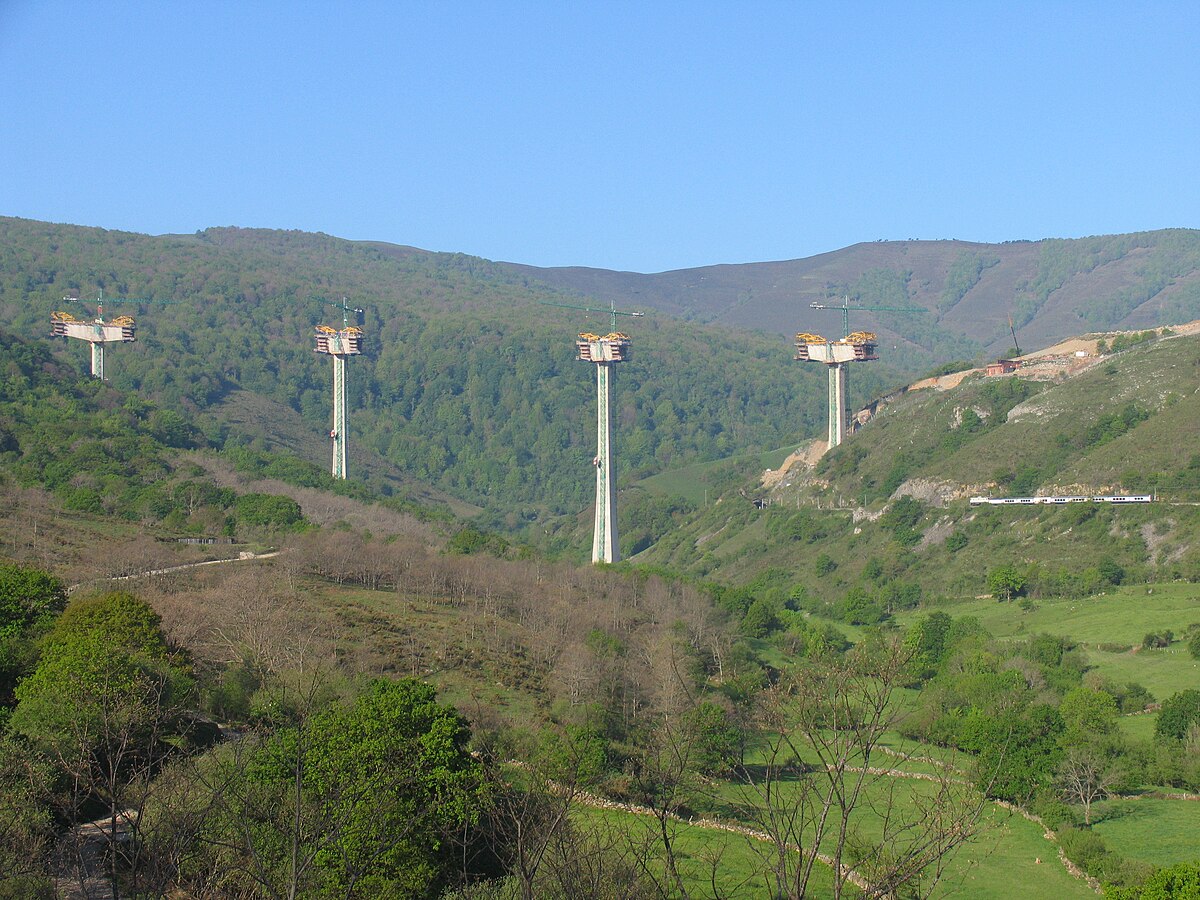
The village sits 180 metres above sea level, pressed between the limestone walls of the Besaya gorge. To the south, the ground rises sharply to the Cantabrian cordillera; to the north, the river slides toward the Bay of Biscay 25 kilometres away. That geography explains everything: the stone roofs designed to shrug off Atlantic weather, the chestnut woods that provided charcoal for the Roman legions, the dairy herds whose bells clang like slow church clocks at dawn.
Morning mist often pools in the valley until ten o'clock, even in July. When it lifts, the view opens to a patchwork of meadows stitched together with chestnut rail fences. This isn't wilderness; it's a working landscape where every field has a name and most have a farmer who can recite its deed back to 1874. Walkers who expect manicured footpaths sometimes grumble about cowpats and muddy boots, but the compensation is space without turnstiles. On an autumn weekday you can hike for two hours and meet only a man gathering windfall chestnuts into a plastic feed bag.
Following the Legionaries
The single track everyone remembers starts opposite the church of San Vicente Mártir. A weathered sign reads "Vía de la Plata – 2 000 años" in peeling paint. Within five minutes the tarmac gives way to slabs of grey limestone, rutted by cartwheels and polished by two millennia of boots. The Romans cut this route to haul gold from the north-west meseta to coastal ports; today it carries hikers uphill through oak and sweet-chestnut wood.
The climb is steady rather than brutal: 400 metres gained over three kilometres, enough to raise a sweat but not demand climbing poles. Halfway up, the gorge narrows to a slit locals call La Horadada – "the drilled one" – where the river has chewed a passage only thirty metres wide. Stand here at midday and the air funnels past like a natural wind tunnel; stand here at dusk and the stone radiates the day's heat back at you. Either way, the acoustics are uncanny: voices carry from the opposite slope as though the speaker stands at your shoulder.
Most walkers turn around at the Roman milestone replica, a rough granite post carved with the distance to Lucus Augusti (modern Lugo). The round trip takes two hours at British pace, three if you stop to photograph the view or fill pockets with glossy chestnuts. After rain the flags are treacherous; trainers are fine in August, but October visitors curse themselves for leaving proper tread at home.
Lunch Where the Menu Depends on the Farmer's Wife
Back in the village the only bar opens onto a room the size of a London kitchen. There is no written menu. Instead, the owner recites what her mother has cooked today: usually cocido lebaniego, a thick chickpea stew bulked out with black pudding and beef shin, or else a potato and chorizo soup that tastes better than it photographs. A bowl costs €9 and arrives with a basket of bread still warm from the wood-fired oven. If you ask nicely she'll cut wedges of quesada pasiega, a baked cheesecake that could pass for a Yorkshire curd tart in dim light.
Vegetarians struggle; coeliacs should pack sandwiches. The bar shuts at four o'clock sharp and all day Monday, so don't plan a late arrival. There is no card machine; cash only, drawn from Torrelavega fifteen kilometres away because the village ATM vanished when the bank branch closed in 2021.
Stone, Slate and the Smell of Apples
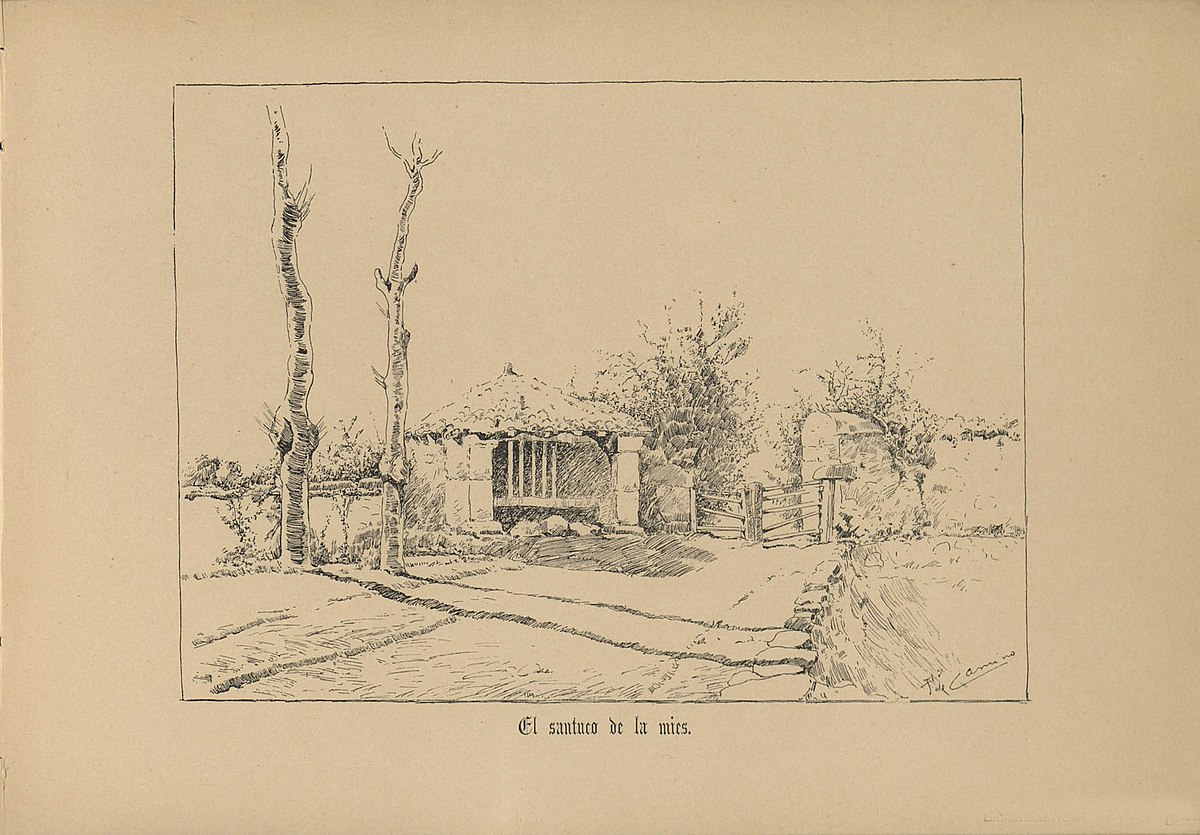
Without a monument to tick off, the pleasure is in looking sideways. Houses are built from the valley's own limestone, roofs weighted with slabs the colour of storm clouds. Many still carry the coats-of-arms granted to 16th-century hidalgos: wolves, towers, a single glove symbolising loyalty to a long-forgotten lord. Balconies are wide enough to hang a year's worth of apples; in October the scent of cider-making drifts across the lane, sharp and sweet.
The church itself is locked more often than not, but the portico is worth studying. A Roman tombstone is embedded upside-down in the wall – nobody knows whether by accident or as a medieval joke. The belltower houses a pair of 18th-century bells whose bronze was cast from English cannon captured during the failed 1719 Jacobite expedition to Scotland. Local legend claims they still ring with a Cumbrian accent, though what that sounds like in metal is anyone's guess.
When to Come, When to Stay Away
Spring brings meadows splashed yellow with cowslips and the first outdoor tables of the year; autumn delivers chestnuts, russet oak leaves and the clearest light. Summer is warm but rarely stifling – mid-twenties at midday, cool enough for a fleece by nine o'clock. Spanish families descend on August weekends, filling the village to capacity all of 500 souls and creating the only traffic jam you'll ever see here: three cars reversing because a delivery van is wedged under the arch.
Winter is a different proposition. Days shrink to eight hours, fog lingers until lunchtime and the Roman path turns into a stream. If you relish the idea of a pub-less village where silence is broken only by church bells and the occasional cow, January delivers. If you need shops or entertainment beyond a paperback and a bottle of Rioja, wait for March.
Getting Here Without a Sat-Nav Tantrum
Fly to Santander on Ryanair or EasyJet from Stansted, Manchester, Bristol or Edinburgh. Hire cars queue directly outside the terminal; ignore the upgrade hard-sell – a Fiat 500 is plenty. Take the A-67 south for 35 minutes, exit at junction 212 toward Los Corrales, then follow the CA-177 for ten minutes. The turning is signposted but easy to miss; if you reach a roundabout with a giant dairy factory you've overshot.
Park in the rough lay-by before the archway – the lane beyond is single-track with no turning circle until you reach the next village six kilometres on. Buses from Santander stop at Los Corrales; a taxi from there costs €18 and drivers appreciate a text the day before because only two firms serve the valley.
The Honest Verdict
Bárcena de Pie de Concha will never feature on a cruise-ship itinerary. It offers no souvenir magnets, no evening flamenco, no pool complex for the children. What it does give is a slice of rural Spain that hasn't been tidied into a theme park: real farmers, real mud, real bread baked by someone whose mother taught her the recipe. Come for half a day and you might wonder why you bothered. Stay for a slow walk, a bowl of stew and an hour listening to chestnuts drop onto stone roofs, and you'll understand why the Romans kept coming back.