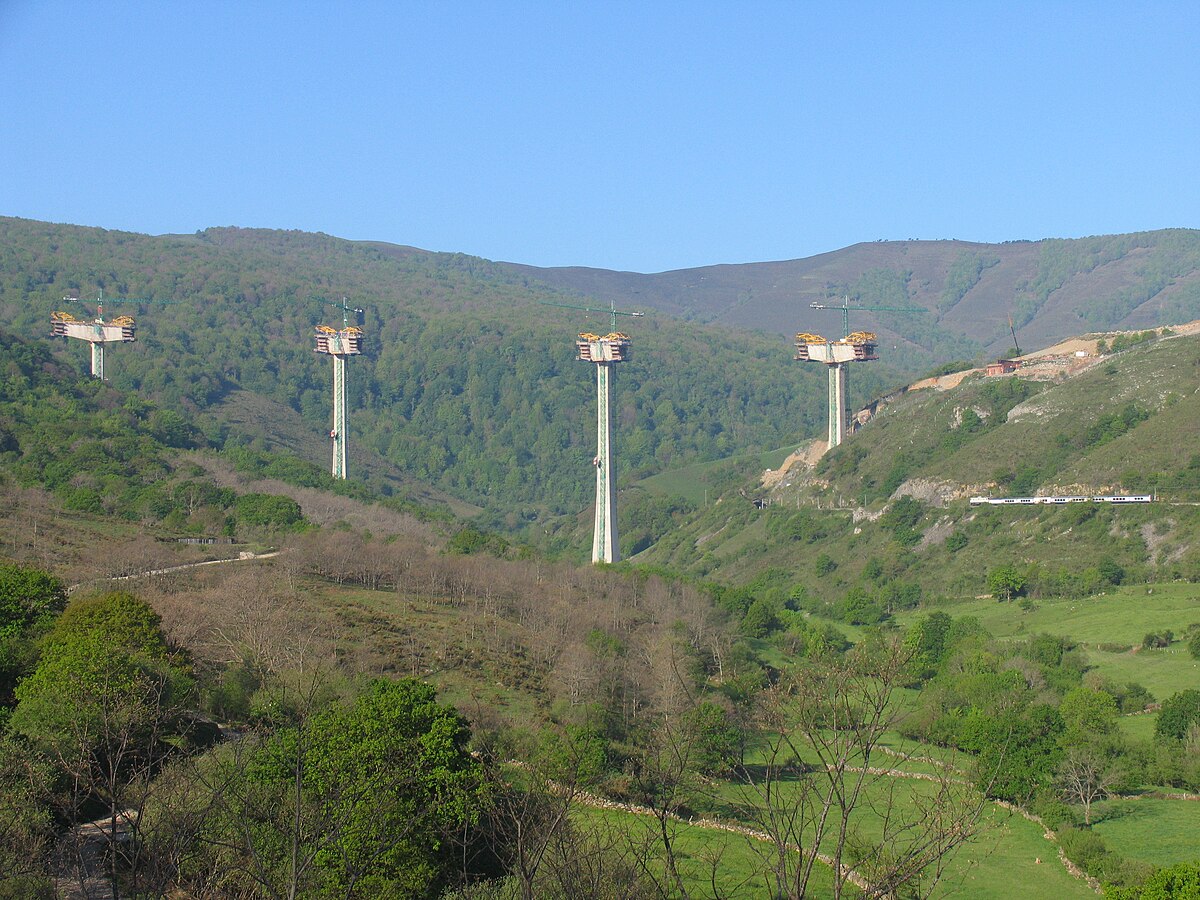
Viaducto de Montabliz 2007-05-08.jpg
Cantabria · Infinite

Molledo

The fog lifts at half-eight, revealing a valley that looks more like Devon than Spain. Holstein cows graze beneath oak trees, stone barns sag under...

1,482 inhabitants · INE 2025
350m Altitude

Why Visit

Mountain Roman road Ethnography

Best Time to Visit

winter

San Martín Noviembre

Things to See & Do
in Molledo

Heritage

  • Roman road
  • Silió (La Vijanera)

Activities

  • Ethnography
  • History

Festivals
& & Traditions

Fecha Noviembre

San Martín, Nuestra Señora

Las fiestas locales son el momento perfecto para vivir la autenticidad de Molledo.

Full Article
about Molledo

The oldest Vijanera

Ocultar artículo Leer artículo completo

The fog lifts at half-eight, revealing a valley that looks more like Devon than Spain. Holstein cows graze beneath oak trees, stone barns sag under orange lichen, and the only sound is the Besaya river pushing brown water towards the Bay of Biscay. This is Molledo, a municipality spread so thinly across 32 km² that locals measure distance in hamlets rather than kilometres.

A Parish Map Come to Life

Molledo proper—if such a thing exists—clusters around the CA-730 where it crosses the river. The parish church of San Martín squats beside the road, its sandstone walls patched with brick like a quilt sewn by several generations. Step inside and you'll find a single nave that smells of candle wax and damp stone, afternoon light filtering through glass donated by emigrants who made their money in Caracas. There's no ticket desk, no audio guide, just a notice board listing the three families who've paid for this week's flowers.

Walk fifty metres and the village dissolves into scattered neighbourhoods. Cobejo hangs on a south-facing slope, its timber balconies stacked like shipping containers. Santa Cruz de Iguña sits higher still, reachable by a lane so narrow that two Corsas can't pass without one reversing 200 metres to the last farm gate. Here the 12th-century church earns its keep: squat Romanesque, stone carved by farmers who understood cattle better than geometry. The doorway arch is slightly lopsided; the priest claims this gives it character. He's probably right.

Between these settlements lie meadows so green they verge on fluorescent. Hay bales wrapped in white plastic dot fields through October, turning to silage bags by November. Black-and-white cows watch passers-by with the suspicion of bouncers outside a Mayfair club. They own the footpaths here—literally. Public rights of way are fenced corridors between electric wires; step carefully and close every gate. The reward is a landscape that changes every twenty minutes as clouds shift across the Cantabrian hills.

When the Pavement Ends

Walking is the honest way to see Molledo, but it requires negotiation. The official PR-BU 71 footpath starts beside the cemetery, climbs through chestnut woods, then drops to the river meadows. It's way-marked in yellow, though winter storms have a habit of relocating signs into adjacent bramble patches. Allow ninety minutes for the full circuit; less if you're the sort who strides past scenery with a podcast in your ears.

More rewarding is to invent your own loop. Follow the lane from Molledo to Portolín, past a farmhouse selling eggs from a fridge on the porch (€2.40 per dozen, honesty box rusted shut). Continue to the medieval bridge at Silió, three arches spanning tea-coloured water. Turn back via the track above the river—here buzzards circle overhead while the occasional salmon breaks surface. Total distance: six kilometres. Gradient: negligible. Café options: zero. Pack a flask.

Cyclists discover quickly that every road points uphill eventually. The CA-730 towards Los Corrales climbs 200 metres in four kilometres, hairpins tight enough to make a driving instructor wince. Sunday mornings bring lycra-clad locals on carbon bikes, thighs like cured hams, chatting in dialect so thick it might as well be Welsh. They'll wave you through on the uphill; accept graciously and try not to wheeze.

Lunch at River Level

Food here follows the agricultural calendar. Winter means cocido montañés, a white-bean stew thick enough to support a spoon upright. Spring brings nettle tortillas and wild asparagus scrambled with eggs from the neighbour's hens. Summer is grilling season—chuleton steaks the size of steering wheels, served rare unless you specify otherwise. Autumn introduces game: boar stewed in red wine, partridge roasted with bay leaves from the garden.

La Ribera de Santa Olalla occupies a 19th-century water mill beside the Besaya. The terrace sits two metres above river level; when the water's high you can watch trout hanging in the current like brown ghosts. Order the chuletón for two (€38) and you'll receive a rib-eye roughly the weight of a small laptop. Chips arrive in a separate bowl, properly crisp, vinegar already on the table. House wine comes from the nearby Liebana valley—tempranillo with enough acidity to cut through beef fat. They close Tuesdays and the entire month of February; plan accordingly.

Sidrería El Rincón de Silió offers lighter fare. The owner, Txema, spent twenty years in Gijón and pours cider Basque-style: bottle raised above head, glass held at knee height, liquid aerating into froth. Don't wear white. Pair it with a plate of quesada pasiega, a baked cheesecake that's essentially custard set in a pastry shell. Locals eat it warm, sprinkled with cinnamon, arguing over whether the recipe needs lemon zest. (It doesn't.)

Practical Notes for the Organised Traveller

Cash remains king. The nearest ATM hides inside a Dia supermarket in Los Corrales de Buelna, ten minutes by car. Withdraw before Saturday evening; the machine runs dry when pensioners collect their payments. Shops observe the classic siesta—14:00 to 17:00—so buy bread early or resign yourself to supermarket baps.

Driving from Santander airport takes 35 minutes on the A-67, exit 203 signed Torrelavega/Los Corrales. Ignore the sat-nav's temptation to cut cross-country via the PU-731; that road narrows to single-track tunnels beneath railway embankments. In Molledo itself, park on the gravelled area behind the ayuntamiento. Everywhere else is either a farm entrance or a resident's private space, and they will emerge to explain this in loud, rapid Spanish.

Mobile signal vanishes in the valleys. Download offline maps before leaving your accommodation. Vodafone users fare best; O2 customers should prepare for a digital detox. The tourist office exists only on Thursdays, occupies a portable cabin, and is staffed by Pilar, whose English extends to "good morning" and "rain tomorrow". She's invariably correct about the weather.

The Weather Reality Check

At 300 metres above sea level, Molledo escapes the coastal humidity that turns Santander into a sauna each August. July afternoons reach 26 °C, but nights drop to 14 °C—pack a fleece even in midsummer. Winter brings Atlantic fronts that roll in off the Bay of Biscay; expect rain on forty percent of days between November and March. When the barometer falls, fog pools in the valley bottom, reducing visibility to twenty metres and making every cowbell sound like it's inside your skull.

Snow arrives perhaps twice each winter, rarely lies more than 48 hours. The CA-730 becomes entertainingly slippery; locals fit chains and continue at twenty kilometres per hour while British hire-car drivers discover what under-steer feels like on a 12-percent gradient. If conditions turn properly bad—defined here as "more than five centimetres"—the school bus doesn't run and the entire municipality works from home. That includes the bar, so don't count on a warming coffee.

Come prepared, then, but not over-prepared. Molledo rewards those who slow to the valley's rhythm: walk between hamlets, buy cheese from the fridge in someone's garage, nod at the old men on the bench outside the pharmacy. Stay long enough and you'll realise the village isn't hiding anything; it's simply getting on with being itself. When the fog lifts again, you might even join in.

Key Facts

Region
Cantabria
District
Besaya
INE Code
39046
Coast
No
Mountain
Yes
Season
winter

Livability & Services

Key data for living or remote work

2024
ConnectivityFiber + 5G
TransportTrain nearby
HealthcareHospital 16 km away
EducationElementary school
Housing~6€/m² rent · Affordable
CoastBeach nearby
Sources: INE, CNMC, Ministry of Health, AEMET

Planning Your Visit?

Discover more villages in the Besaya.

View full region →

More villages in Besaya

Traveler Reviews