Full Article
about Campoo de Yuso
Inland sea of Campoo
Hide article Read full article
A landscape reshaped by water
Campoo de Yuso is organised around the Embalse del Ebro, a relatively recent presence when set against the longer history of the area. The reservoir was completed in the mid-20th century and transformed the valley in southern Cantabria. Before the water covered the low-lying meadows, this was a patchwork of hay fields, vegetable plots and paths linking villages with Reinosa. Parts of that network now lie underwater.
What remains is a scattered municipality made up of small villages and hamlets, where livestock farming still sets the rhythm of daily life. In the wider region of Campoo-Los Valles, this territory has long been tied to the management of pastureland and to the natural routes that connect the Meseta, Spain’s central plateau, with the Cantabrian coast. It is not a place of long streets or grand squares. It makes more sense when approached slowly, moving between villages and observing how houses, barns and enclosed meadows are arranged across the land.
Villages shaped by work and terrain
Naveda, Celada de los Calderones and La Costana form part of a mosaic of small settlements that make up the municipality. There is no clear urban layout. Houses cluster according to the slope of the land or their proximity to fields and grazing areas.
The architecture reflects an economy rooted in livestock. Many houses retain wide gateways, designed for carts or for moving animals, along with south-facing balconies traditionally used for drying produce or catching the winter sun. Some façades display family coats of arms, remnants of old hidalgo houses, a type of minor nobility common in this part of Cantabria from the early modern period onwards.
Along certain paths, old washhouses and watering troughs appear at the edges. These modest structures point to a shared system of water use that lasted for centuries. They are not monumental, yet they help explain how these communities functioned before farming became mechanised.
Argüeso Castle and the valley routes
A few kilometres away stands the Castillo de Argüeso. Although it belongs to the neighbouring municipality of the Hermandad de Campoo de Suso, it is a constant presence on the horizon when travelling through Campoo de Yuso.
The fortress began to take shape in the Middle Ages and became linked to noble lineages that controlled the Campoo territory. Its location is deliberate. From this rise, it was possible to oversee the natural passes through the valley, routes used for centuries by transhumant herders moving livestock seasonally, as well as by traders crossing the mountain range.
The two towers that define its outline belong to different construction phases. Today the building has been restored and usually hosts cultural activities, although opening times can vary depending on the season.
The reservoir and the surrounding hills
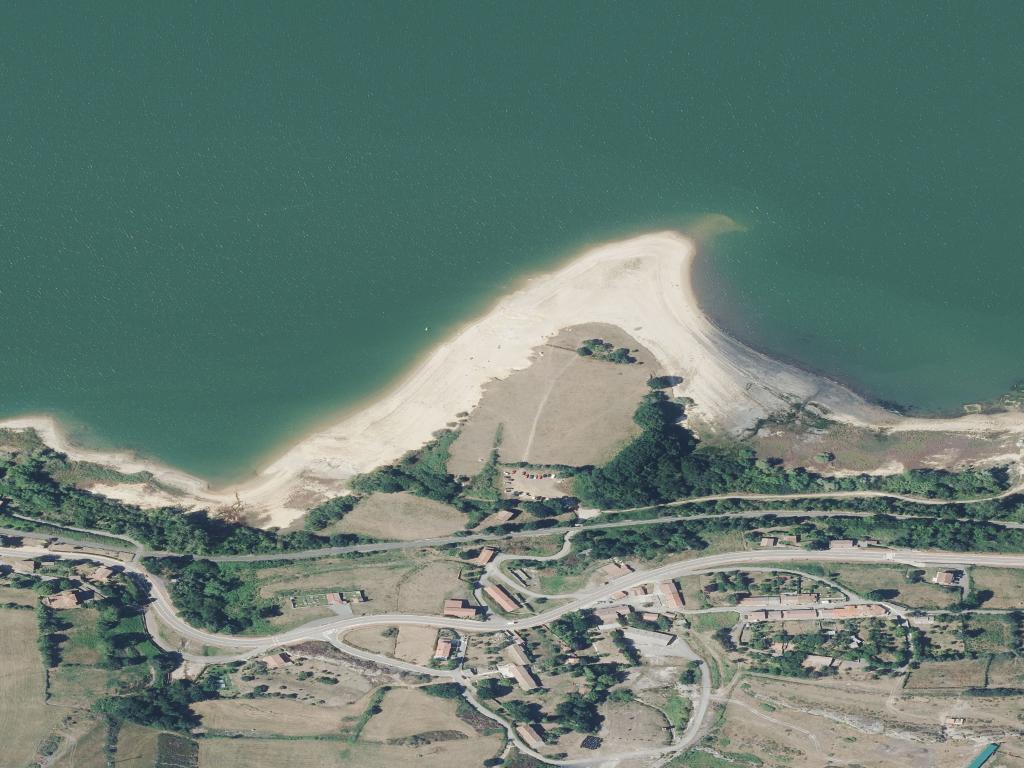
The Embalse del Ebro alters how the territory is perceived. In some places it resembles a wide lake; in others, its irregular shoreline reveals traces of former meadows when water levels drop. The landscape shifts depending on these changes.
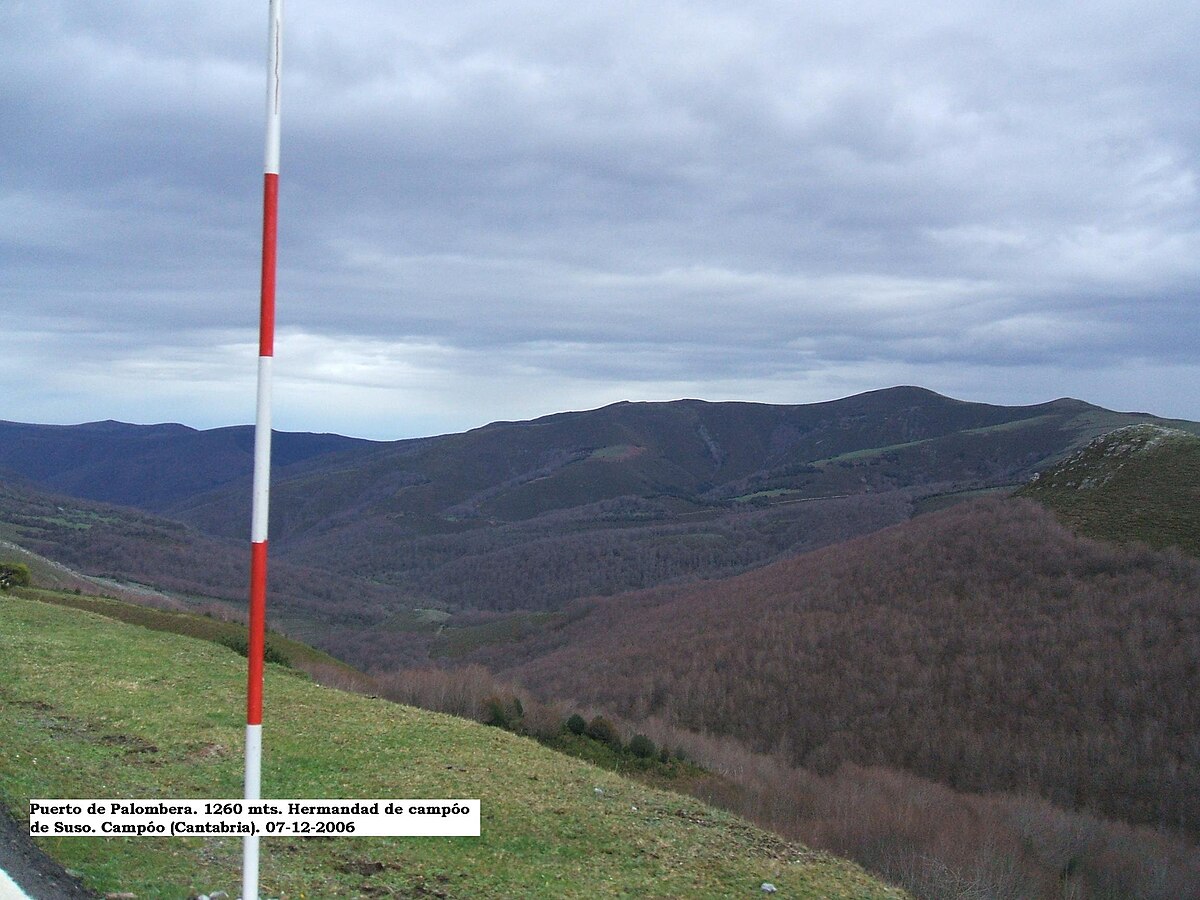
From villages set on higher ground, the lines of the Sierra del Cordel and other parts of the Cantabrian Mountains stand out clearly. On clear days, the horizon stretches further than might be expected in an inland valley. When fog rolls in, the view closes in and the reservoir almost disappears beneath low cloud.
This contrast between open and enclosed views is a constant feature of the area. It shapes how distances are felt and how the villages relate to one another across the terrain.
Moving between villages and fields
The most direct way to understand Campoo de Yuso is to follow the paths that link its villages. Many of these tracks began as access routes to meadows or barns and still serve that purpose today.
Signposting is not always clear, so using a map or GPS is advisable if planning to connect several settlements on foot or by bicycle. The ground can be muddy for much of the year, and it is common to encounter livestock along the way.
This is not a destination designed as a sports circuit. The paths remain working spaces, and moving through them calls for a degree of care and awareness of their everyday use.
A brief visit
With limited time, it is often enough to visit one of the villages and spend a short while walking its streets. Naveda and Celada de los Calderones offer a clear sense of how houses and nearby fields are arranged.
The area around the Castillo de Argüeso helps to place the valley in context. From there, the relationship between the surrounding hills, the reservoir and the scattered villages of Campoo de Yuso becomes easier to grasp.