Full Article
about Reinosa
Capital of Campoo and snow
Hide article Read full article
Where Cantabria Meets the Plateau
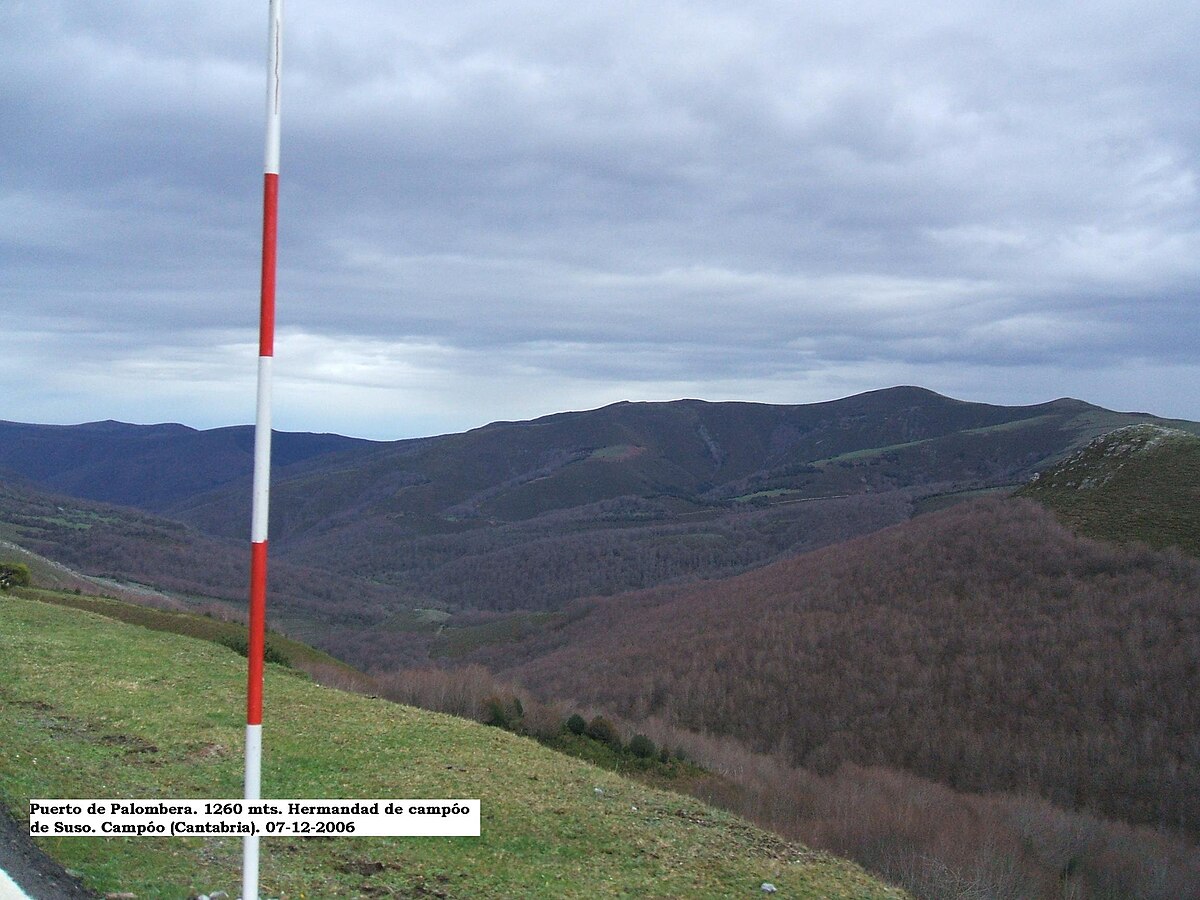
The train pulls into Reinosa and the setting quickly makes sense. A wide valley opens out, edged by damp meadows and ringed by mountains that close off the horizon. Tourism in Reinosa often begins with that feeling of being at a crossroads: administratively part of Cantabria, yet historically tied to the Castilian plateau just beyond the hills.
Here, the Ebro is still a young river. Its source lies only a few kilometres away in Fontibre, and it passes through the town before beginning its long route towards the Mediterranean.
Reinosa acts as the centre of Campoo‑Los Valles. It is not a large town, but it concentrates services, shops and administrative life for the surrounding area. That role explains much of its layout: a sizeable main square, a theatre, and streets with arcades designed for everyday movement rather than leisurely strolling.
A Valley Once Marked by Borders
Medieval records mention Reinosa as early as the 11th century. At the time, it stood in a sensitive position along an داخلی frontier between territories that frequently changed hands. Control of the route towards the plateau carried strategic importance, and the settlement grew around that function.
The church of San Sebastián reflects this long evolution. Its origins are Romanesque, though the current building combines later phases. Baroque reforms and subsequent additions gradually reshaped the structure. From the area around the church, the geography becomes clear: the valley opens towards the south, and the river traces the natural axis of the land.
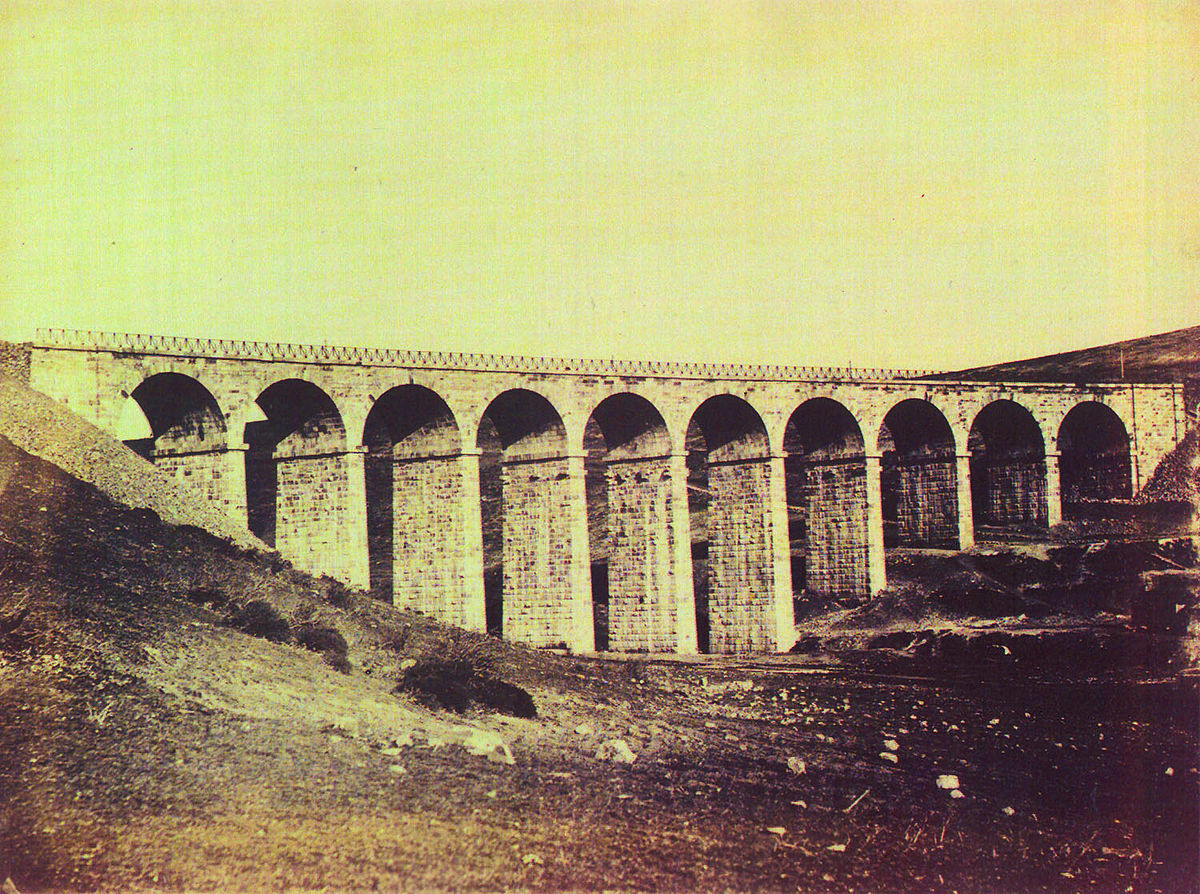
At the entrance to the town stands a stone bridge linked to the old Camino Real that once connected the plateau with the port of Santander. For centuries, this route carried goods and livestock. The bridge remains a recognisable feature within the urban landscape.
The Ebro Before It Becomes the Ebro
A short distance away lies Fontibre, traditionally identified as the source of the Ebro. Water emerges from a spring among limestone rocks, forming a small pool before continuing as a river. The setting is simple and generally quiet outside weekends.
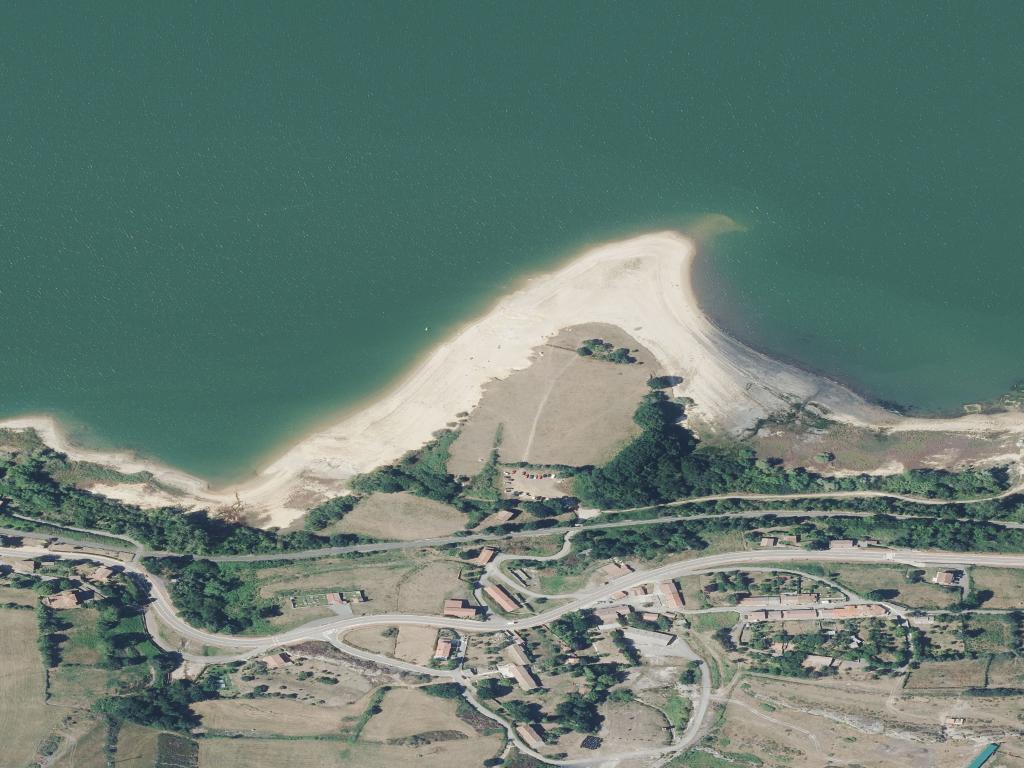
Further downstream, the Ebro reservoir appears. Built in the mid-20th century, it transformed the landscape of Campoo. Areas that once held villages and grazing land were flooded, replaced by a wide expanse of water that now dominates views across the region. On clear days, when mist lifts, the surrounding mountains are reflected on the surface of the reservoir.
A Town That Moves to Its Own Rhythm
Reinosa retains an urban structure closely linked to its commercial past. Calle Mayor still features arcades that provide shelter from rain and snow, something practical in a place where winter makes itself felt.
The Teatro Principal recalls a period of growth tied to the arrival of the railway and industrial activity. It continues to host cultural events and remains part of everyday life in the town.
Plaza de España gathers much of this local rhythm. The town hall stands here, along with a small bandstand. On one side, an old cannon is preserved, traditionally associated with fighting against Napoleonic troops. Beyond that story, the square functions as a regular meeting point.
When the Town Celebrates
Towards the end of September, the fiestas of San Mateo bring a noticeable change of pace. The streets fill with encierros, open-air dances and processions moving through the centre. Participation is largely local, with people from nearby villages joining in.
At the same time, the Día de Campoo takes place. This event features a parade of traditional dress from the region, including wooden clogs known as albarcas, thick wool garments and clothing suited to a mountain climate. Although its modern origins are well known, it has gradually become part of the local calendar.
Shortly afterwards, a livestock fair is usually held. During that weekend, the movement of animals and farmers reflects the continued importance of livestock farming across the comarca.
Paths Along the River Plain
Several easy routes begin in Reinosa for those who want to walk along the Ebro’s floodplain. The terrain is flat for the first stretches, crossing meadows where grazing cattle are still a common sight.
One of the better-known itineraries links with sections of an old Roman road associated with the Blendios, the Cantabrian people who inhabited this territory before Romanisation. In some places, stone alignments can still be seen, marking the course of that earlier route.
It is also common to head out towards nearby villages. Some retain their traditional rural layout, while others were greatly reduced during the rural exodus of the 20th century. Walking through them gives a sense of how life in Campoo has shifted over just a few decades.
Hearty Food for a Mountain Climate
The climate in Campoo has always called for substantial cooking. Cocido montañés appears on many tables in winter, made with white beans, cabbage and products from the traditional pig slaughter. It is a dish shaped by the need for warmth and energy in colder months.