Full Article
about Valdeolea
Romanesque Route of Campoo
Hide article Read full article
A landscape shaped by movement
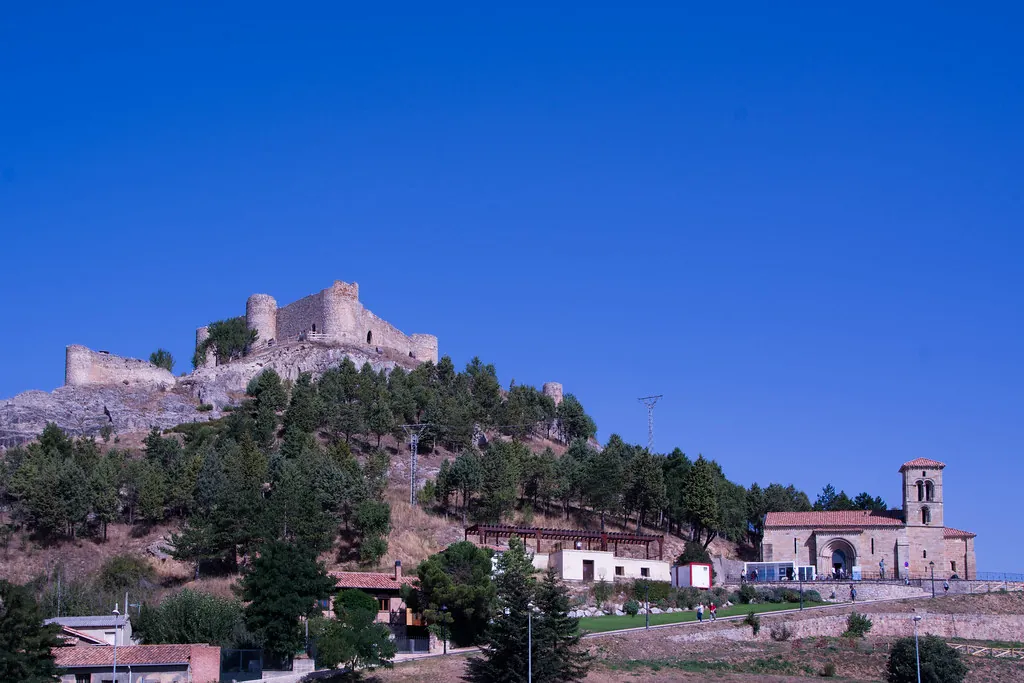
Valdeolea, in the Campoo-Los Valles area, is made up of a spread of small villages across a territory that for centuries acted as a corridor between the Castilian plateau and the Cantabrian coast. That position explains much of what is seen today: Romanesque churches in modest settlements, roads linking gentle valleys, and a very dispersed pattern of habitation. The municipality does not revolve around a single centre. It makes more sense as a network of villages connected by landscape and shared history.
This sense of passage is still visible in the old routes that link the villages. For a long time, they were used to move livestock, grain or wool between inland Spain and the Cantabrian valleys. The terrain is relatively soft compared with much of Cantabria, with open meadows, wooden fences and scattered oak groves. It is not a place of dramatic viewpoints or clearly defined routes. Interest tends to emerge when turning off towards a small village or pausing beside an isolated church.
Romanesque traces across the valley
Valdeolea is often mentioned in discussions of Romanesque art in Cantabria. Within a small area, several churches from the 12th and 13th centuries are preserved, built at a time when these villages held greater importance along inland routes.
The collegiate church of San Pedro de Cervatos, dating from the 12th century, is the main reference point. Its structure is compact, almost austere from a distance, yet closer inspection reveals a wealth of detail. The corbels beneath the eaves display a wide range of scenes, from religious imagery to more earthly representations that have given the building a certain reputation. The doorway retains finely worked carvings that point to the skill of the stonemasons involved.
In Las Henestrosas de las Quintanillas, the church of Santa María is more modest. Even so, its capitals and corbels reward a careful look. What stands out is how these Romanesque buildings sit within very small villages, almost always surrounded by meadows.
Mataporquera functions today as the main hub of the municipality. There, the church of San Andrés reflects different phases of construction. The tower and some parts of the building correspond to later alterations, something quite common in churches that have remained in use for centuries.
It is worth bearing in mind that many of these churches are closed much of the time. They may open at specific moments or by prior arrangement, but up-to-date information is not always easy to find.
Moving between villages
Valdeolea is best understood by travelling from village to village. Distances are short, and local roads make it easy to connect places such as Cervatos, Las Henestrosas and Mataporquera. The experience is less about following a fixed route and more about stopping where the landscape or a building draws attention.
Those with a particular interest in Romanesque architecture can extend their visit to other churches in the surrounding area, part of what is often referred to as the Romanesque of Campoo, spread across several nearby municipalities. In any case, it is sensible to expect that many buildings will only be visible from the outside.
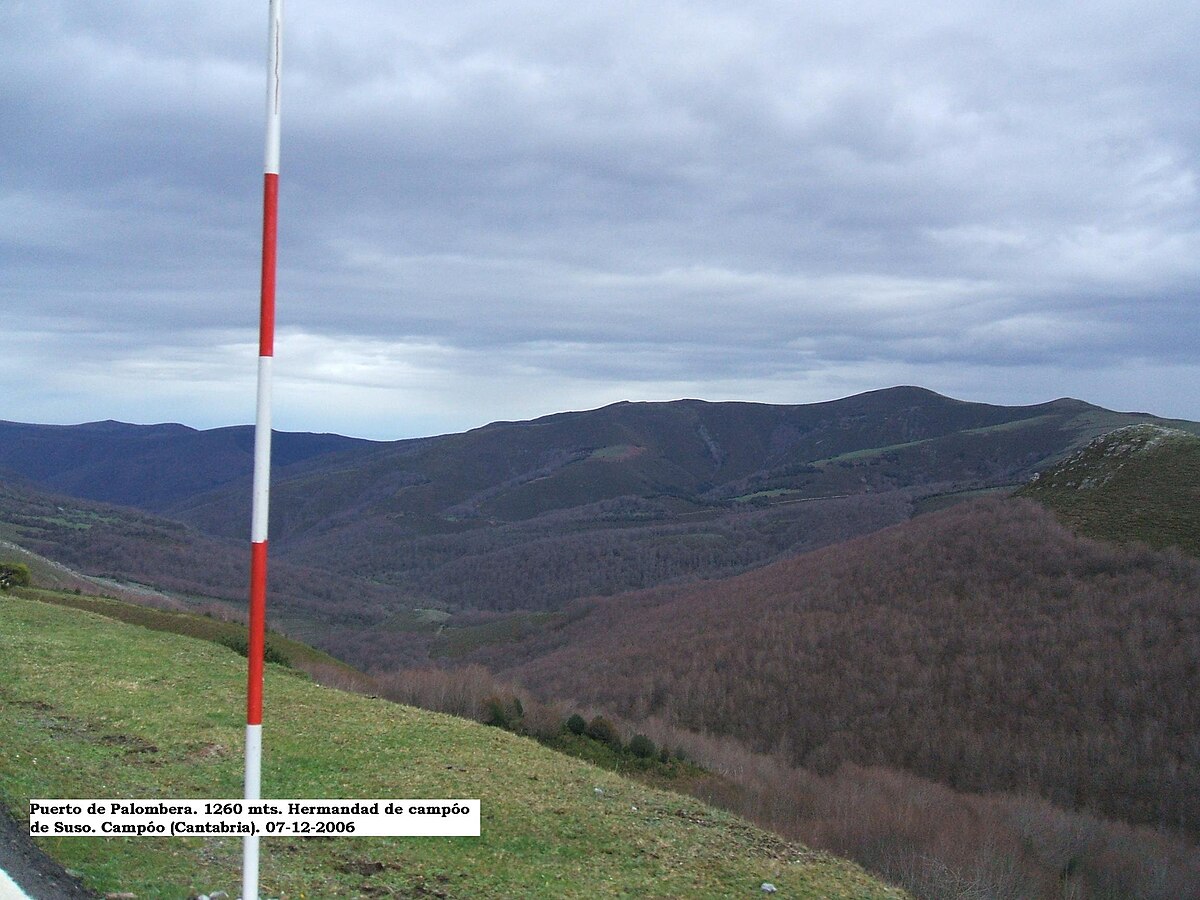
The landscape accompanying these journeys is restrained: open pasture, stone walls and livestock farms. On clear days, the transition becomes visible between the gentler relief of Campoo and the mountains that close the horizon to the north.
What often goes unnoticed
Valdeolea can be covered in a few hours if the aim is simply to locate a couple of Romanesque churches. Yet the municipality is better understood by spending a little time walking through the villages or following the paths that lead out of them.
It also helps to accept something typical of rural Romanesque heritage: many churches are closed. This is not always a drawback. Much of the interest lies outside, in the corbels, the doorways, or the relationship between the building and the land around it.
Sometimes it is enough to walk slowly around the church or sit for a while in the atrium to understand why it was built in that particular spot.
Making the most of a few hours
With a morning or an afternoon, it is possible to explore a small part of the municipality. Cervatos is usually the first stop, given the importance of its collegiate church. From there, Las Henestrosas de las Quintanillas lies nearby and offers another example of rural Romanesque architecture in a very quiet setting.
Mataporquera works as a point of reference within the municipality and helps with orientation before continuing towards other villages in the valley.
Common missteps
One frequent mistake is trying to visit every church assuming they will be open. In many cases they are not, so it helps to approach the visit with some flexibility.
Another is focusing only on Mataporquera. It is the most active settlement, but the historical interest of Valdeolea is spread across smaller villages where the Romanesque churches are preserved.
Finally, although distances on the map appear short, some of the local roads can take longer than expected. Slowing down tends to be part of the experience here, rather than something to avoid.