Full Article
about Alfoz de Lloredo
Gateway to the Altamira cave
Hide article Read full article
Seven villages, one rhythm
You smell the lemons before you see them. On an overcast April morning in Alfoz de Lloredo, smoke from chimneys in Novales drifts into the same air as the citrus scent rising from orchards enclosed by low stone walls. This is Cantabria, a short distance from the Cantabrian Sea, yet lemon trees grow here as if they belonged further south.
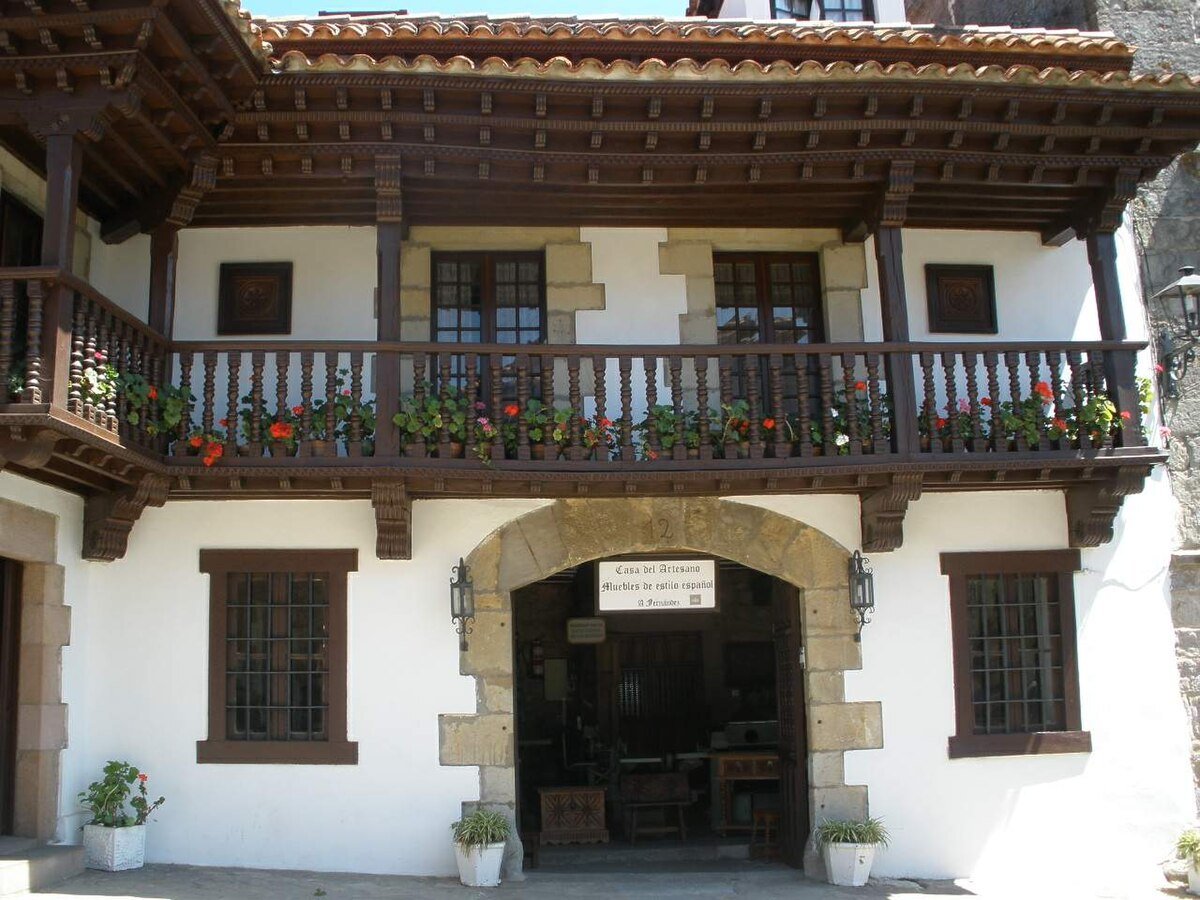
Alfoz de Lloredo is not a single town but a municipality made up of seven villages: Cigüenza, Cóbreces, La Busta, Novales, Oreña, Rudagüera and Toñanes. Each one keeps its own square, church and daily routines. They were grouped under one council in the 1960s, though in everyday speech people still refer to them individually, going to Novales or heading down to Oreña.
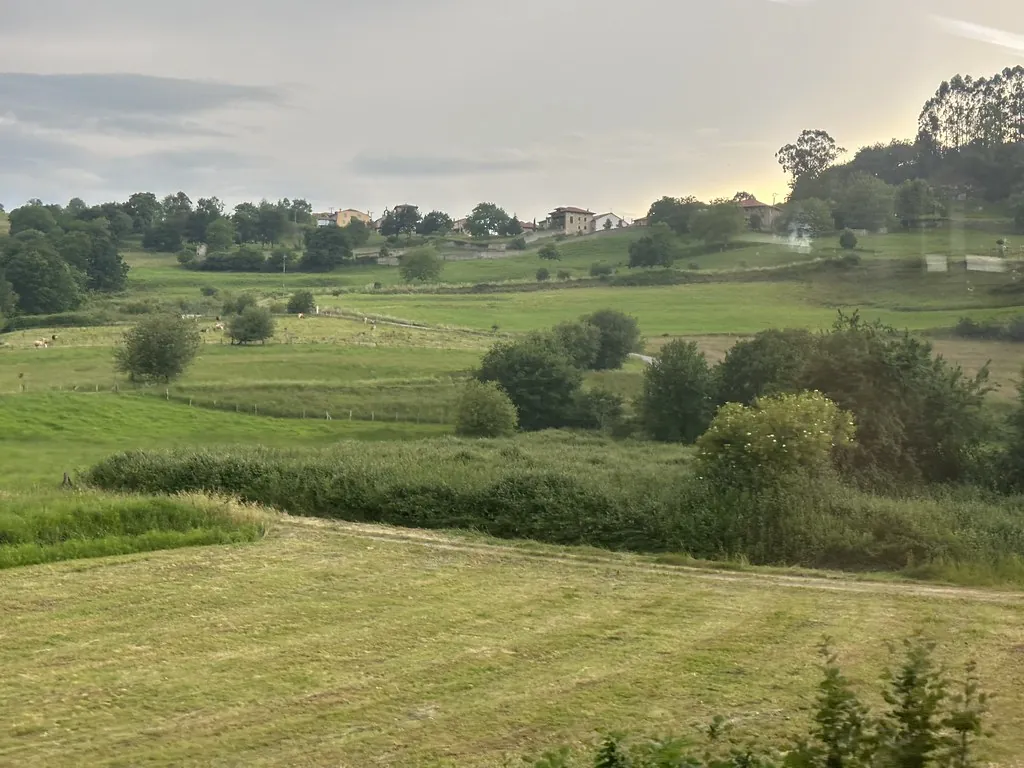
The road that links them moves gently from valley to valley, passing meadows edged with hedgerows and low hills where, in certain stretches, the sea appears in the distance.
In Cigüenza, the church of San Martín carries a certain gravity linked to the indianos, Spaniards who returned from the Americas with enough wealth to build churches or large houses. The pale stone façade shifts with the light. By late afternoon it takes on a warmer, almost golden tone.
The Camino towards the coast
The Northern Way of the Camino de Santiago enters Alfoz de Lloredo through Oreña and crosses the municipality on its way to the sea. Pilgrims often stay overnight near Cóbreces, in a former educational building that has been adapted as a hostel.
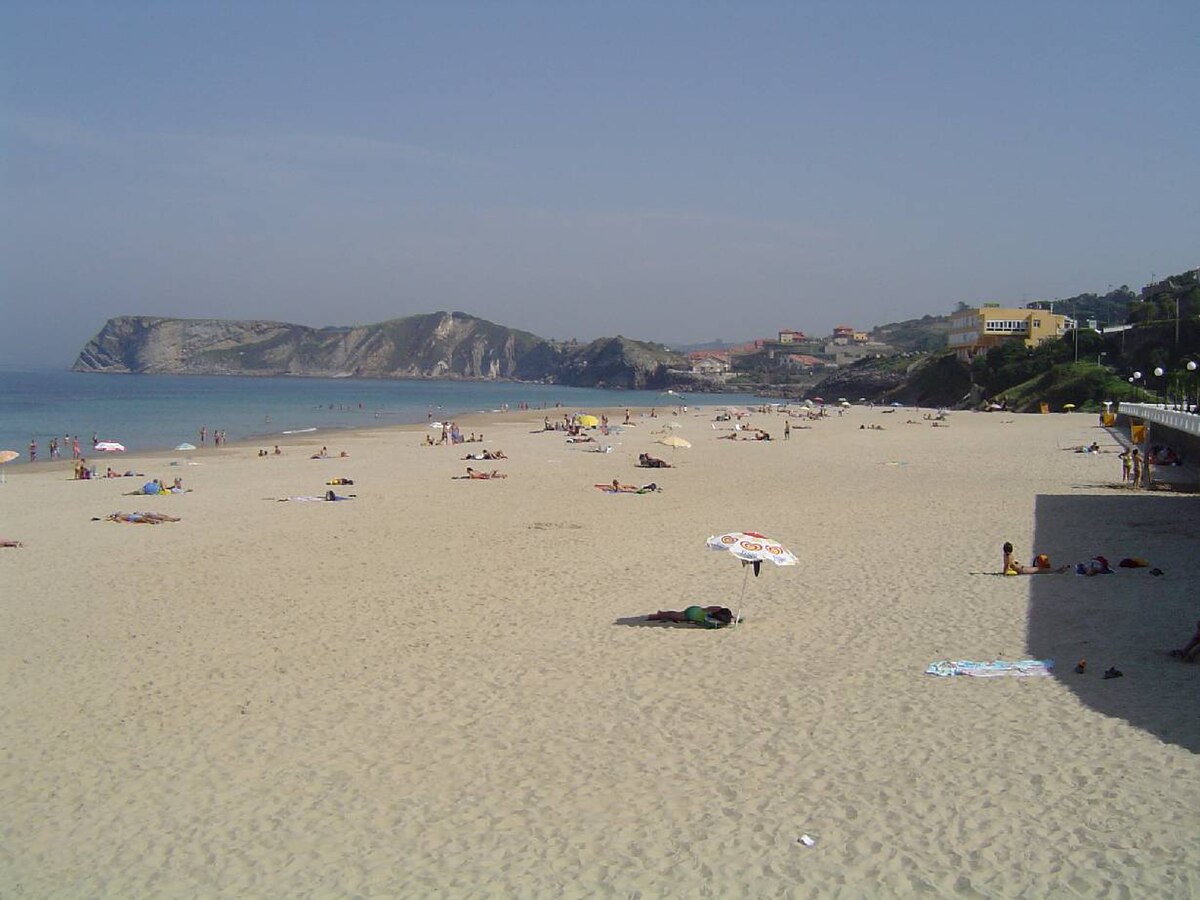
In the morning, the route slopes gradually down towards Luaña beach. The wind from the Cantabrian Sea tends to blow straight in, sometimes forcing walkers to lean slightly forward. On either side lie damp fields, stone walls and the occasional isolated house. On clear days, from higher points along the route, the coastline can be seen stretching towards Asturias.
The pace here is steady rather than dramatic. The landscape changes quietly as the path approaches the water, with more open views and a stronger presence of the sea.
Beneath the surface: caves and mining
At the beginning of the 20th century, a group of children playing near Novales came across bones and fragments of pottery in what is now known as the Cueva de las Aguas. Archaeologists later confirmed that the area had been inhabited since very early times.
Access to the cave exists today, though it is advisable to check beforehand before setting out. The path begins near the football pitch and cuts through a stretch of eucalyptus where the ground is often damp. Inside, the temperature drops noticeably and water drips steadily, forming small pools that reflect the stalactites above.
For much of the 20th century, there was also mining activity around Novales. Various metallic minerals were extracted, and tunnels ran through the valley’s subsoil. Many of these galleries were sealed when operations ceased. In the neighbourhood of Pelambres, where tanners worked centuries ago, there are still people who remember the noise of machinery and the strong smell of drying hides.
A monastery among fields
In Cóbreces, the monastery of Santa María de Viaceli appears unexpectedly among open fields where cows often graze. Built in the early 20th century, the structure was considered advanced for its time because of its use of reinforced concrete.
The Trappist monks maintain a small-scale cheese production, which they sell on site. The process is simple: a side door, a bell, and someone appearing after a short wait from within the monastery.
Close by are the cliffs of El Bolao. In the evening, the rock and grass briefly take on a pink hue that lasts only a few minutes. The area has been used as a setting for film and television, largely because of the way the sea strikes the base of the cliffs.
The lemon microclimate of Novales
Novales is known across Cantabria for its lemon trees. These are not arranged in formal plantations but scattered across family orchards, protected by dry stone walls that retain heat from the day. The valley creates a small microclimate where cold air rarely lingers.
The trees themselves are low and twisted, with branches that spread outwards. In spring, white blossoms scent the streets closest to the orchards. In winter, yellow fruit stands out against the typically grey northern sky.
During summer, the village usually organises activities centred on the lemon, many of them with a charitable purpose, making use of fruit that is not sold commercially.
When to go and getting around
May is often a good time to explore Alfoz de Lloredo. Orchards are in bloom and the paths still hold the intense green of a Cantabrian spring. September also works well, with the sea retaining some warmth and the villages settling back into a calmer rhythm after summer.
In August, the nearby coast, especially around Luaña and Cóbreces, sees a noticeable increase in visitors and the atmosphere shifts.
The A‑8 motorway runs relatively close by, and the area can be reached from Torrelavega or from the Comillas exit. Once there, moving between the villages means following the local roads that wind through valleys and low hills, always with the possibility of the sea appearing just beyond the fields.