Full Article
about Suances
Surf town and beaches
Hide article Read full article
Between the Tide and the Fog
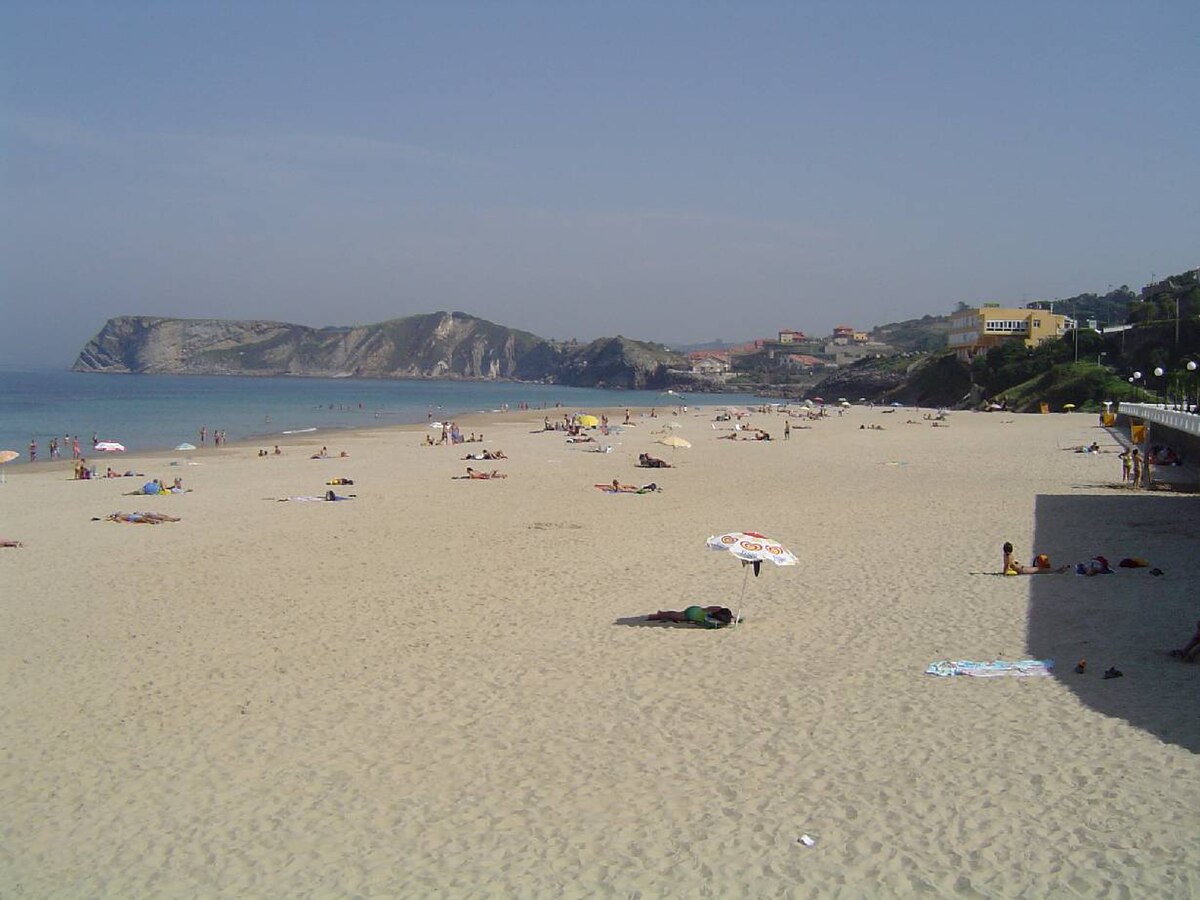
The water at Playa de la Concha goes still and flat in the late afternoon, a dark mirror for the sky. Wet sand glistens where the tide has just pulled back, exposing ridges and shallow pools. Surfers walk up the beach with their boards under their arms, leaving trails of footprints that the next high tide will erase. This is the daily pause in Suances, a town on the Cantabrian coast that exists in a steady rhythm of advance and retreat.
A Working Harbour’s Morning Air
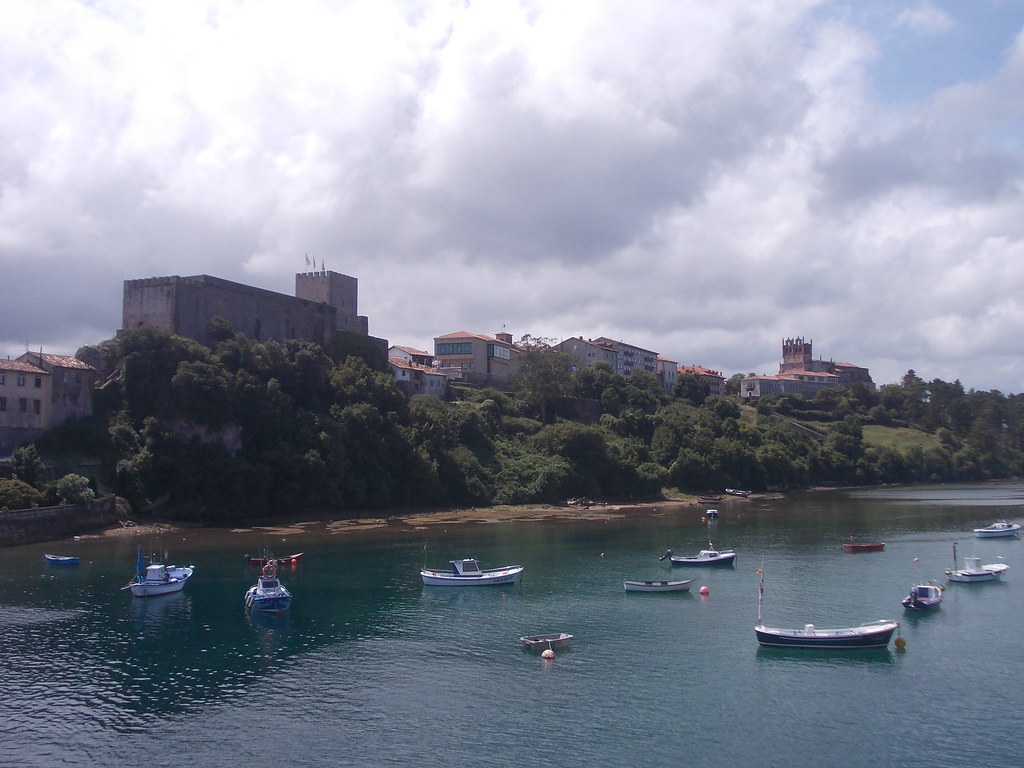
Before the day truly begins, the air at the harbour carries a specific mix of scents: cold salt, diesel fuel from the boats, and the faint, clean smell of fish just unloaded onto the quay. Gulls argue over scraps near the moored vessels. The white houses of the old town, stacked above the estuary of San Martín de la Arena, have a quiet, closed-up look. From the Virgen del Carmen promenade, you watch the water slowly fill the river mouth, a silent, daily transformation. In winter, this space belongs to the wind and the crying gulls. The terraces are empty, the towels gone from balcony rails. The port works without an audience.
Two Beaches, Two Temperaments
Playa de Los Locos earns its name when a northwest swell arrives. The waves are powerful, breaking with a hard thump onto the sand. The water turns a deep, ink-stain green. From the cliff viewpoint, surfers appear as small black dots bobbing beyond the break. Locals often stand watching with folded arms, assessing the sets. The currents here are not forgiving; the seabed shifts. It demands respect.
A ten-minute walk east, Playa de la Concha presents a different face. It is wide, with fine sand, a gentle slope into the water. In August it fills with families and the chatter of buckets and spades. Come in June or September and you can walk its length with barely a soul in sight. These two shores, so close geographically, feel like separate countries.
Stone Markers on the Coast
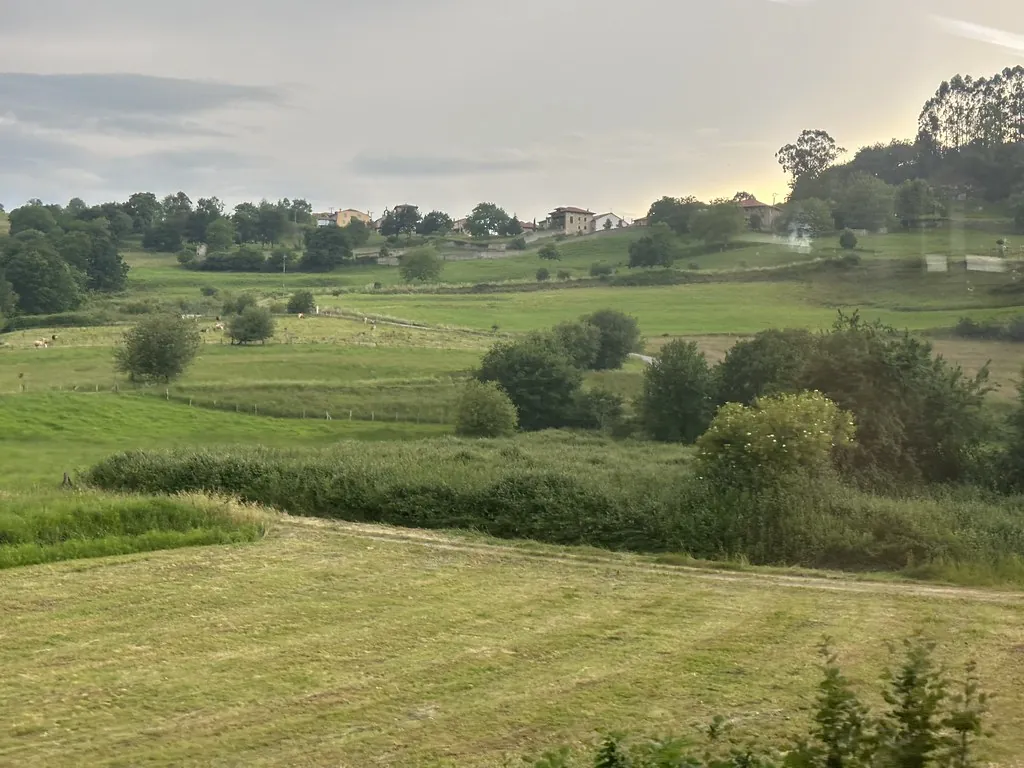
In the village of Tagle, within the municipality, the Torre de Tagle stands in a field. It is a medieval tower of worn stone, its base softened by moss and damp. The Cantabrian wind has smoothed its edges over centuries. From here, the view opens across green pastures to the broad estuary mouth.
On Punta del Torco, the Suances lighthouse does its job without fanfare. It is a squat, white structure on a rocky headland. The path to it fills at sunset. People sit on the low wall listening to the sea crash below as the beam begins its slow sweep over darkening water. These are not attractions built for show; they are parts of the landscape, waypoints that frame the long coastline.
The Walk Up the Hill
The first Sunday of September is traditionally for the romería of the Virgen de Guadalupe. From early morning, people begin walking up a dirt track to a small chapel on a hill. They carry backpacks with tortillas wrapped in foil and bottles of cider to share. The path is uneven, muddy if it has rained. Eucalyptus trees line the route, their leaves rustling and trunks creaking in the wind.
At the top, the gathering feels more like a family reunion than a formal event. Groups settle on the grass. Children run between the trees while adults talk and eat. From this modest height, you can see the whole coastline open up to the sea. The day passes slowly, measured in conversations and shared food.
A Practical Sense of Time
June and September often provide the best balance. The sea has lost its spring chill, but the summer crowds have not yet arrived or have already left. Parking is simpler. The light is softer.
July and August change everything. Traffic builds on access roads by mid-morning. The seafront promenades become rivers of people. If you visit then, go to the beach early. Claim your patch of sand before ten.
One piece of advice holds true year-round: keep a sweater nearby. Sea fog can roll in swiftly during the afternoon, especially at Playa de Los Locos, dropping temperatures abruptly. It’s also wise to watch the sea for a few minutes before entering there; conditions shift faster than you might expect.
Suances does not hide these contrasts. It is defined by them—the calm bay and the serious surf, the crowded summer afternoon and the solitary winter morning. You come to understand it by feeling that changeable rhythm for yourself