Full Article
about Cabezón de Liébana
Hidden corner of Liébana
Ocultar artículo Leer artículo completo
The church bell strikes eleven, yet only four cars line the lane outside San Esteban. A farmer props his bicycle against the stone wall, nods at the pharmacist emerging for a cigarette, and both watch a red squirrel sprint across the slate roof. This is morning rush hour in Cabezón de Liébana—population somewhere south of six hundred, depending on who’s left for Santander for the week.
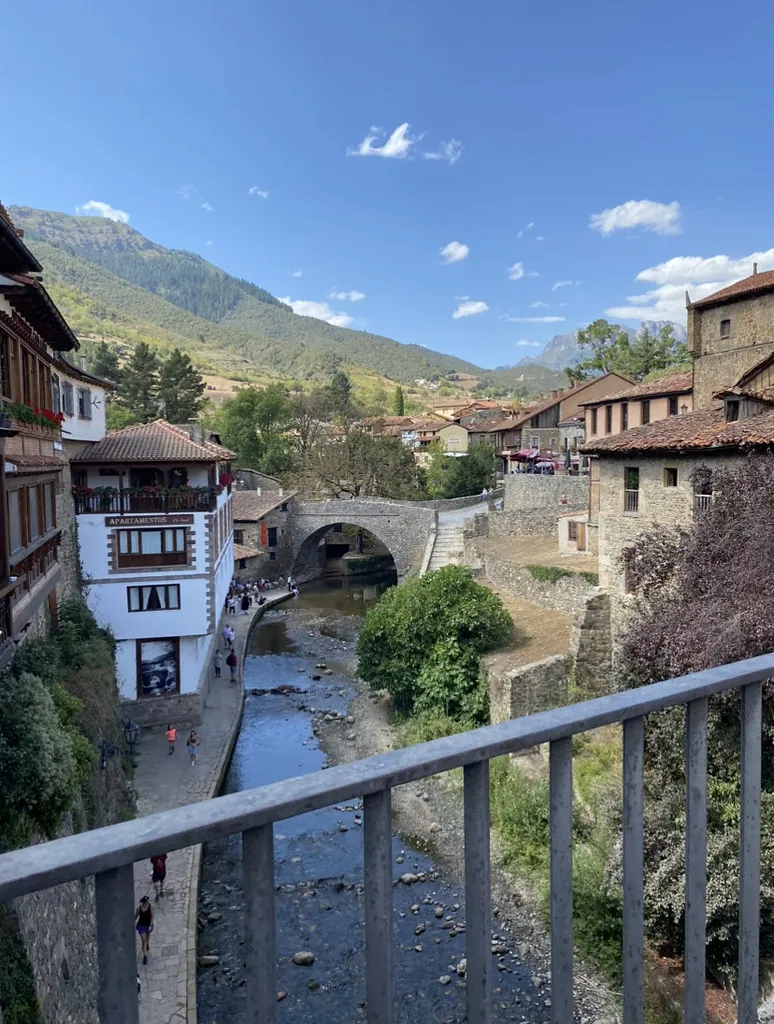
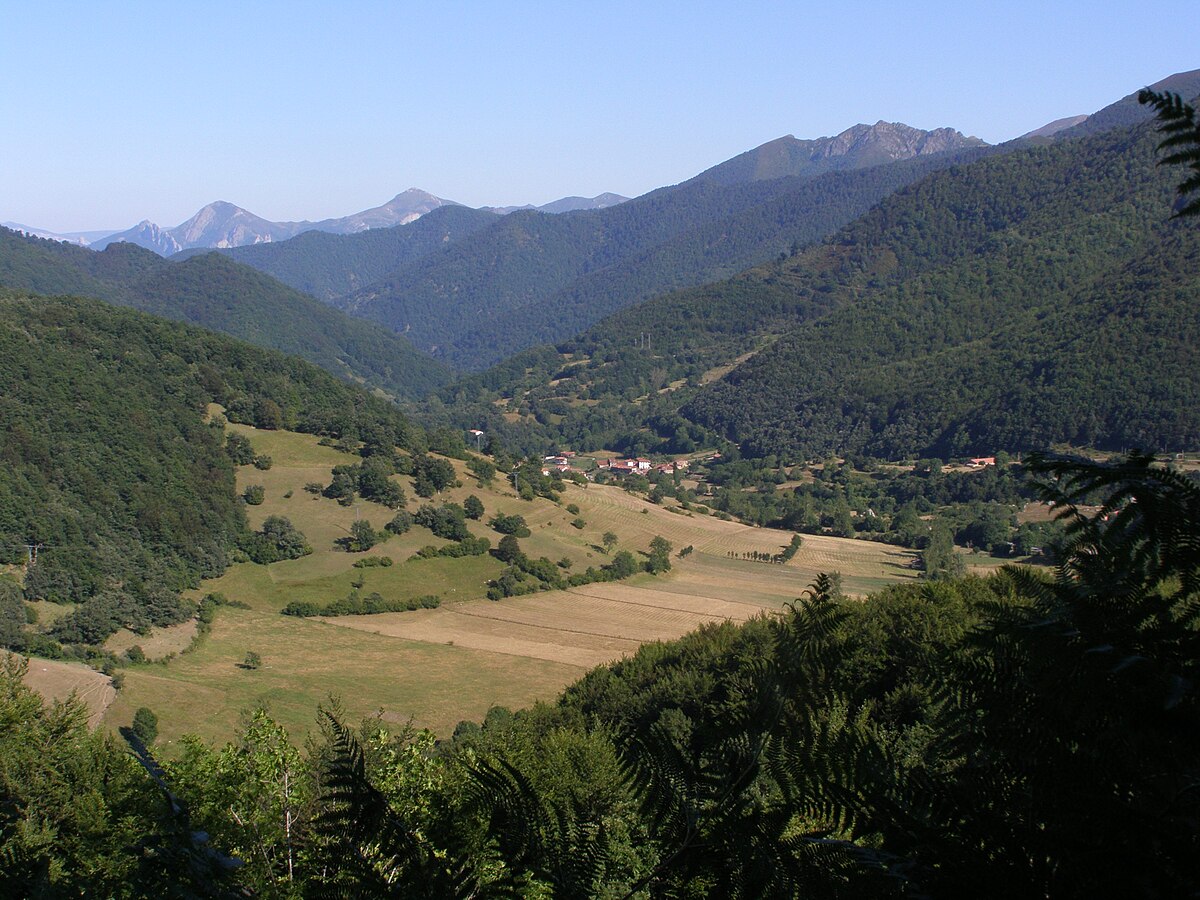
Cantabria’s Liébana valley is famous for its Picos views and the glitzy market town of Potes, 14 km east. Cabezón, scattered across the western rim, gets none of that coach-party footfall. What it offers instead is space: meadows stitched together by dry-stone walls, centuries-old footpaths that link tiny hamlets, and a silence broken only by cowbells and the River Deva sighing through the gorge below.
Stone, Wood and the Slope of the Land
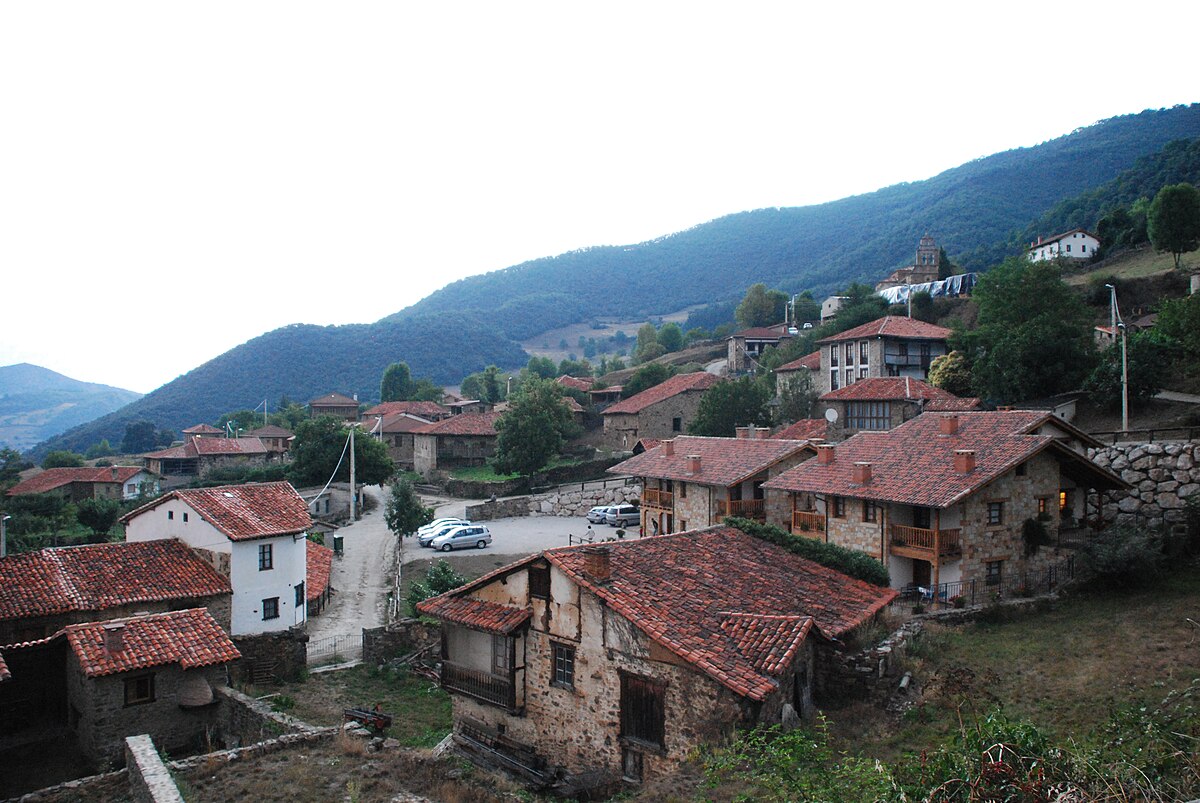
There isn’t really a “centre” to speak of. The ayuntamiento, pharmacy and solitary cash machine sit beside the church, but a dozen outlying barrios—Cavia, Frégano, Ríofor—isolated by chestnut woods, complete the municipality. Houses are built from whatever the hill provided: slate roofs the colour of storm clouds, oak beams darkened by smoke, balconies just wide enough for geraniums and a morning coffee. Look up and you’ll spot carved coats of arms on 18th-century mansions; look down and you’ll notice how doorways are angled to match the incline—evidence of builders who respected gravity more than symmetry.
Inside San Esteban itself the décor is sober, almost Presbyterian, apart from a gilded baroque retablo rescued from a fire in 1890. The cemetery next door is worth a wander: graves face south-east, the better to catch the first winter sun creeping over the Sierra de Peña Sagra. On a clear day you can trace the Deva canyon all the way to the Atlantic, 40 km distant.
Walking Without a Target
This isn’t terrain for tick-box peak baggers. What Cabezón does brilliantly is gentle, half-day ambles that start the moment you shut the car door. A 45-minute loop south of the church follows an old drove road through hay meadows to an abandoned threshing floor; stone markers painted with yellow stripes keep you right. Extend it by another hour and you’ll drop into oak woods where jays argue overhead and the air smells of moss and wild mint. Maps are helpful but not essential—paths converge on hamlets, and every farmer seems happy to point.
Serious hikers can link up with the Ruta de la Reconquista, a 6 km climb that joins the GR-71 in the beech forest above. It tops out at 1,100 m with views across to the limestone blades of the Picos; allow three hours return and take water—there are no bars on the ridge.
Food that Comes with Altitude
Lunch options are limited to one bar, Casa Julian, open Thursday to Sunday. Order the cocido lebaniego: chickpeas stewed with pork rib, chorizo and a chunk of smoked bacon, served in an earthenware bowl that retains heat as the mountain air cools. A media ración (€9) is enough for most appetites; add a side of cabbage sautéed in butter if you’re ravenous. Cheeses to try are the local Picón Bejes-Tresviso, blue-veined and sharp, and quesada pasiega, a baked cheesecake sold by the slice for €3.50. Beer comes in 33 cl bottles—no hand-pulled ale here—though the house cider from Cantabria is crisp and low enough in alcohol for a post-walk refresher.
If you’re self-catering, the morning bread van reaches the square at 10:30. Walnut loaves disappear first; arrive early or be content with standard white. The nearest supermarket is in Potes, so stock up before you drive the last 15 km of switchbacks.
Seasons and the Small Print
Spring arrives late. By late April the meadows are still yellow with last year’s hay, but within a fortnight new grass pushes through and orchards erupt in cherry blossom. Temperatures hover around 18 °C—perfect walking weather—though showers can roll in from the Bay of Biscay without warning. Autumn is equally reliable: beech woods turn copper, days stay settled until late October, and the valley smells of chestnut smoke. Summer is warm but rarely oppressive; highs of 28 °C send hikers into the shade by 3 pm, while nights drop to 15 °C—ideal for sleeping with the window open and no need for air-con.
Winter is quiet, occasionally spectacular after snow, but daylight is scarce and the road from the A-8 can ice over. Chains are advisable from December to February; the local bus suspends service when the thermometer falls below zero.
Getting There, Staying There
Fly into Santander with Ryanair from London Stansted or Manchester; the drive takes 90 minutes on the A-8 and then CA-184. Car hire is essential—public transport runs only four buses a day from Potes, and the last departure back is at 18:10. Fill the tank at Unquera before the mountain section; rural stations shut on Sundays and card machines are temperamental.
Accommodation is low-key: four rural cottages (casa rurales) and a three-room guesthouse. Week-long lets start at €420 outside August; mid-week short breaks are often possible if you email ahead. None have pools, gyms or concierges—what you get instead is a terrace, a bottle of local orujo on arrival, and a host who’ll lend you a walking guide dog-eared by twenty years of boots.
When Silence Feels Like a Luxury
Cabezón won’t suit everyone. There are no boutiques, no cocktail bars, no sunset yacht trips. Phone signal drifts in and out, and the loudest noise after midnight is the church clock counting the hours. Yet for travellers who measure value in lungfuls of mountain air rather than Instagram likes, the village delivers. You could see the sights in a morning, but the real point is to stay still long enough to notice the light change on the peaks, watch a shepherd move his flock without haste, and remember that in parts of Europe life still runs at walking pace. Pack a fleece, leave the itinerary blank, and let the valley set the rhythm.