Full Article
about Pesaguero
Remote Upper Liébana
Hide article Read full article
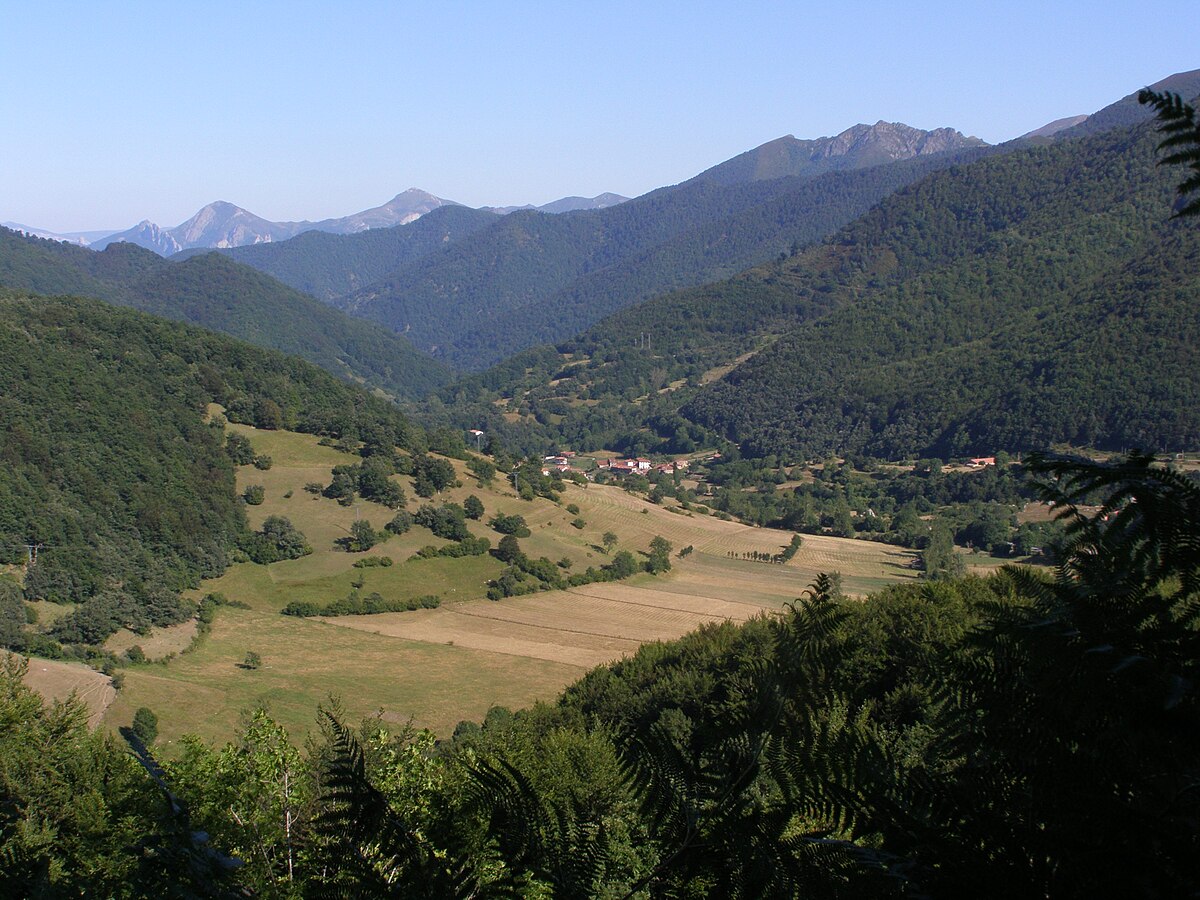
A valley of scattered villages
Pesaguero occupies the upper part of the Liébana valley, its territory spilling across the southern slopes of Peña Sagra. It is not a single village but a municipality composed of a dozen small hamlets—Lomba, Valdeprado, Avellanedo, among others—separated by meadows and wooded hillsides. This geography dictates movement: you drive short distances between settlements, then walk through each one. The administrative centre is in La Puente, but the life of Pesaguero is distributed.
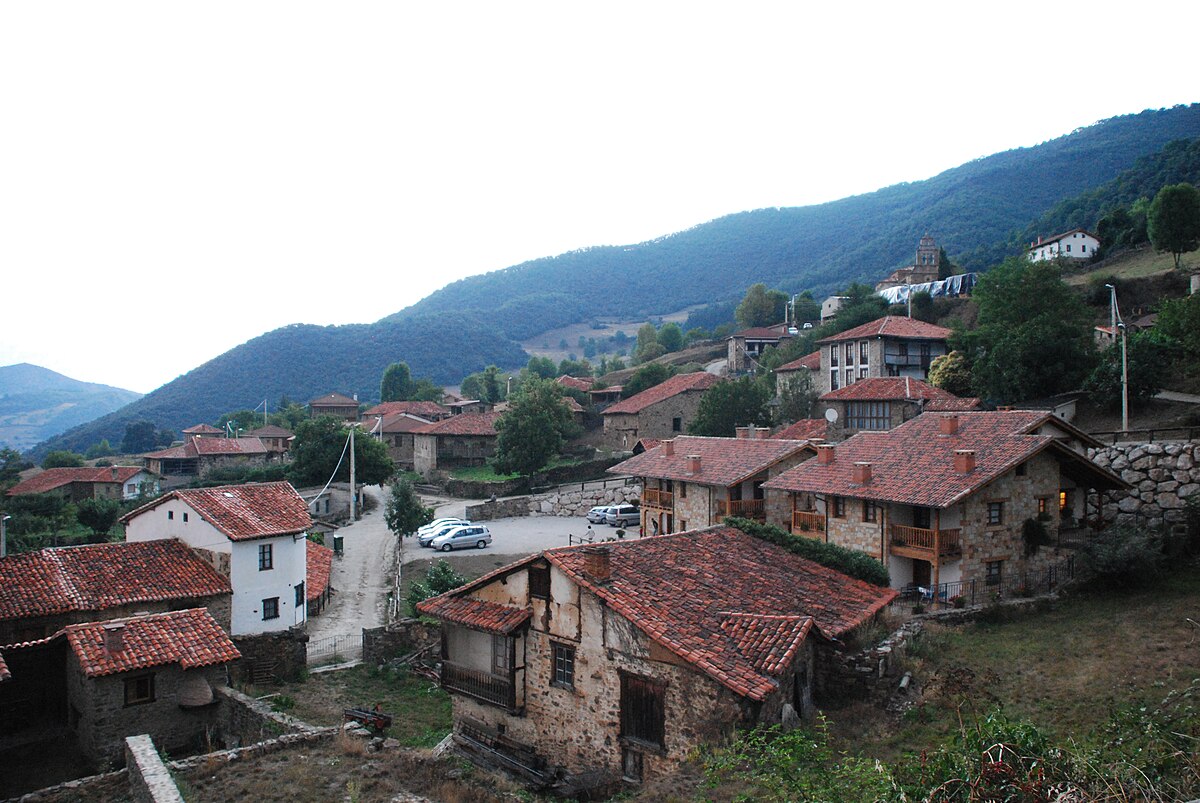
That dispersed pattern creates a particular rhythm. Each hamlet has its own nucleus of stone houses and a small church, yet all share the same backdrop of pasture and mountain. Moving from one to another, even just a few kilometres, shifts your perspective entirely.
Houses built for mountain life
The architecture here is functional, born from a livestock economy. You see two-storey stone houses with wooden balconies, where the ground floor was traditionally the stable and the upper floor the living quarters. The roofs are steep, designed to shed winter snow efficiently. Most of these structures date from the 18th and 19th centuries, a period of relative prosperity in Liébana's pastoral economy that allowed families to build more substantially.
Some façades bear simple coats of arms. These speak not of high nobility but of hidalguía—a local, rural lineage that carried certain tax exemptions. They are a quiet record of social structure in the valley.
The parish churches in each hamlet are modest, built for small, scattered communities. They typically have a single nave and a plain belfry. Inside, some retain Baroque altarpieces from regional workshops. Their value isn't artistic grandeur; it's their continued presence as part of the local fabric.
Between the hamlets, you'll pass hórreos and haylofts standing alone in fields. Many are still in use. It's common to meet herds of cattle or horses near the paths, or to wait for a tractor on a narrow lane.
Moving through the landscape
To understand Pesaguero, you need to link its parts. A car is necessary to cover the initial distances between hamlets, though the roads are narrow and winding. From each settlement, farm tracks and footpaths lead upwards towards the higher grazing areas, known locally as brañas.
These walks are rarely flat. What looks like a gentle slope on a map often translates to a steady, calf-straining climb. Proper footwear is essential. The weather in this part of Liébana is notoriously changeable; fog can descend rapidly, even in summer, obscuring paths and landmarks.
The reward for the climb is perspective. From higher ground, the layout of the hamlets below makes sense, set against the long ridge of Peña Sagra. The landscape transforms with the seasons: the intense green of spring meadows gives way to the deep golds and browns of autumn in the surrounding oak woods.
Things to bear in mind
Pesaguero functions as a territory, not a tourist destination. The hamlets are lived in year-round, though you'll notice many houses are shuttered during the week, used by families on weekends or in summer.
Parking requires patience. In smaller hamlets, you may need to leave your car at the entrance of the settlement. Always leave room for agricultural vehicles to pass.
The mountain climate is decisive. Rain can make paths slippery and muddy in minutes. In winter, ice is common on shaded tracks and higher routes. Your plans should allow for flexibility.
Planning your time
A half-day lets you explore two or three hamlets and walk one of the connecting paths towards the higher pastures. A full day allows you to trace a wider loop, perhaps from La Puente to Valdeprado and up towards the base of Peña Sagra.
There is no monumental highlight here. The interest lies in observing a working landscape—how these hamlets relate to each other and to the land that sustains them. Pesaguero reveals itself slowly, through the accumulated detail of stone, pasture, and the quiet pace of rural life.