Full Article
about Vega de Liébana
High Liebana mountain
Hide article Read full article
A valley that doesn’t reveal itself at once
Some places make sense quickly. You park, walk around the square, and you’re done. Vega de Liébana works the other way round. You step out of the car and the first thing you notice is the quiet. Then you look around and realise you’re not in a single village at all, but in a spread of neighbourhoods and small settlements scattered across the valley.
Tourism here is about slowing down. There isn’t a compact historic centre or a single landmark that pulls everything together. What matters tends to appear in between: while driving along narrow roads, climbing a short slope, or wandering down a track between meadows. A few kilometres away sits Potes, which acts as a kind of hub for the area. Many visitors stay there and make their way over, noticing how quickly the atmosphere shifts once the bustle is left behind.
A close look at rural life
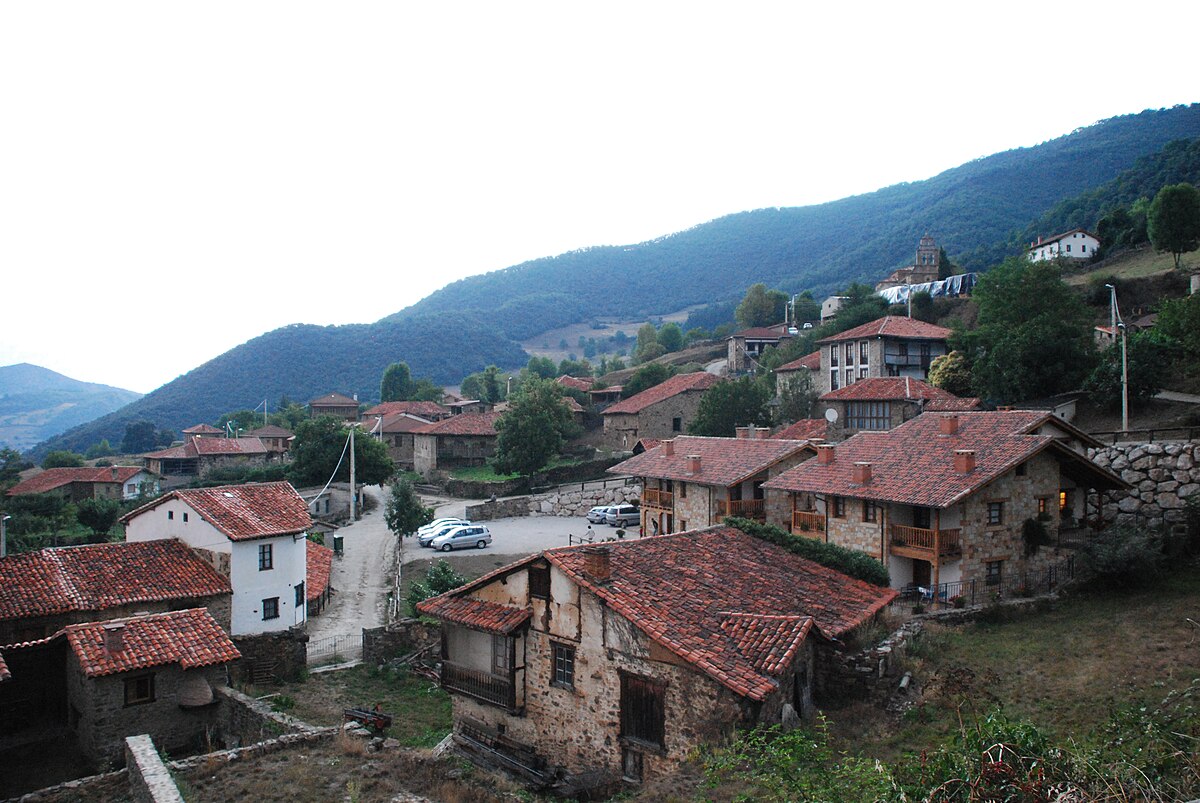
Life in Vega de Liébana still revolves around these small clusters of houses. Churches like Santa María in Soberado, along with others dotted through different neighbourhoods, show how local the organisation of the valley has always been. They are often closed, which is typical in small villages, but even from the outside they offer a clear sense of place.
Stone houses with wooden balconies, traditional raised granaries known as hórreos, and old animal sheds remain part of everyday life. They are not arranged for display. On one façade you might see washing hanging out to dry, on another a stack of firewood waiting for winter. Details like these say more about the area than any information board could.
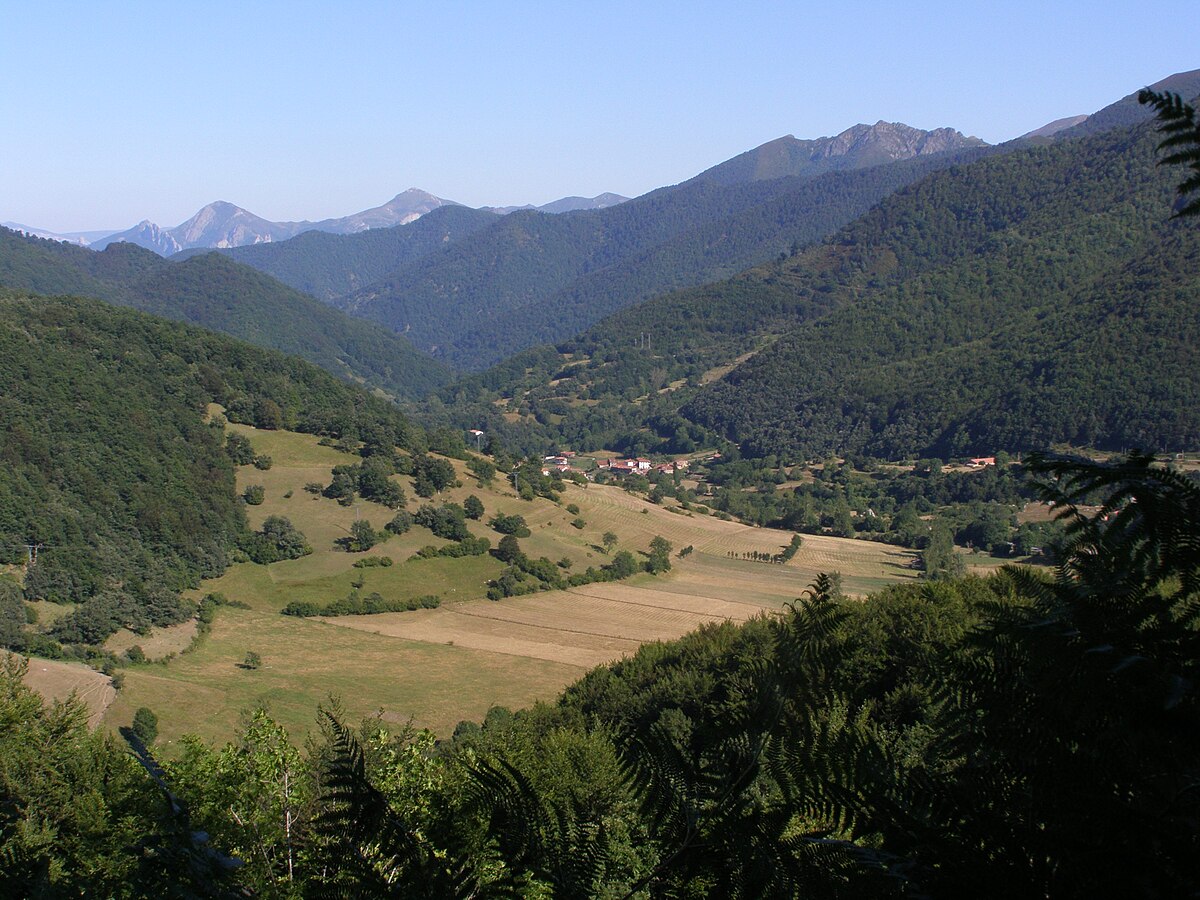
On clear days, the Picos de Europa appear through gaps in the valley. Not from a designated viewpoint, but suddenly: at a bend in the road, on a wider verge, or at the end of a path lined with oak trees. The effect is brief and unexpected, which is part of what makes it memorable.
Journeys over landmarks
What makes Vega de Liébana worth visiting is not so much specific sights as the act of moving through it. Start with the car, then continue on foot. Tracks used by locals link neighbourhoods and fields. Follow one for a while and small surprises tend to appear: a hidden fountain, a restored hut, or a stretch where the valley opens up all at once.
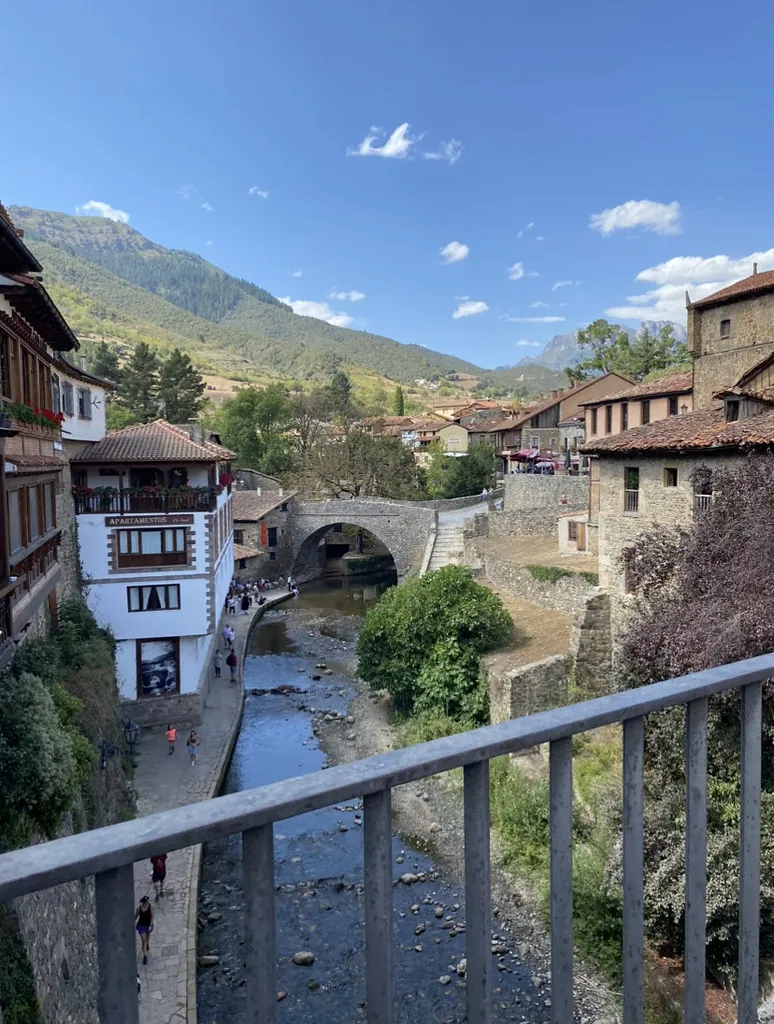
Potes is close enough for an easy change of pace. When a bit more activity appeals, it’s simple to head over for a while. Its narrow streets gather traditional shops and noticeably more movement compared to the calm of these villages.
A few kilometres away stands the monastery of Santo Toribio, one of the best-known religious sites in Cantabria and a place of pilgrimage for centuries. Even without a particular interest in religious buildings, the setting alone justifies the short detour.
Eating in Liébana
After time spent walking through the valley, a proper appetite tends to follow. In Liébana, cooking remains straightforward and filling. Cocido lebaniego, a hearty local stew, appears on many menus when the weather turns cooler, served in portions that warm you up quickly.
Local cheeses, cured meats and crusty bread are also easy to come by. And then there is orujo, a traditional spirit produced in the area for generations. There is no need to overthink it: these are solid, satisfying dishes, the kind made for people who have spent the day working outdoors or walking in the hills.
What often goes unnoticed
Passing through the valley without stopping means missing most of it. From the car window you mainly see meadows and scattered houses. Once you get out and walk, other details come into view: vegetable plots, old vines, and a slower rhythm that still shapes daily life in many parts of Liébana.
It helps to know that Vega de Liébana has no clear centre. Each neighbourhood functions almost like an independent village. Because of that, a visit usually unfolds as several short walks rather than one continuous route.
Distances can also be misleading. On a map everything seems close together, but bends in the road and steady climbs make journeys take longer than expected.
When to experience it
Spring changes the valley noticeably. The meadows turn intensely green and walking feels easy and rewarding. Summer brings long days and generally mild temperatures for this part of Cantabria, though starting early is a good idea if you plan to walk.
Autumn has a particular character here. The colours on the hills shift and there is less movement than in summer. Some days clouds sit low over the valley, while on others the views towards the Picos de Europa open up clearly.
With only a few hours, it makes sense to accept that you will not see everything. Choose two or three neighbourhoods, walk their streets and follow a nearby path for a while. San Vicente de Híjar or the main settlement of Vega are often good starting points to get your bearings.
The most common mistake is trying to cover too much ground, or crossing the valley without leaving the car. Vega de Liébana becomes clearer when you stop, walk a little, and take the time to look around. The interesting parts are not signposted. They appear when you allow yourself the time to notice them.