Full Article
about Puente Viesgo
Prehistoric caves and thermal waters
Hide article Read full article
A valley shaped by passage
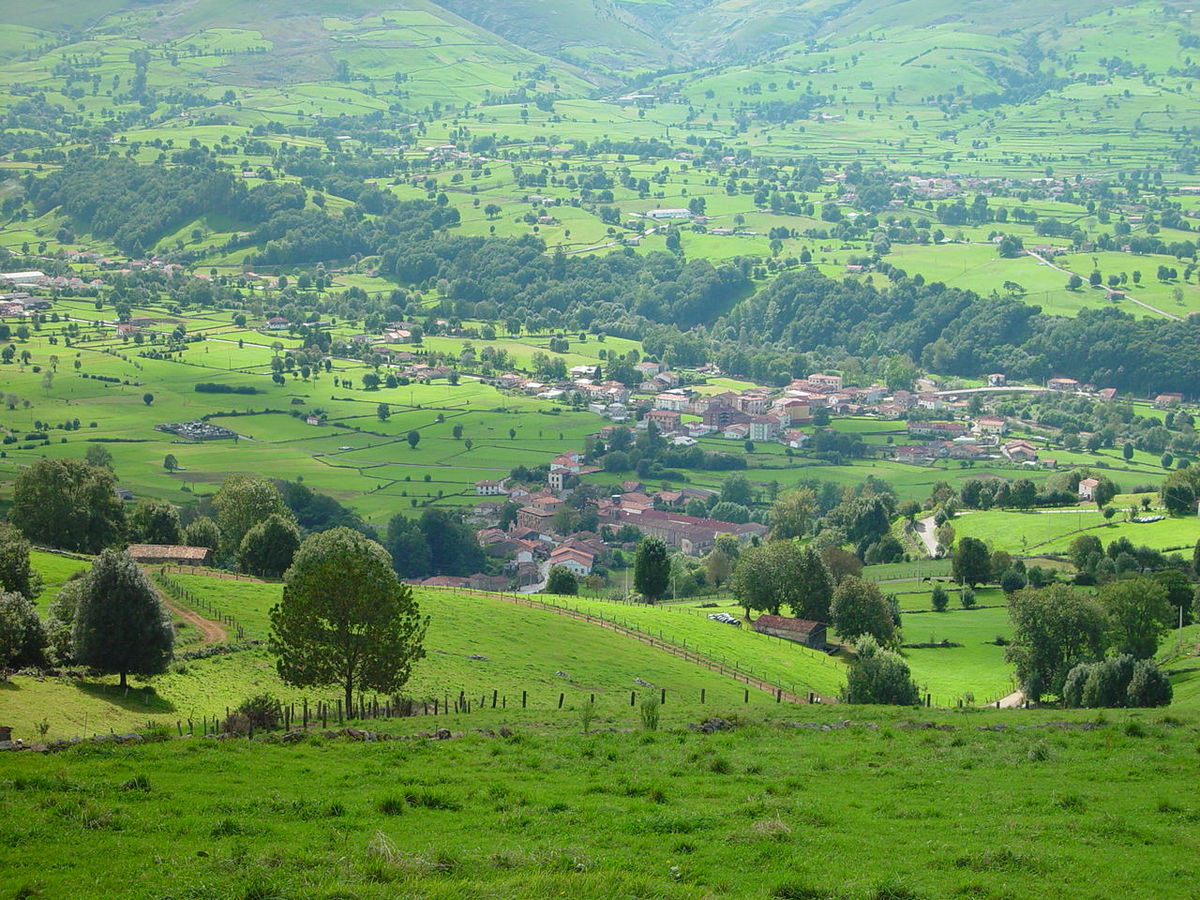
Puente Viesgo sits in a narrow stretch of the Pas valley, where the river tightens into a small gorge. This geography made a crossing necessary, likely as early as the medieval period, and a bridge gave the settlement its name. Around that crossing, houses gathered along the limestone hillside where the caves of Monte Castillo open out.
The setting helps explain why people have stayed here for so long. There is constant water, a natural route towards the coast, and caves that offered shelter in very distant times. The sense of continuity is striking: in Puente Viesgo, time is read less in centuries and more in layers.
Above the valley stands the church of San Miguel, positioned to overlook both the river and the approach to the village. It preserves elements often linked to the Romanesque period, although the building seen today reflects later alterations. The exact details of its architecture matter less than its location, which allows a clear visual command of the landscape below.
Monte Castillo and the earliest images
Monte Castillo rises modestly, about 180 metres above the Pas, yet inside it holds one of the most studied groups of prehistoric cave art along the Cantabrian coast. The caves here have changed how the chronology of Paleolithic art is understood.
The Cueva del Castillo became known at the beginning of the 20th century and has played a central role ever since. Its walls show negative hand stencils, animal figures and engravings that make use of the rock’s natural shapes. Some recent datings suggest an age of more than 40,000 years for certain paintings. These figures were created by human groups moving through the Pas valleys during the Paleolithic, at a time when the climate and landscape were very different from today.
Other caves on the same hill complete the picture. In Las Monedas, coins from the time of the Reyes Católicos were discovered inside when the cave was explored in the 20th century. La Pasiega is known for the abundance of animal figures spread across several panels. Las Chimeneas is usually kept outside the standard visiting circuit in order to better preserve the site.
Together, these spaces place Puente Viesgo in a particular position within Cantabria. Some of the oldest evidence of human presence in Europe remains visible here, directly on the rock.
Thermal waters and a railway past
More recent history in Puente Viesgo is closely linked to its thermal waters. The sulphurous spring began to be used in an organised way in the mid-19th century, when spa culture became fashionable among wealthier groups along the coast. Santander was relatively close, and visitors started arriving to treat rheumatic conditions or skin problems.
The spa building still reflects that 19th-century style. Metal structures, glazed galleries and open views across the Pas valley define its appearance. It connects the village to a period when health tourism shaped local life.
Opposite the spa area once stood the station of the Pas railway. This line carried mineral and goods towards the coast before closing in the mid-20th century. Its route has since been adapted into a greenway, a flat path that follows the valley for several kilometres through meadows and alder groves. The transformation has turned an industrial corridor into a quieter route through the landscape.
Houses that speak of return
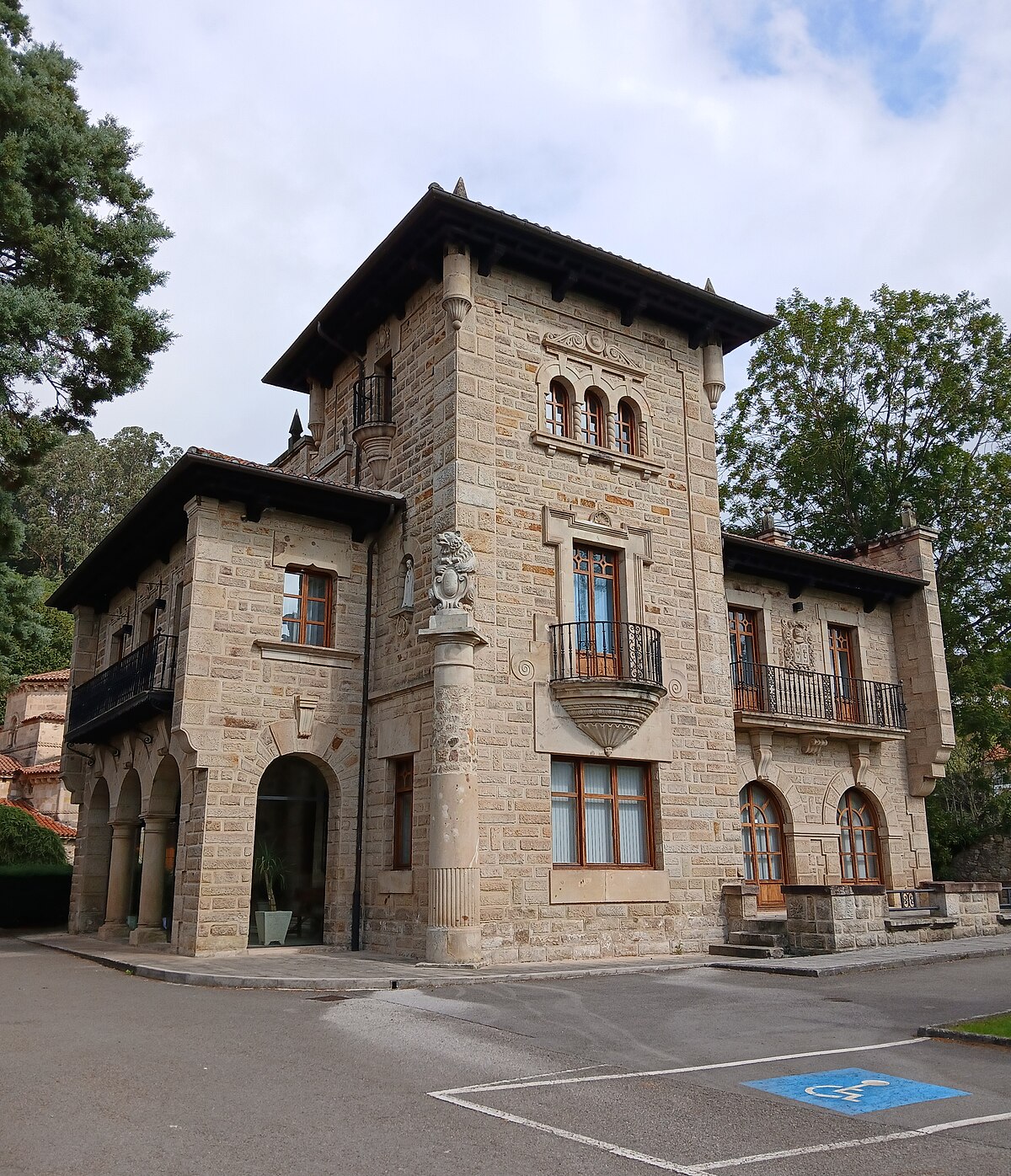
Walking through the town reveals another layer of prosperity, linked to those who left for the Americas and later returned. These emigrants, often referred to as indianos in Spain, built houses in the early decades of the 20th century that combined architectural references and made their social position visible.
One of the most notable examples is the Casona de Fuentes Pila, designed by the architect González de Riancho. Its composition brings together classical elements with balconies and heraldic shields, a combination frequently seen in residences of well-off families at the time.
An earlier building is the Palacio de Soñanes, dating from the 18th century. Its façade has a rococo character that is uncommon in rural Cantabria, making it stand out within the village.
Beyond these larger buildings, smaller details reward attention. Some traditional houses retain wooden arcades, while older doorways display carved stone coats of arms. In places, fragments from earlier constructions have been reused, adding subtle layers to the built environment.
Moving through Puente Viesgo
Puente Viesgo lies about 25 minutes from Santander via the motorway that runs along the Besaya valley. The village itself is arranged between the river and the hillside, which means there are noticeable slopes in many streets.
The caves of Monte Castillo operate with guided visits and limited capacity, so it is usually advisable to check ahead or arrange a place in advance. This helps protect sites that are both fragile and of great archaeological importance.
From the centre of the village, a path runs alongside the Pas towards the historic bridge that gave Puente Viesgo its name. It is a short and easy stretch, bordered by trees and following the course of the river. This simple walk brings together several of the elements that define the place: water, landscape and the sense of passage that has shaped its history.