Full Article
about San Pedro del Romeral
Authentic Pasiegan village
Ocultar artículo Leer artículo completo
The church of San Pedro Apóstol appears only after the final bend, a modest stone rectangle with a single bell tower that doubles as the village’s only landmark. Blink and you’ll have driven through the entire “centre” of San Pedro del Romeral in thirty seconds. That is not an exaggeration; the 2019 census counted 579 souls, fewer than most Surrey commuter trains at 7 a.m.
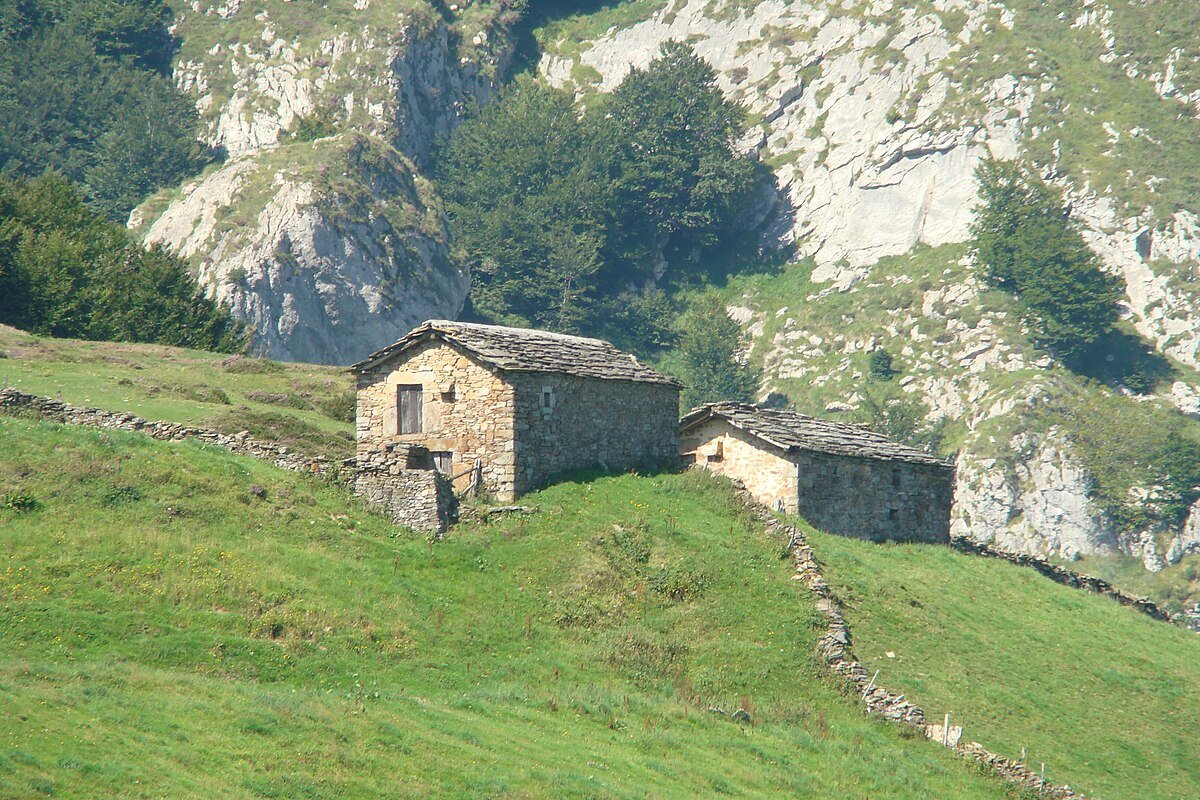
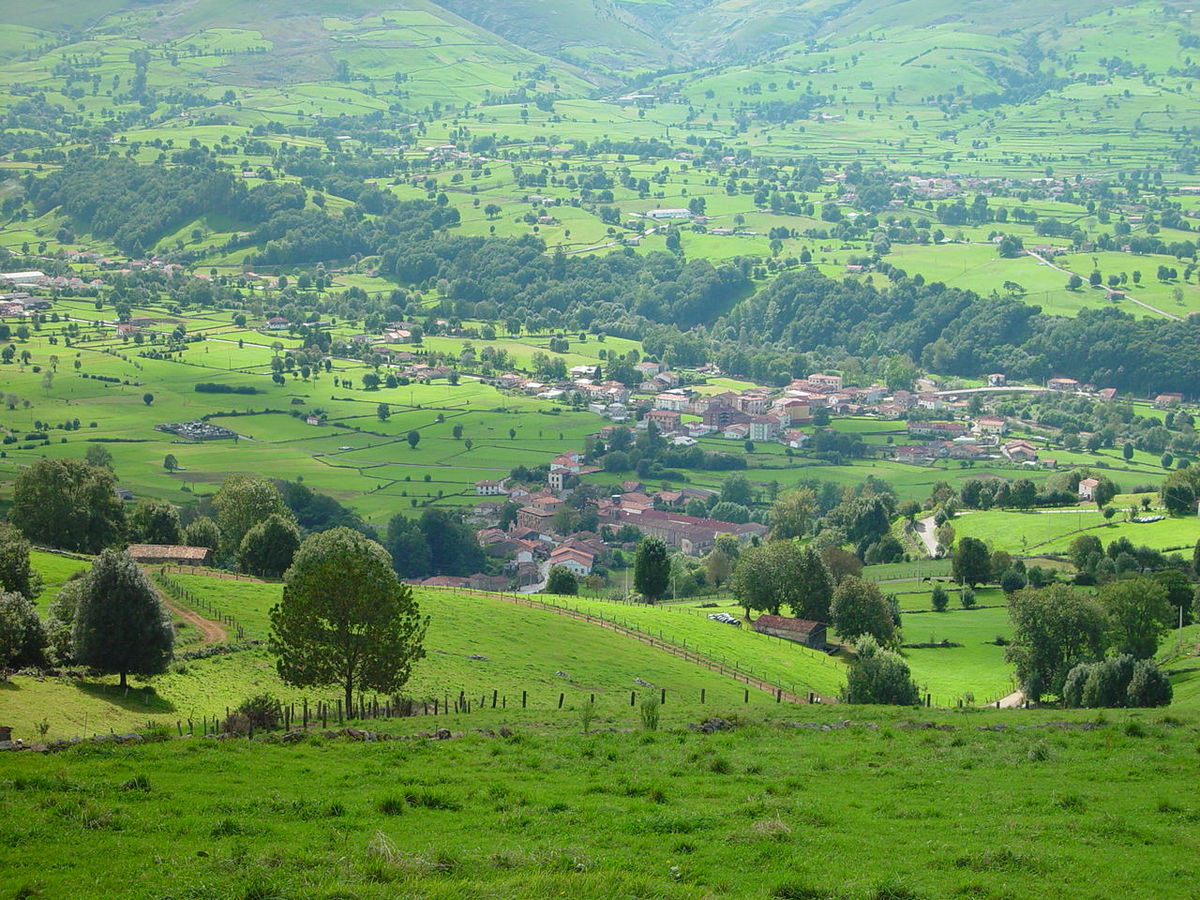
Spread across four kilometres of Pasiego valley wall, the settlement is less a village than a loose federation of stone cottages called cabañas pasiegas. Each stands in its own meadow, lower storey for cows, upper for people, exactly as it was in the 1800s when butter from these hills supplied Madrid’s royal household. Modern additions are limited to satellite dishes and the occasional PVC window, both tolerated rather than welcomed.
A landscape that refuses to flatten
Everything worth looking at lies uphill or downhill. The word llano (flat) is used locally as a joke; even the football pitch tilts. From the church, a web of sunken lanes—camberas—radiates into waist-high grass. They were built for ox carts, not Corsas, so visitors should park on the verge without blocking the galvanised gates. Leave 30 cm more than seems necessary; farmers need the width for tractors at dawn.
Walking is the simplest, and often the only, activity. A thirty-minute loop south-east drops to the Río Miera, where alder roots knot like old rope, then climbs back through holm oak and gorse. The gradient is short but vicious; heart-rate monitors spike faster than on a Tube escalator during rush hour. In May the slopes are yellow with broom and the air smells of cider from the apple orchards above Vega de Pas. By October the same hills turn the colour of burnt toast and the wind carries wood-smoke from cottage chimneys.
Cyclists arrive with mountain bikes and low expectations of their lowest gear. The old drove road to San Roque de Riomiera gains 400 m in 5 km, surface a mosaic of loose shale and cow hoof prints. Descending requires more nerve than ascending; farmers have nailed old tyres to the gateposts to save their walls from speed wobble casualties.
Food that travels no further than the dairy
There is one bar, Casa Marcial, open from 7 a.m. until the last regular leaves. Coffee is €1.20 if you stand, €1.50 if you sit. The house speciality is quesada pasiega, a baked cheesecake slice the texture of set custard, lightly flavoured with lemon. It is served warm at 11 a.m. and usually gone by 11.30. Sobao, a buttery muffin the size of a cricket ball, keeps for days and fits neatly into a walking pocket; locals dunk it in red wine, visitors tend to choose coffee.
Proper meals require forward planning. The nearest restaurant is in Vega de Pas, ten minutes away by car, where Asador El Caserío grills chuletón—a beef rib-eye the thickness of two iPhones—over holm-oak embers. Ask for hecho al punto (medium) unless you enjoy meat that still twitches. Vegetarians should request the menestra, a vegetable stew bulked out with chickpeas and cabbage; it is prepared only if the chef’s mother is in the mood, so ring ahead.
Cheese is bought direct from the stone hut opposite the church on Friday mornings. Queso de nata tastes like Wensleydale that has spent a gap year in double cream. It comes wrapped in waxed paper and a warning: leave it in a hot car and you’ll arrive home with fondue.
Weather that edits the timetable
Atlantic clouds arrive without announcement, sliding up the valley like rude guests. One moment the meadows glow green enough to hurt your eyes; the next, the world ends ten metres beyond your boots. Mist can last twenty minutes or two days; the locals call it la boina (the beret) and treat it as background noise. Carry a lightweight waterproof even when the sky in Santander is cloudless; San Pedro sits 550 m above sea level and makes its own microclimate.
Summer afternoons average 24 °C, cool enough to leave butter out but hot enough to burn necks. Rainfall is double that of London, yet falls in sharper, shorter bursts. Winter is surprisingly functional: daytime 7 °C, nights just below zero. The road is gritted to the church; anything steeper is left to the sun and the cows. Snow settles perhaps twice a year and melts within 48 hours, turning every lane into axle-deep caramel.
Practicalities that matter more than postcards
Getting there: Ryanair and easyJet fly London-Stansted and Manchester to Santander year-round. Hire cars are stacked directly outside arrivals; refuse the upgrade—narrow lanes punish wide wing mirrors. Take the A-67 to Torrelavega, then the CA-280 into the Pas valley. The turning for San Pedro is signposted but easy to miss at 70 km/h; if you reach the tunnel you’ve overshot by two kilometres.
Where to stay: Two village houses offer rentals, both booked most weekends by families from Santander. Contact details are pinned to the church noticeboard in handwritten Spanish; Google Translate and polite persistence work. Otherwise, Hotel Spa Villa Pasiego in Vega de Pas has twenty rooms, a heated pool and week-day rates under €80 including breakfast.
When to come: Mid-May to mid-June for orchids and uncrowded lanes; mid-September for russet grass and migrating kites. August is warm but busy—Spanish second-home owners fill every driveway with SUVs. November to March is perfectly feasible if you enjoy your own company and remember wellies.
What not to do: Do not picnic in a meadow without closing the gate behind you. Do not assume a footpath on Google Maps is public; many cross private pasture and end at a bull’s ribcage. Do not expect phone signal inside the valley—WhatsApp works from the church steps and nowhere else. Finally, do not ask for a souvenir; the village sells nothing you can carry away except cheese, cake and the memory of a place where the cows have right of way.