Full Article
about Villacarriedo
Capital of the Pas valleys
Hide article Read full article
A slow start in the valley
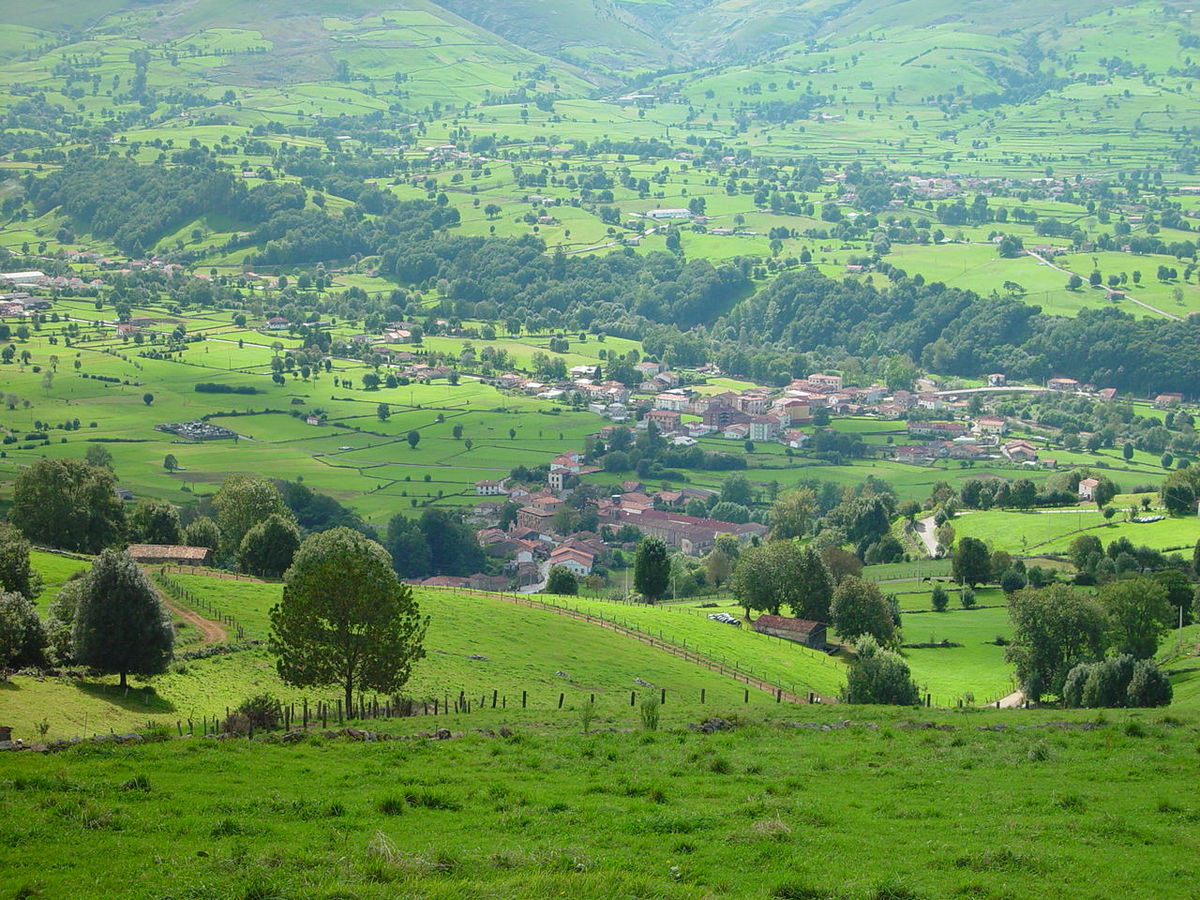
By mid-morning, when the damp still clings to the grass, the centre of Villacarriedo carries a soft rhythm: footsteps on gravel, a door opening somewhere nearby. Tourism in Villacarriedo usually begins like this, unhurried, along a short street where stone houses line one side and meadows appear suddenly beyond low walls.
Light takes its time settling into this valley. It first touches the tops of the trees, then gradually drops towards the façades. Grey and ochre walls shift in tone as the day moves on. This is not a place of long urban routes. The centre can be understood in under an hour. What matters is looking closely: worn coats of arms, timber darkened by years of rain, heavy gates that have seen decades pass.
Landmarks among trees and stone
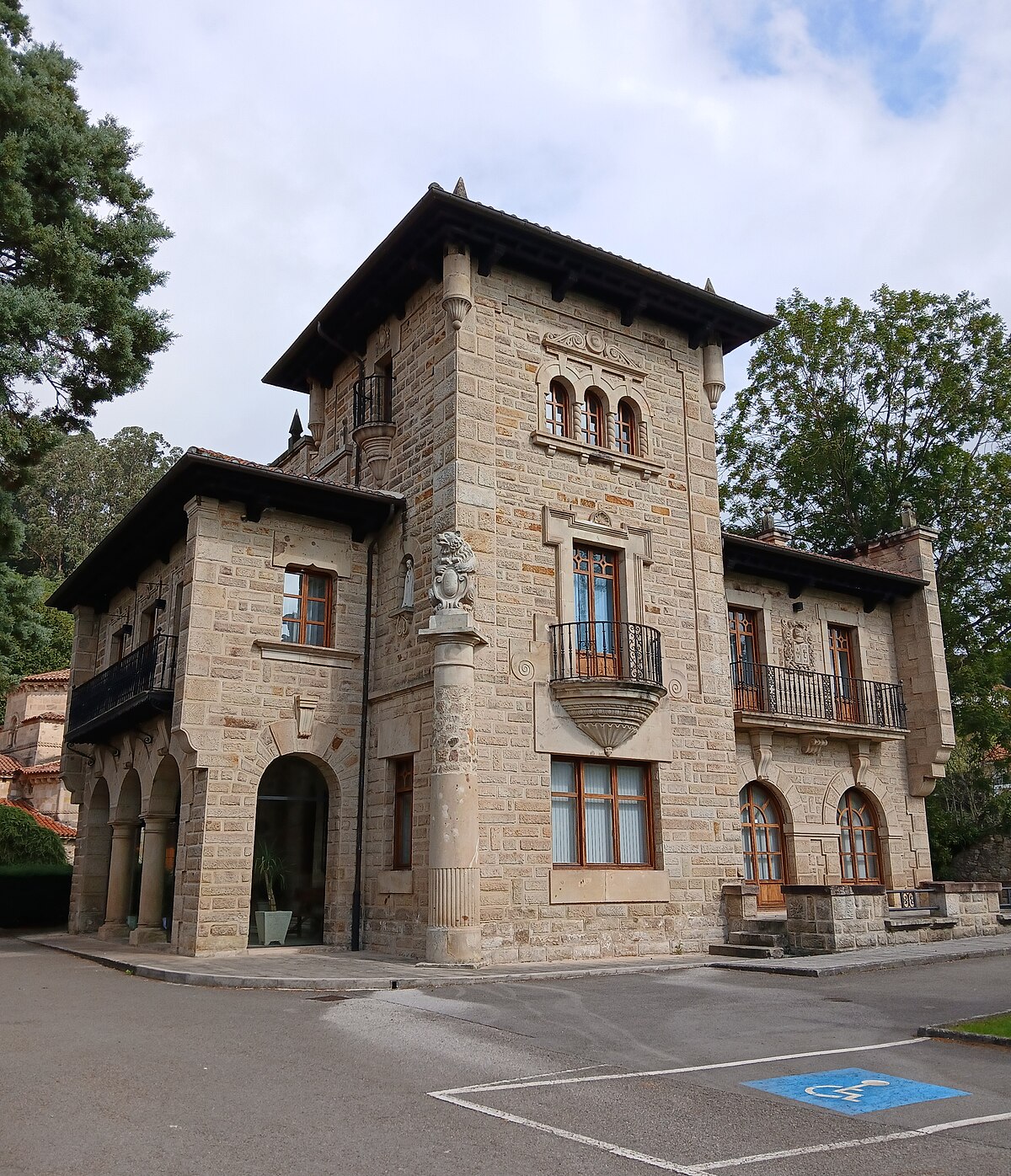
The building that draws the most attention is the Palacio de Soñanes. It appears almost without warning among tall trees, its pale stone and sloping roof defining its outline. The palace is linked to Cantabrian civil Baroque architecture and is often mentioned as one of the best-known buildings in the valley.
The interior is not always open to visitors, so the usual approach is to walk around it. From certain angles, the volumes of the building stand out more clearly, along with its relationship to the surrounding landscape. Early in the morning there are fewer cars, and the setting feels calmer.
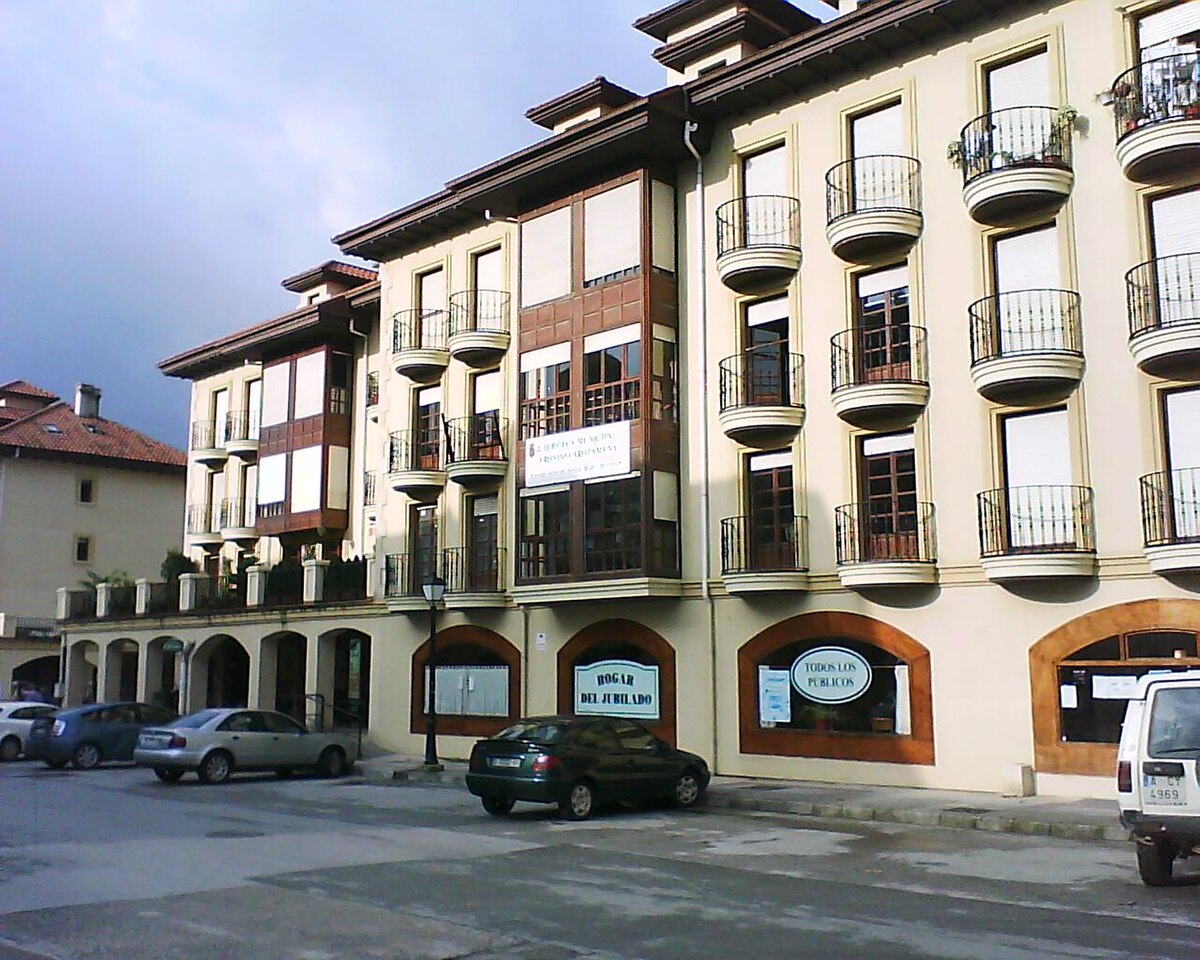
Very close by stands the iglesia de San Pedro. Its origins go back a long way, though it has changed over time. The stone of the tower appears darker than the rest of the structure. Around it are several traditional pasiego houses, with coats of arms on their façades and wooden balconies overlooking the street.
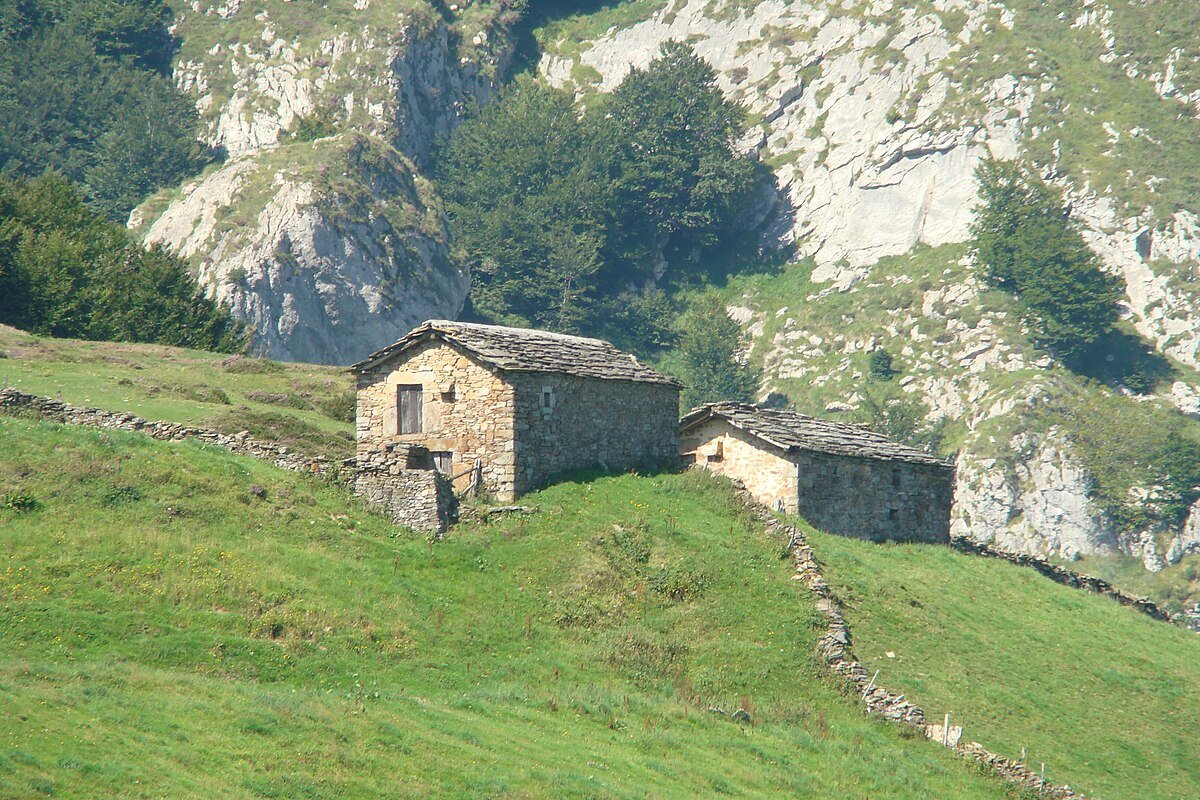
A few minutes away from the centre, enclosed meadows begin to appear, edged with stone walls. Some still contain cabañas pasiegas. These are simple rural buildings, low against the ground, with sloping roofs designed for the constant rain of the area.
Walking, noticing, slowing down
The most natural thing to do here is walk. There is no need to follow a marked route. Take a street and watch how the village opens out towards the fields. Sometimes the sound of a tractor carries from far away, or the bell of a cow that is not yet in sight.
Materials tell part of the story. Stone changes colour depending on the moisture in the air. The wood of balconies and gates is often darkened by years of rain. On many houses, it is easy to see where the older structure ends and a more recent renovation begins.
Small local shops often carry products from the Pasiegos area. Sobaos and quesadas are typical, both traditional pastries closely tied to daily life here, not just something to take away as a souvenir.
Cycling is another way to move through the area. Secondary roads cross meadows and scattered neighbourhoods, though some stretches involve steep climbs. It is best to take them steadily and stay aware of agricultural vehicles.
Local traditions and seasonal moments
The feast of San Pedro, towards the end of June, remains an important point in the local calendar. It usually includes religious events and celebrations in the streets, although the atmosphere can vary each year depending on how many neighbours take part.
During the summer, smaller neighbourhood festivals appear in different parts of the municipality. These tend to include music, gatherings and activities, sometimes announced only a few days in advance.
In December, the Feria de Santo Tomás is traditionally held, linked to rural life and its rhythms. The exact dates can vary, so it is worth checking local information if it coincides with a visit.
If you only have a few hours
Start around the Palacio de Soñanes. Walk its perimeter and look for a viewpoint where the whole building can be seen framed by trees. From there, head towards the iglesia de San Pedro and wander through the nearby streets without a fixed plan.
In less than an hour, it is possible to get a clear sense of the place. If the ground is wet, some of the paths leading into the meadows can become slippery, so it is better to remain within the streets of the village centre.
For parking, the simplest option is to leave the car in more open areas and continue on foot. Some streets are narrow and still used for agricultural work.
When the valley changes
Spring alters the valley noticeably. The meadows turn an intense green, and the air often carries the scent of freshly cut grass. Mornings can still be cool.
Autumn has its own atmosphere. Mist appears early in the day, leaving the village partially hidden for a while. When it lifts, light falls sideways across the façades.
Summer brings more movement, especially at weekends. For a quieter visit, weekdays and earlier hours of the day tend to work better.
Reaching Villacarriedo
Villacarriedo lies in the Pas-Miera area, within the Valles Pasiegos of Cantabria. From Santander, the journey by car usually takes around three quarters of an hour, depending on traffic and the chosen road.
Access is via regional roads that pass through narrow valleys and stretches of meadow. The final part of the journey follows this same pattern, with the landscape gradually closing in before the village appears.