Full Article
about Villafufre
Indian-style Pasiego architecture
Ocultar artículo Leer artículo completo
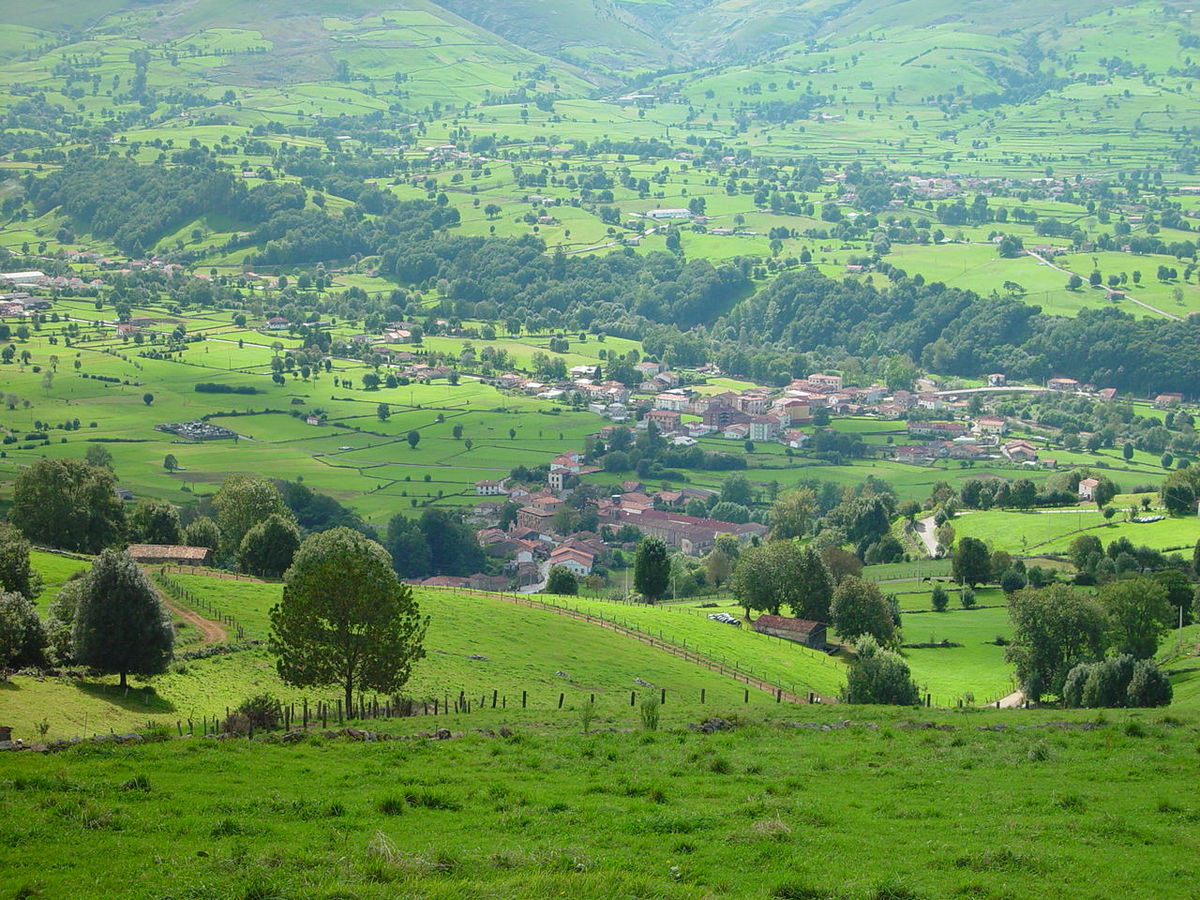
The valley fog lifts just long enough to reveal a scatter of stone houses, their slate roofs still dripping from last night's rain. At 180 metres above sea level, Villafufre sits low in the Pas-Miera basin, not perched dramatically on a ridge as first-time visitors often expect. The surrounding folds of Cantabrian countryside rise gently at first, then abruptly, creating a natural amphitheatre where cattle outnumber people and the loudest sound is often a distant tractor.
This is motorway country only in theory. The A-67 lies ten minutes north, yet drivers shooting between Santander and Torrelavega rarely notice the turn-off. Those who do discover a municipality spread thinly across five hamlets—Helguera, Heras, No, Pujayo and the同名 village—connected by lanes so narrow that hedges brush both wing mirrors. Sat-navs hesitate here; the road atlas still lists the old CA-270 while newer signs insist on C-270. Both refer to the same ribbon of tarmac that twists past dairy farms and 200-year-old granaries converted into weekend retreats.
Arrival feels like stepping into the pause between sentences. There is no formal centre, no plaza mayor ringed with cafés. Instead, the stone church of San Martín marks the nearest thing to a hub, its bell tower visible above farmhouse roofs. Inside, the building is plain to the point of austerity—useful for orientation rather than photographs. Stand on the church steps and you realise the village map is written in grass: meadows climb south toward the Sierra del Escudo, each field stitched to its neighbour by chestnut fences and the occasional iron gate. Public footpaths exist, but they are unsigned. Locals advise following the track that looks most used and turning back at the first closed gate; if livestock can pass, so can you.
The altitude makes weather a daily lottery. Atlantic systems stall against the coastal range, so sunshine can collapse into hill fog within half an hour. When the cloud base drops, colour drains from the landscape; stone walls turn the same grey as the sky and distances shrink to the next hedgerow. Bring a waterproof even in July—morning dew is heavy and grass stays wet until midday. Conversely, clear winter days can be razor-sharp, with snow visible on the Picos at 40 km distance. Those photographic meadows of travel brochures? They photograph green only between May and early July; August burns them straw-yellow, and from November to March the valley palette is brown, grey and rust.
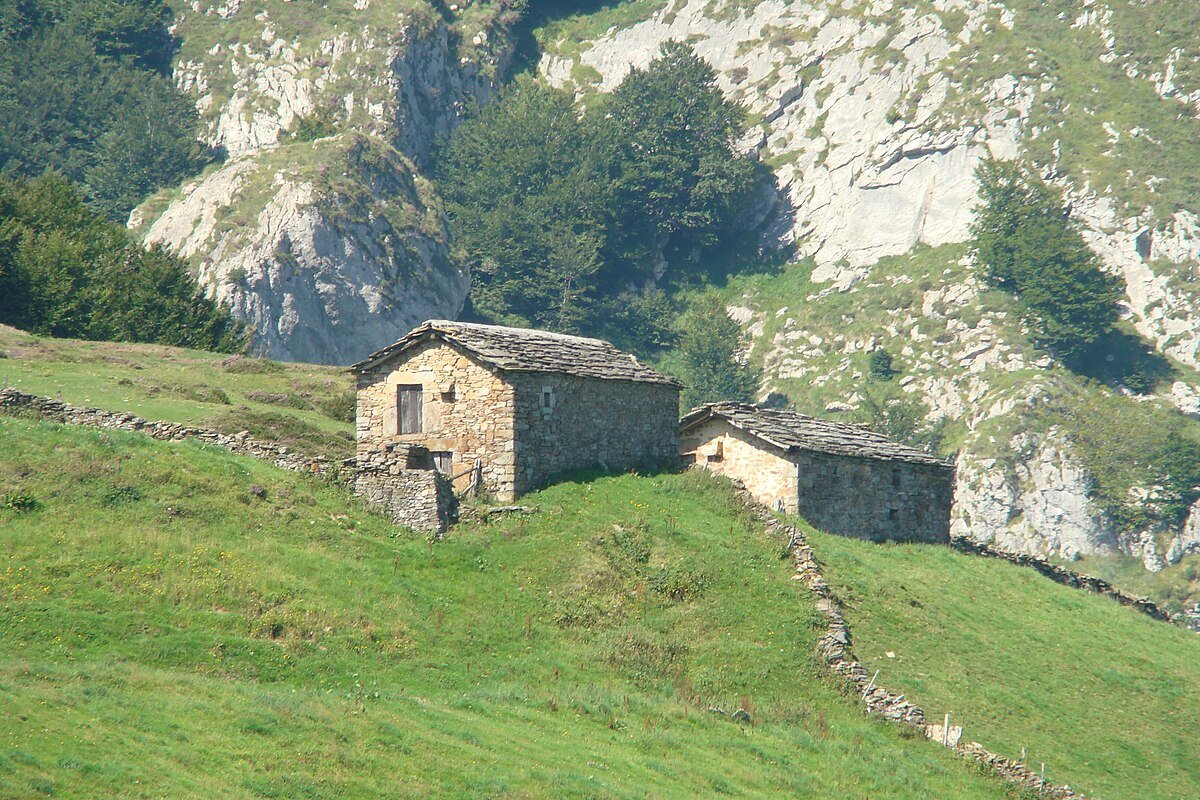
Walking options are short rather than epic. A circular hour from the church leads past stone cabins called cabañas pasiegas—squat, chimney-less buildings once used for cheese-making. Many still serve their original purpose, so respect closed doors; a working dairy is not a heritage display. The ground underfoot is rarely level: cow paths cut diagonals across slopes, and after rain the red clay clings to boots like wet cement. Proper tread is essential; fashion trainers disappear into the mire within minutes. For longer routes you need wheels, not boots. Ten minutes south by car the road climbs to 600 m at San Pedro del Romeral, gateway to beech forest and limestone outcrops where griffon vultures ride thermals. Attempting to walk there on the main road is foolish—there is no verge, and milk tankers take the bends at alarming speed.
Food is dairy-heavy and proudly local. The nearest shop is a tiny ultramarinos in neighbouring Santiurde where you can buy sobaos—buttery sponge cakes wrapped in wax paper—or a wheel of quesada, a grainy cheesecake that keeps for days. For a sit-down meal you have two choices, both on the main road. La Dama Boba serves roast suckling lamb that tastes like a slower, Spanish version of British spring lamb; ask for it poco hecho if you prefer pink. Their pumpkin and almond tart has been nicknamed “Cantabrian Bakewell” by returning British guests. Across the carriageway, Asador El Fresno opens only at weekends and fills with extended families ordering cocido montañés, a hearty bean and pork stew that defeats even healthy appetites. Sunday lunch starts at 13:30 sharp; arrive after 15:30 and the kitchen is closed until evening, by which time most visitors have driven home.
Practicalities are straightforward once you abandon city expectations. There is no cash machine—stock up in Torrelavega before you arrive. Mobile signal flickers inside thick stone walls; step into the lane for 4G. Parking is free but requires common sense: leave ten metres for farm machinery to swing through gateways. A tractor blocked for ten minutes can disrupt the milk collection schedule of an entire valley. Accommodation is limited to a handful of self-catering cottages and one manor house divided into apartments. British owners of the latter advertise “20 minutes to Santander airport” as their prime asset; guests book for the convenience of a 07:00 flight rather than for the village itself.
That airport link shapes most itineraries. Villafufre works as a soft landing after a late evening arrival, or as a final night before an early departure. Treat it as a place to decelerate: unpack the walking boots, buy fresh milk that still smells of pasture, listen for the church bell that marks the hour but never seems in a rush. Stay longer than a morning and you will find yourself adopting local rhythms—coffee at 11:00, lunch at 15:00, lights out by 23:00 when the lane grows pitch black and the Milky Way reappears above the ridge.
The village rewards curiosity rather than box-ticking. You will leave without having seen a famous landmark, but you might understand why Cantabrians measure distance in time rather than kilometres, or why every farmhouse keeps a wooden stick by the door (to lever cattle gates shut). Come prepared for damp grass, sudden fog and the occasional smell of silage. Accept those details and Villafufre offers something increasingly rare: a corner of rural Spain where tourism is still incidental, not the main trade.