Full Article
about Herrerías
Tradition in the Nansa
Hide article Read full article
A scattered municipality shaped by iron and pasture
Herrerías sits in the Saja‑Nansa region of Cantabria, stretched along a narrow valley that links inland areas with the estuary of Tina Menor. It is not a single compact village. The municipality is made up of small neighbourhoods and hamlets spread across meadows and wooded slopes, with space and distance defining how the place feels.
The name points to an activity that has long disappeared. Ironworks operated here from the medieval period, using timber from surrounding hills to produce charcoal and work the metal. That economy shaped both the place names and the way land was organised. Today, livestock farming has taken over as the main activity, and the landscape reflects that shift.
Daily life centres on small settlements such as Cabanzón and Bielva. These are separated by fields and patches of woodland rather than joined into a continuous town. Traditional houses combine stone and timber, often with south-facing balconies and large gateways that once led to stables and haylofts. Some façades still display coats of arms or inscriptions dating from the seventeenth to nineteenth centuries, when cattle farming became firmly established.
San Martín and the parish centre
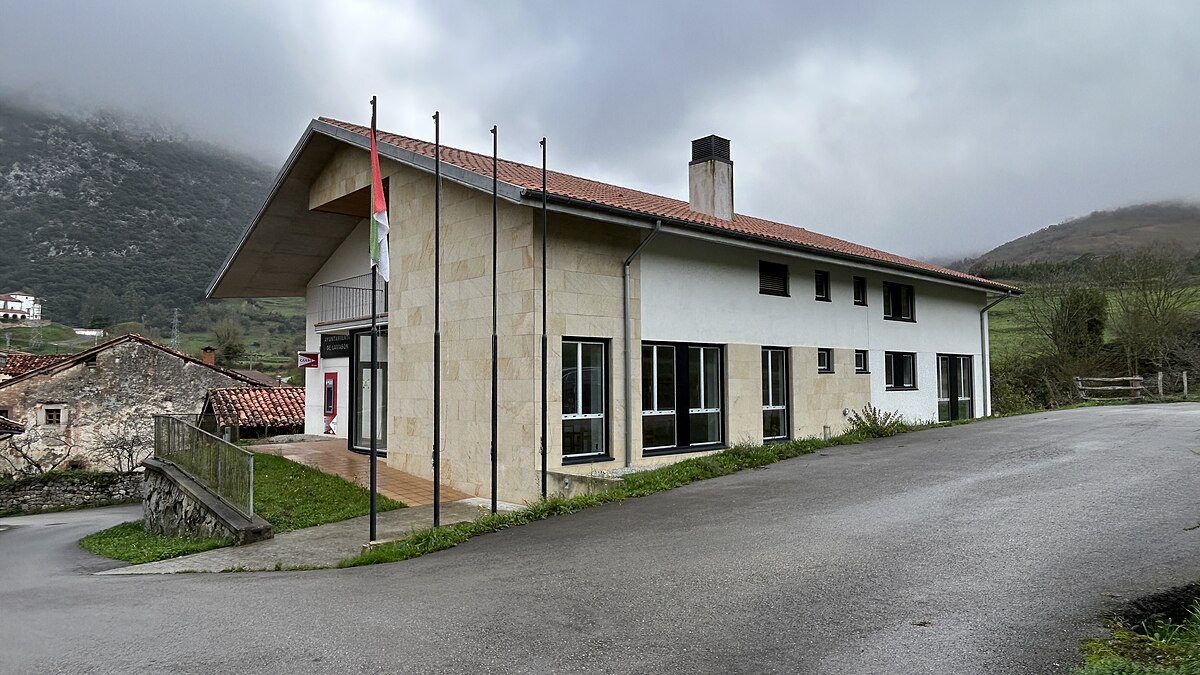
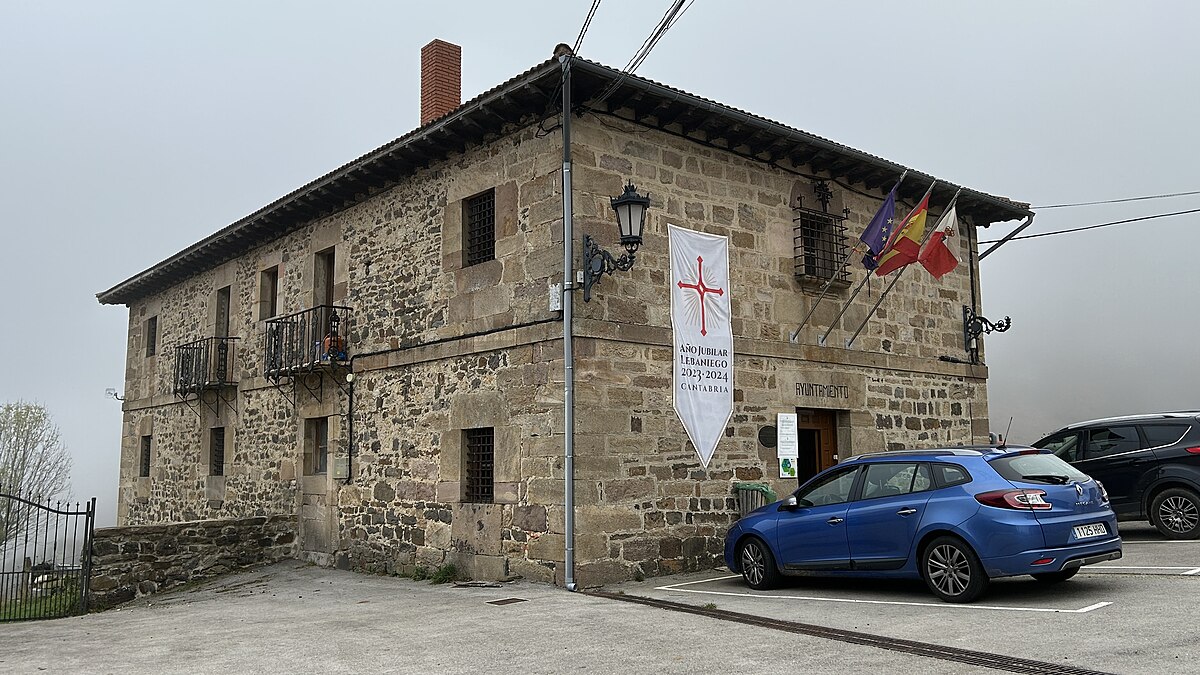
The parish church of San Martín stands in the neighbourhood where the town hall is located. The building shows several phases of construction. Parts of it appear to date from the early modern period, with later alterations adapting the space to the needs of the local population.
Its appearance is restrained, in line with many rural churches across Cantabria. A simple bell gable defines the outline, while the atrium acts as a small gathering space. The interest lies less in decorative detail and more in its role within the community. For centuries, this church brought together residents from the various scattered neighbourhoods across the valley.
Neighbourhoods and domestic architecture
Moving through Herrerías means travelling from one small cluster of houses to another along local roads or paths that cross open land. Cabanzón preserves many examples of traditional mountain architecture. Houses are built with masonry walls, timber balconies, and pitched roofs designed to shed the frequent rain typical of this part of Cantabria.
Details on doorways and façades help tell the story of these buildings. Dates carved into stone lintels and small protective crosses appear on some entrances. These touches are modest, yet they offer clues about the people who lived here. Many houses were designed as both home and workplace, with the family living upstairs and livestock kept below alongside tools and equipment.
Between the neighbourhoods, dry-stone walls mark boundaries, wooden fences divide plots, and meadows are still cut for fodder. Modern agricultural buildings stand alongside older structures, making it clear that this is a working landscape rather than a preserved display.
Paths across the valley
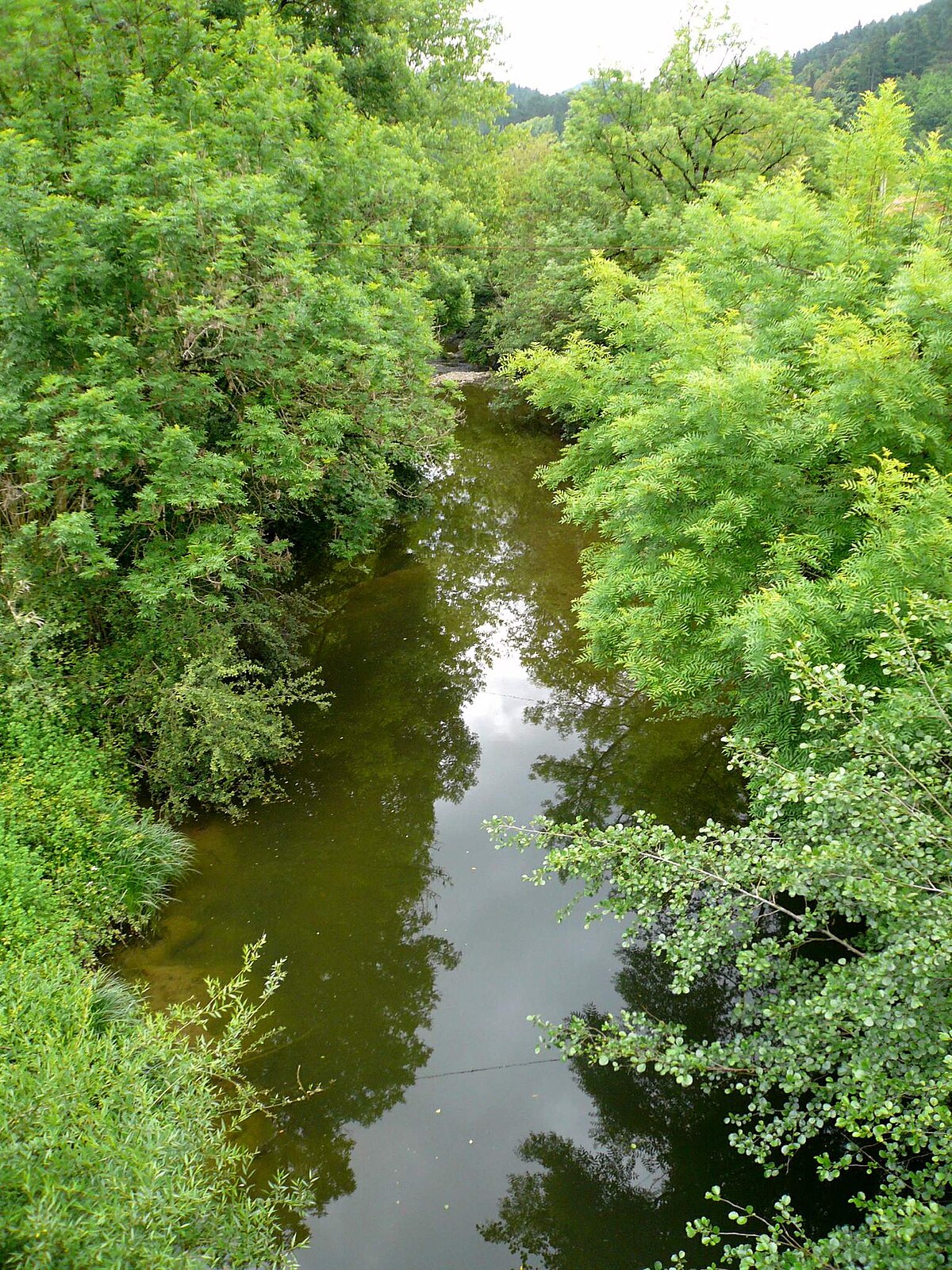
The area is easy to explore on foot without detailed planning. Agricultural tracks and local paths connect fields and settlements, forming a network used daily by residents. Some of these routes follow small streams that run down from the slopes and eventually join the Nansa or other minor watercourses.
Stone bridges appear at intervals along these paths. Most are simple in form, often with a single arch. They are not monumental structures, yet they reflect a long-standing system of crossings from a time when roads were unpaved and transport depended on carts or animals.
Moisture is present for much of the year. Moss and ferns cover embankments and stones, so walking requires care when the ground is wet. The pace here tends to be slow, shaped by the terrain and conditions rather than any marked route.
Wildlife along the woodland edges
Open pasture alternates with areas of woodland dominated by oak, chestnut, and plantations of conifers. The edges where fields meet trees are where much of the local wildlife is found.
With patience, it is possible to spot common birds of prey from northern Spain, such as buzzards or kites, gliding above the meadows. Early in the day, roe deer sometimes appear near the margins of the forest, though they retreat quickly once they sense movement.
There are no fixed viewing points to rely on. A simple approach works best: pause along a quiet path, observe for a while, then continue.
Food shaped by the valley
Cuisine in this part of Cantabria remains closely tied to what is produced locally. Cocido montañés is a regular presence on tables in the region, a hearty dish made with beans, cabbage, and assorted pork cuts. Beef from cattle raised in the surrounding valleys also features prominently.
Cheeses from nearby producers, often made on a small scale, are common, as are homemade jams. In autumn, when conditions allow, wild mushrooms collected in the surrounding hills are used in straightforward stews.
Before setting out
Herrerías can be covered fairly quickly if the focus is only on its main neighbourhoods. It gains more interest when included as part of a wider route through the Saja‑Nansa region.
Local roads are narrow and winding, which is typical for valleys like this. Driving requires patience. Many tracks branching off the main road cross farmland, reinforcing the sense that this is an inhabited and productive landscape rather than a place arranged for visitors.