Full Article
about Mazcuerras
Entrance to the Saja valley
Hide article Read full article
A valley that wakes slowly
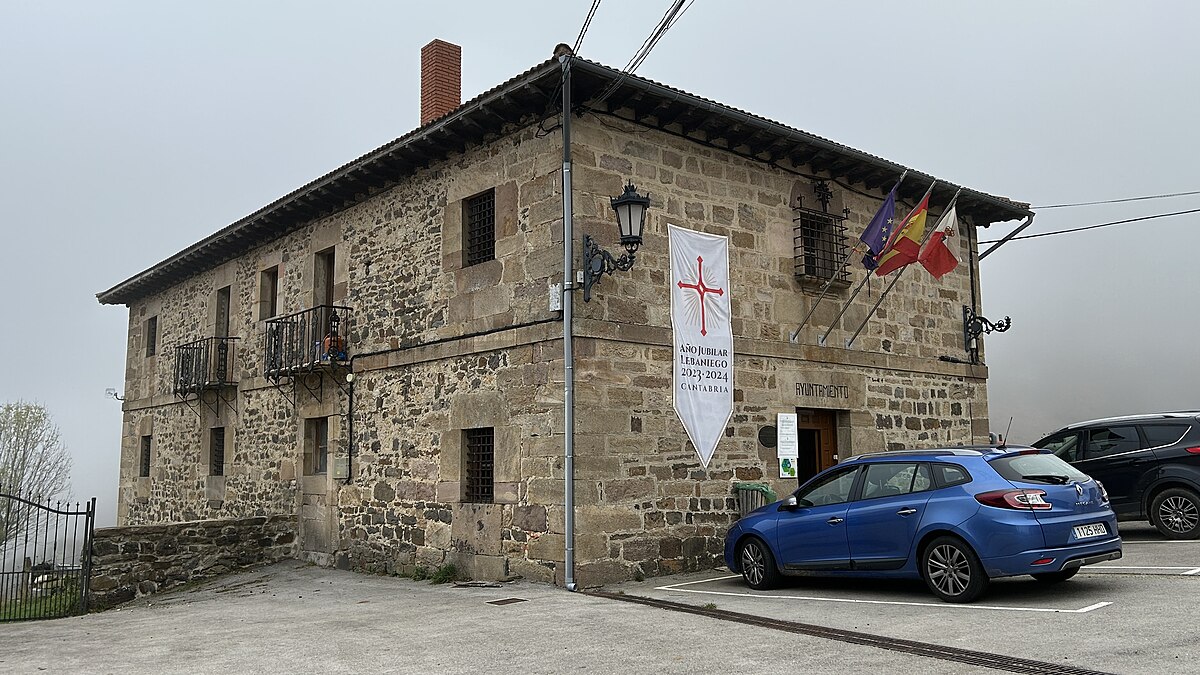
Church bells carry across Villanueva de la Peña while the valley is still half covered in mist. Slate roofs begin to take shape against a pale grey sky, and the first chimneys send out the smell of firewood drifting along the street. It is a quiet start to the day. A few early risers gather in a local bar, talking about the weather and the cattle, as tends to happen in this part of Cantabria.
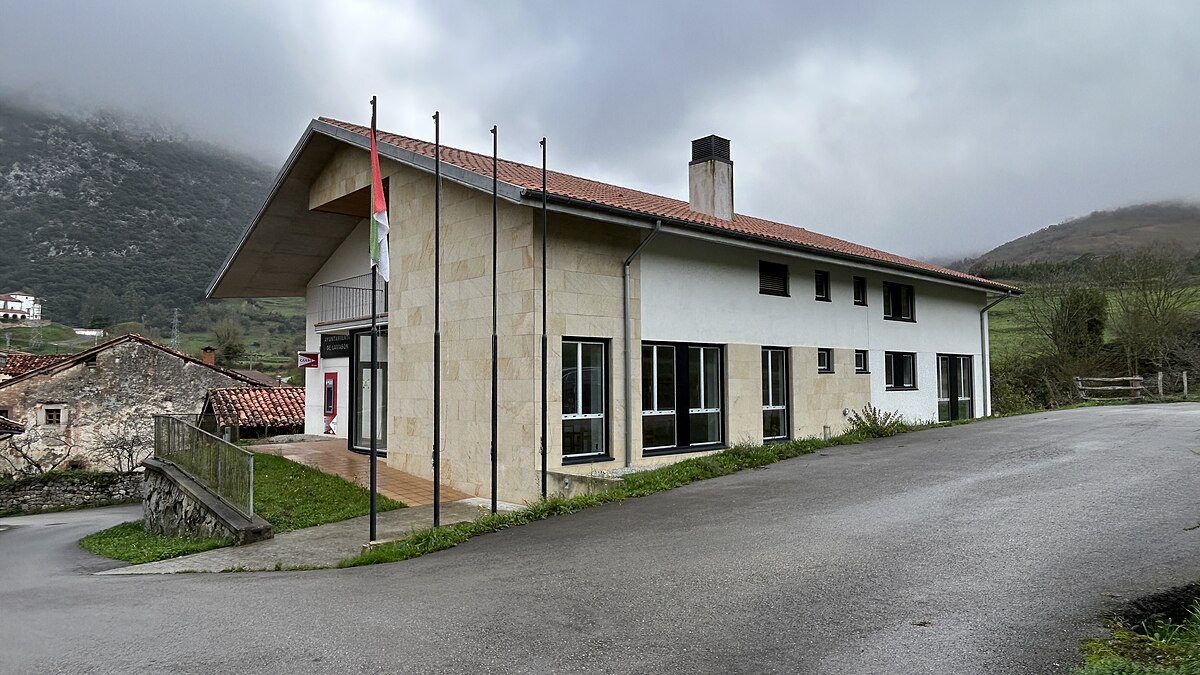
Mazcuerras is not a single village but a municipality made up of seven small settlements: Cos, Herrera de Ibio, Ibio, Mazcuerras, Riaño de Ibio, Sierra de Ibio and Villanueva de la Peña. They sit close together, separated by meadows, narrow roads and patches of woodland. Walking between them feels continuous rather than fragmented. The road sometimes cracks softly underfoot, and when a north wind passes through, the beech trees on Monte Ibio rustle with a dry, papery sound.
Stone that keeps its past
In Ibio, the Torre de los Guerra rises above lower houses, a structure that clearly belongs to another time. It is usually dated to the 15th century and, unusually for towers of this kind in Cantabria, it is still inhabited. The stone, darkened by damp and long winters, holds a muted ochre tone.
Close by stands the Palacio de Gómez de la Torre, a manor house from the early 18th century. Its appearance is restrained, with iron balconies and coats of arms on the façade, a style often found in the inland valleys of the region.
Cos offers a different kind of historical trace. The ermita de Cintul sits partly hidden among oak and chestnut trees. The building combines elements from different periods, with references often pointing to medieval origins. Nearby lie the remains of a small necropolis known as Tresileja, discovered towards the end of the 20th century. The area feels notably still, even on windy days. Sound carries very little beyond birdsong and the occasional distant car.
Horses, fields and quiet work
The Centro Militar de Cría Caballar de Ibio occupies a large stretch of land in the valley. In the early part of the day, the air carries the scent of damp straw and leather. From outside, fenced plots can be seen where mares graze. Closer by, there are the sounds of neighing and the metallic clatter of stable gates. The facility has been here for decades and forms part of everyday life in Mazcuerras.
On the outskirts, several long-established plant nurseries add another layer to the landscape. Their greenhouses stretch out in rows, and lines of pots shift in colour with the seasons. On damp days, which are frequent in this part of Cantabria, the smell of wet soil and fertiliser lingers in the air. The work is steady and largely quiet: people moving carts, watering plants, checking leaves carefully for signs of pests.
A literary valley: Luzmela
Mazcuerras became closely linked to the writer Concha Espina during the 20th century. She spent time here and set her novel La niña de Luzmela in this environment. The story was so influential that “Luzmela” became a popular name for the valley itself.
One building still reflects that period. The house known as Las Magnolias, an indiano-style mansion built in the late 19th century, stands among tall trees and slightly overgrown gardens. The term “indiano” refers to homes built by Spaniards who returned from the Americas, often with a distinct architectural style. Even from the road, its glazed galleries and pale façade stand out against the darker stone houses found elsewhere in the municipality.
At the time, figures from the cultural world would come here in search of calm, away from Madrid. That atmosphere has not entirely disappeared. There is a sense that the valley holds on to a slower rhythm, shaped more by landscape and weather than by urgency.
Moving between villages and hills
A circular route links the seven villages of Mazcuerras using quiet roads and paths. The terrain is mostly flat, making it suitable for walking or cycling. Many people take their time with it, stopping in village squares along the way.
In summer, starting earlier in the day is advisable, as the sun can be strong in the open stretches between meadows. Shade comes and goes, depending on the section.
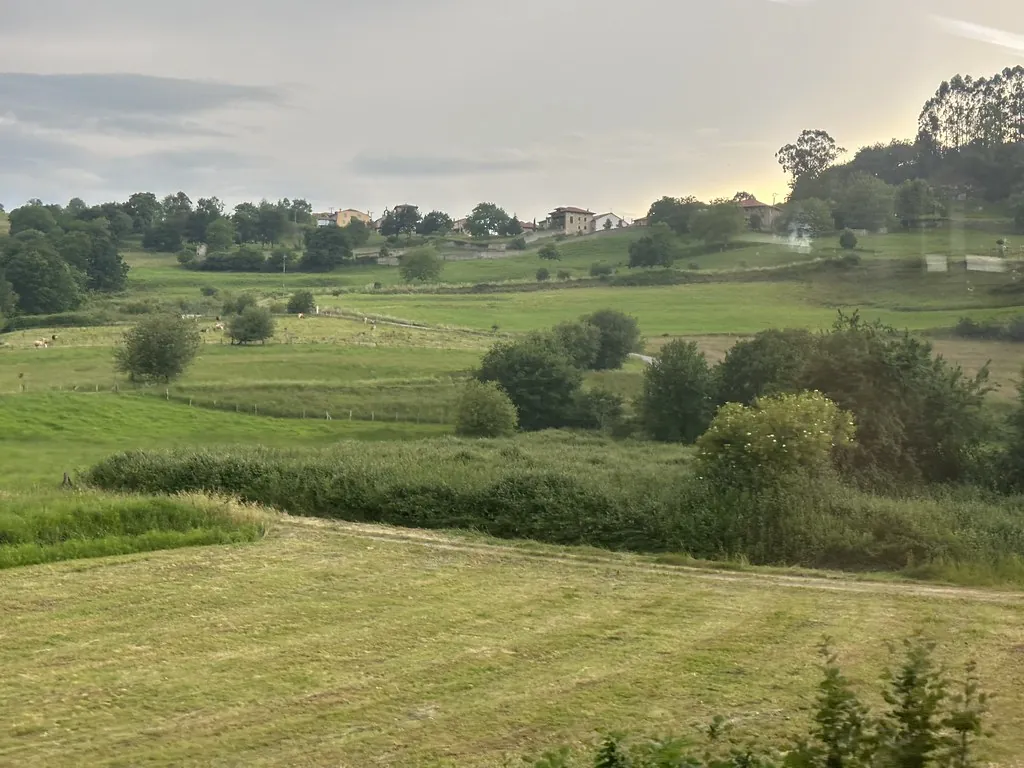
Another option is to head up Monte Ibio. The most common ascent begins near the Alto de San Cipriano and climbs gradually. At the top, on clear days, the whole valley opens out. Green fields spread across the landscape, rooftops appear scattered between them, and in the distance there is sometimes a faint line of sea, partly veiled by haze.
Seasonal events also shape life here. During summer, the Fiesta del Bosque takes place, when several squares across the municipality fill with stalls selling local crafts and produce. As night falls, the smell of grills and the sound of music drift through the streets, mixing with smoke that lingers between the houses.
The fiestas of Santiago in Cos, held towards the end of July, are smaller in scale. A procession passes through the village, followed by music and gatherings that continue into the night, with neighbours talking in the square.
Reaching Mazcuerras and choosing the moment
Mazcuerras lies less than an hour by car from Santander. The route heads west before turning onto a road that enters the valley through meadows and low hills. Having a car makes it much easier to move between the different villages, as public transport options are limited.
September often brings a balanced atmosphere. Mornings tend to begin with low mist, which gradually lifts to reveal clear and calm days. August feels different, especially at weekends, when there is more movement and activity across the area.
What remains consistent is the pace. Mazcuerras unfolds gradually, in the sound of bells, the presence of stone buildings, and the steady work that continues in fields and nurseries. It is a place defined less by individual sights and more by how everything connects across the valley.