Full Article
about Bareyo
Unspoiled beaches of Trasmiera
Hide article Read full article
Three villages, one shared rhythm
There is a moment, just after passing the sign that reads “Cabo de Ajo – Fin del mundo conocido”, when the GPS becomes less helpful and the sea starts to take over. That is when Bareyo begins to make sense. Here, the Cantabrian Sea is not a backdrop. It leads.
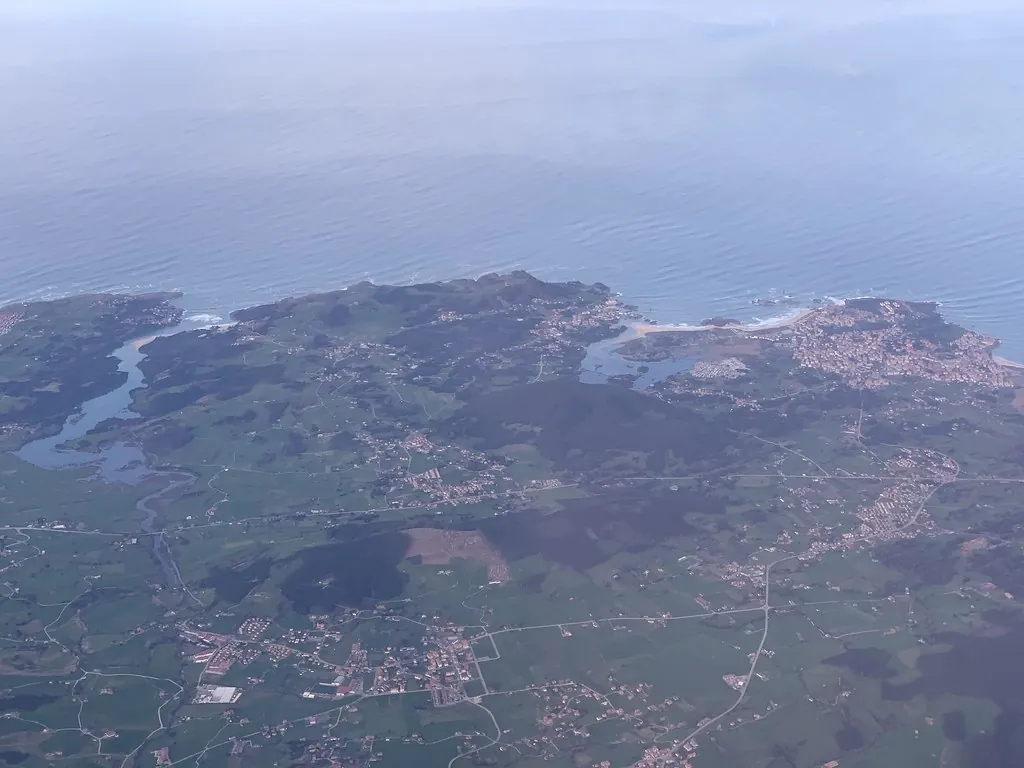
Bareyo is made up of three distinct villages that feel connected in a way that is easy to notice. Ajo acts as the centre, with the town hall, the school and the busiest streets. Bareyo itself is quieter, with the air of an older place where everything moves slowly. Then there is Güemes, which carries a slightly different feel, more open, shaped in part by people who arrived briefly and ended up staying.
The whole municipality can be crossed quickly by car, yet each village keeps its own rhythm. In Ajo, people still stop to chat outside their homes as if time is not pressing. In Bareyo, silence tends to hold until a tractor passes or cows call out from a nearby field. Güemes sits somewhere in between, rural but with a subtle traveller presence that feels unexpected so close to the coast.
Coastline and Cabo de Ajo
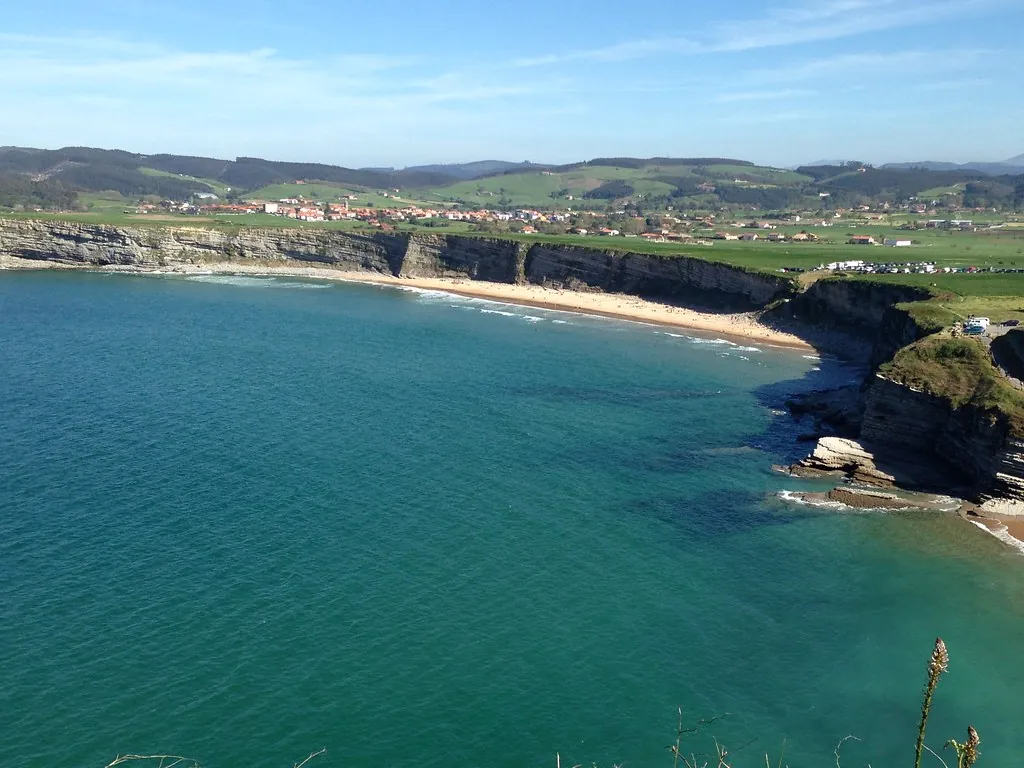
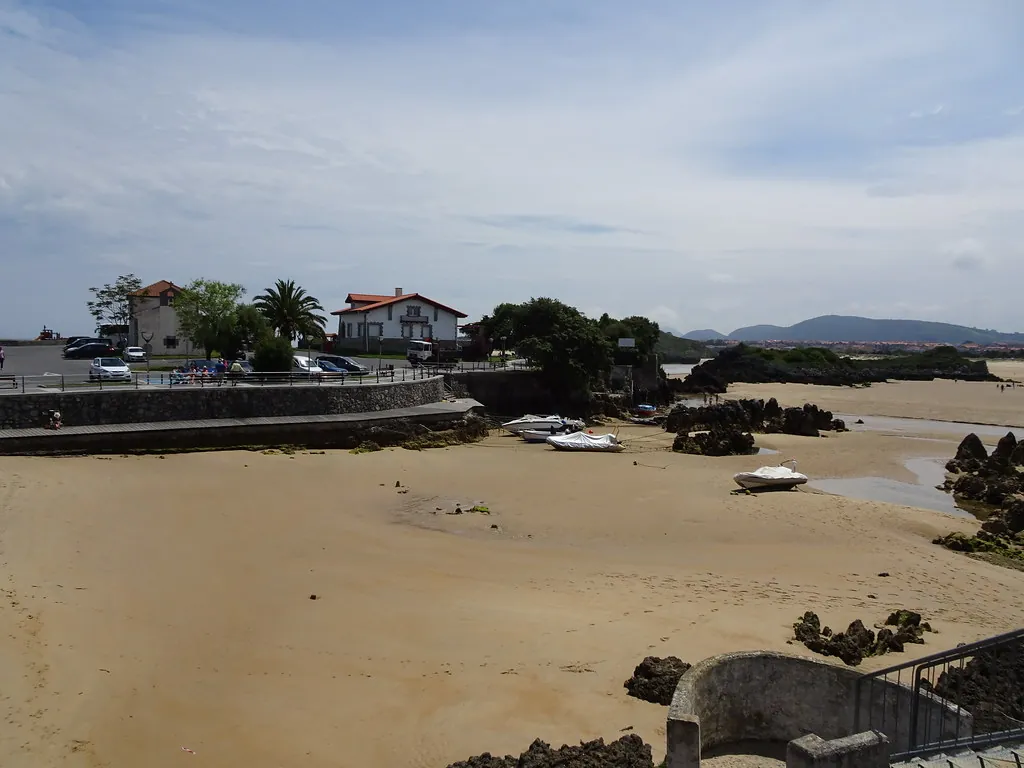
Many visitors arrive looking for the beach at Ajo, once described as a secret spot. That label no longer quite fits. During summer, there is a noticeable flow of people.
Even so, the setting holds its appeal. Cliffs drop into the sea, meadows stretch right to the edge, and the wind rarely leaves hair or clothes untouched.
A short distance away lies Cabo de Ajo, which shifts the atmosphere slightly. It is the northernmost point of Cantabria. The description sounds grand, though in practice it is a lighthouse set on a wide, open headland. What draws people in is simpler: watching the waves roll in and seeing seagulls hold their ground against the wind. It is the kind of place where taking a few photos turns into taking many more than planned.
Santa María de Bareyo
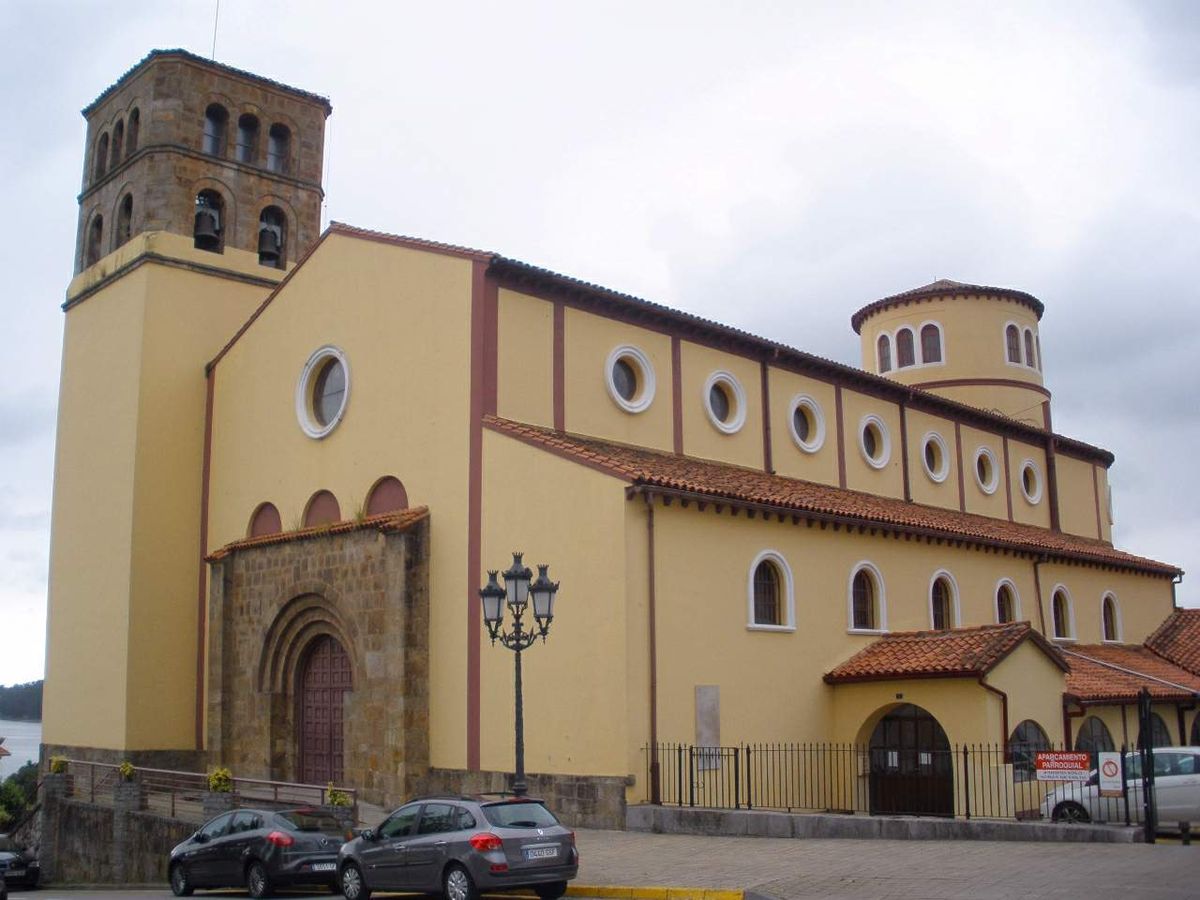
The church of Santa María de Bareyo stands out in a way that feels unexpected. It dates from the 12th century and is built in solid Romanesque style, with thick stone walls and a presence that suggests it has been quietly doing the same job for centuries.
Inside, the baptismal font tends to attract the most attention. It is often described as one of the most carefully preserved pieces of Romanesque work in Cantabria. Expertise is not required to notice that it is something special.
The visit itself is straightforward. There are no elaborate routes or large displays. Entry, a look around, and that is enough. The familiar scent of cold stone and wax lingers, much like in many old churches, unchanged over time.
Summers shaped by camping
Bareyo once had an unusually high number of camping spaces for a municipality of just over two thousand residents. Far more than expected for its size.
That history is still visible. Campsites remain part of the summer landscape, with families returning year after year to the same place. Caravans often look as though they have settled in for good, and routines repeat each season.
Viewed from the outside, it creates an interesting contrast. Some people pass through for a couple of days, moving along the coast. Others have been coming here for decades and move through the villages as if they were at home.
Walking without a map
Bareyo does not revolve around marked walking routes or signposted trails, and that absence works in its favour.
Paths branch off between meadows, often looking more like working tracks than planned routes. Following them leads to views of the sea, scattered farmhouses and grazing cattle that pay little attention to anyone passing by.
There is no set itinerary. Walk for a while, turn when it feels right, head back when hunger takes over. It is a way of exploring that does not appear in guidebooks, and that is precisely why it feels natural.
A place that keeps its own pace
Bareyo does not try to compete for the title of the most beautiful village in Cantabria. There are many places that could claim that distinction.
What stands out here is something harder to find along the coast. Life still follows its own rhythm rather than adjusting itself entirely around tourism. Visitors come for the beach, the campsites or the headland, yet the municipality continues to function as a place where people live throughout the year.
During summer, local festivals take place across the villages. The atmosphere stays rooted in the community, with music, groups of friends and families filling the streets. It does not feel arranged for visitors.
The best way to approach Bareyo is simple. Arrive with time, leave the car behind for a while and move without a strict plan. Take in the sea from Cabo de Ajo, step into the church if it is open, and wander along the paths between fields.
Bareyo works best like this, without too much structure. A short walk can easily stretch into something longer, the kind that ends later than expected.