Full Article
about Entrambasaguas
Between rivers and palaces
Hide article Read full article
A place you didn’t plan to stop
Some places appear by accident. Entrambasaguas is one of them. You leave the motorway, pass a couple of roundabouts, and assume you are just stopping for fuel or a quick break. Then you slow down, look around, and realise there is more going on here than first impressions suggest.
Entrambasaguas does not try to draw attention to itself. Between the rivers Miera and Aguanaz, traces of its past remain visible: old mills, a hilltop castro, manor houses from the days when rural nobility held influence, and a spa that attracted visitors long before modern pharmacies became common.
Between two rivers
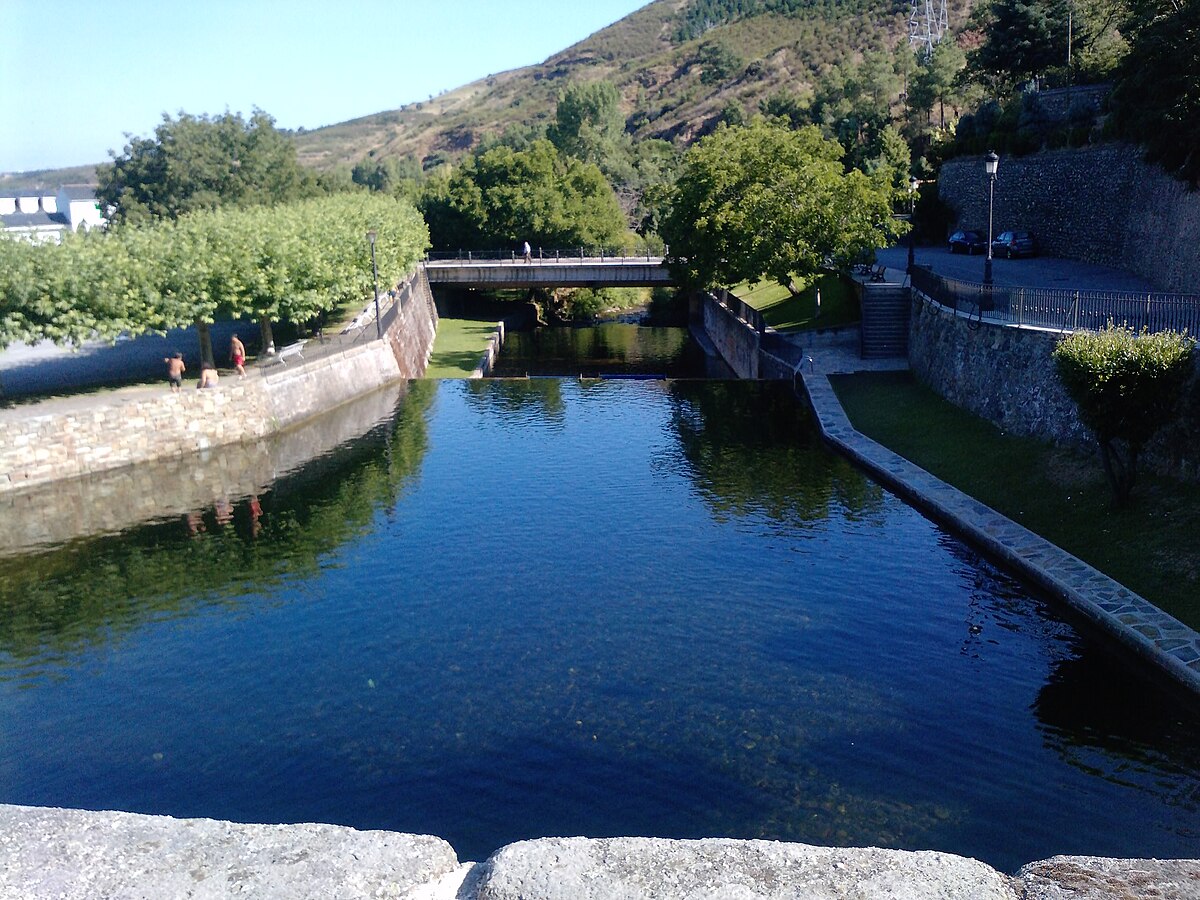
The name might sound unusual at first, but it is quite literal. Entrambasaguas sits between two rivers, and that water shaped much of the local economy for centuries.
There were once more than twenty working mills in the area. Today, only fragments remain, some partly hidden by vegetation. Walking along the banks of the Aguanaz, you can still spot channels and stone walls that hint at how grain was once ground here, powered by the current and a good deal of patience.
The municipality has around 5,700 residents spread across several settlements. There is no single centre that dominates. Instead, it feels like a collection of neighbourhoods and small villages that have gradually grown together. You can cross a couple of streets and find yourself back among open fields almost immediately.
From hilltop settlements to manor houses
At the highest point stands the castro of Vizmaya. The climb has its moments. It is not especially long, but it is not a casual stroll either. The path winds between holm oaks and rock until reaching the area where sections of wall still remain.
From up there, the valley opens out widely. It becomes clear why this spot was chosen more than two thousand years ago. The view allows you to see movement across the valley, a strategic advantage in its time.
In Hoznayo, another side of Entrambasaguas comes into view. The Palacio de Acebedo reflects a period when wealthy and influential families were present in the area. Built in the 17th century, it has a restrained appearance, with carved coats of arms on its façade. It is often closed, but even walking around it gives a good sense of its scale.
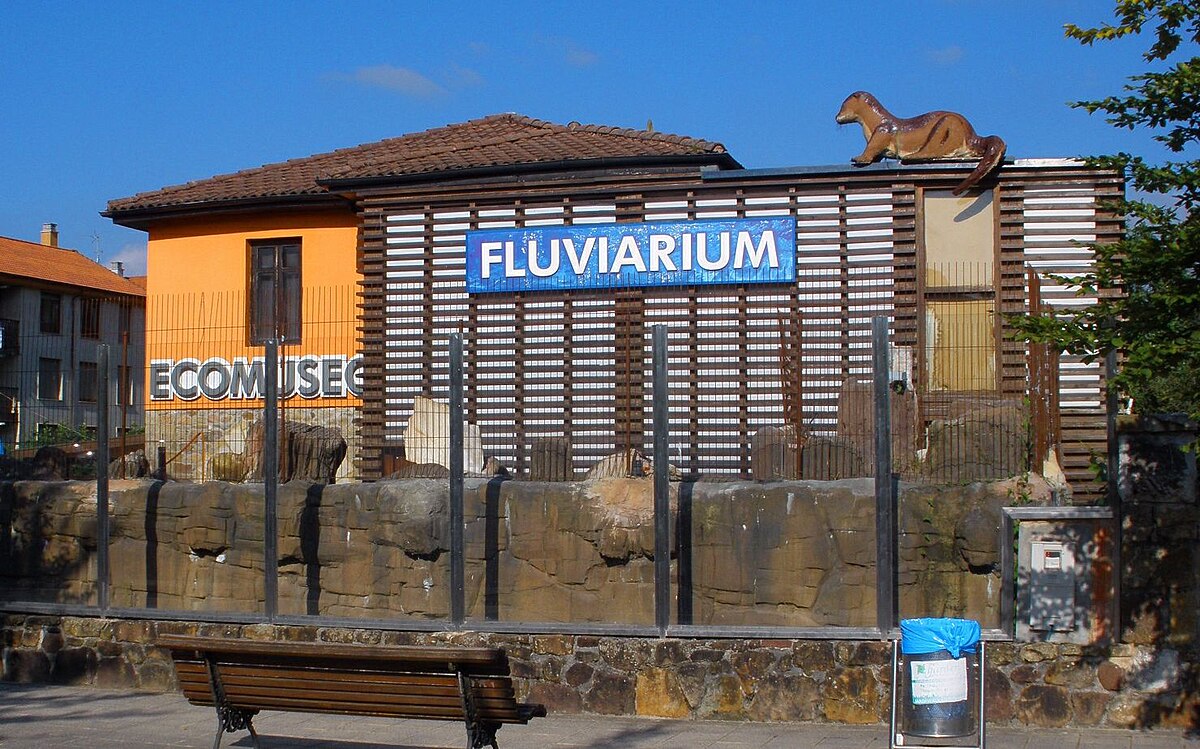
Nearby stands a former milk factory that operated through much of the 20th century. The building has since been repurposed for educational use linked to the environment. The contrast is striking: industrial architecture surrounded by meadows and grazing cattle, as if two different periods had been placed side by side.
The valley spa
The spa of Entrambasaguas has been open for a long time. In the early 20th century, people were already coming here to ease aches and spend a few quiet days.
The building retains the feel of a traditional thermal establishment, with long corridors, gardens and a calm atmosphere designed for slowing down. Some local residents still visit, convinced that the mineral water suits them better than many modern remedies.
Even without going inside, the surrounding area is worth a walk. This is where the valley widens and the river flows more gently, creating a noticeably calmer setting.
What guidebooks tend to miss
Entrambasaguas does not depend on appearances. There are no streets designed for photographs or rows of souvenir shops. Daily life takes priority: cars parked wherever there is space, neighbours stopping for a chat in the middle of the pavement, tractors passing through without ceremony.
A place where people talk about the weather over a drink. A bakery that starts work while it is still dark outside. The steady rhythm of a town that carries on regardless of whether anyone is visiting.
Mention spending a day here and you might get a raised eyebrow. It is not unfriendly, just genuine surprise. Many locals assume that anyone arriving has family ties or work in the area.
A different way to spend the day
This is not somewhere to approach with a checklist of sights. Entrambasaguas does not really work like that.
It makes more sense as a base for exploring the wider Trasmiera region. Start with a walk up to the castro in the morning, then follow the secondary roads that run between fields, and return to the town later in the day.
After that, sit for a while in the square without rushing. People pass by: neighbours, cyclists, someone returning from the hills. It does not take long to understand what defines the place.
Entrambasaguas is not the most striking destination in Cantabria. What it offers is something quieter. Life here moves at its own pace, with or without visitors. At times, that can feel more valuable than any well-known viewpoint.