Full Article
about Ribamontán al Mar
Cantabrian surf capital
Hide article Read full article
Ribamontán al Mar: entre la ría y los acantilados
La primera imagen de Ribamontán al Mar suele ser la de la barca cruzando la bahía. Desde el embarcadero de Somo, Santander queda al otro lado, una línea de edificios recortada contra la ladera. La diferencia es inmediata: frente a la capital regional, una franja de costa donde los pueblos se dispersan entre prados y arenales.
Aquí, el paisaje todavía marca el ritmo. Las casas se esparcen por valles que bajan hacia el mar, y la vida diaria transcurre entre las fincas, la orilla y, desde hace unas décadas, el surf. Es un territorio abierto, sin un núcleo único que lo concentre todo.
Una costa compartida por varios pueblos
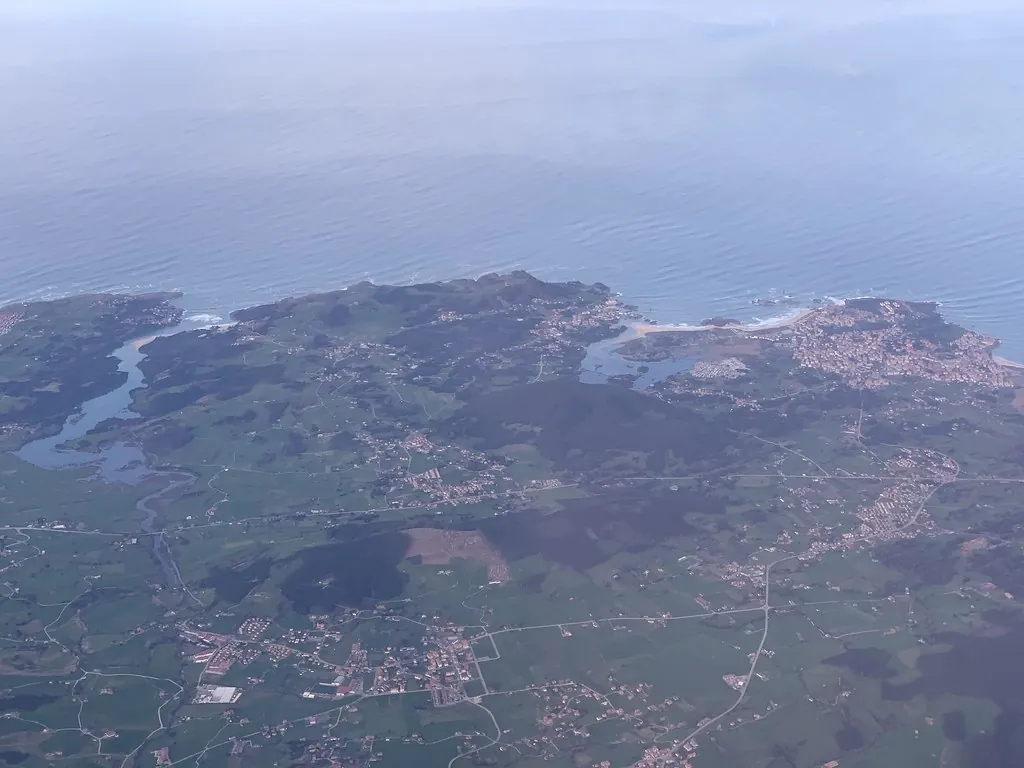
Ribamontán al Mar no es un solo pueblo, sino varios: Somo, Loredo, Langre, Galizano, Carriazo, Castanedo y Suesa. Juntos forman una franja costera relativamente corta, marcada por playas abiertas al Cantabrico y tramos de acantilado que caen bruscamente al agua.
Somo es el más poblado y mira directamente a la bahía de Santander. Loredo se extiende tierra adentro desde la playa, con casas dispersas y algunas villas indianas construidas a finales del siglo XIX y principios del XX. Langre queda más apartado, resguardado por los acantilados, y mantiene un vínculo más estrecho con el paisaje rural.
La geografía explica buena parte de este trazado. Pequeños valles descienden desde el interior hacia la costa, y estos han proporcionado desde siempre las condiciones para el asentamiento: pastos, agua cercana y un acceso relativamente fácil al mar.
Los canteros de Trasmiera
Esta zona de Cantabria pertenece a la comarca histórica de Trasmiera, conocida durante siglos por sus maestros canteros. Desde la Baja Edad Media y hasta bien entrada la Edad Moderna, grupos de artesanos salían de estos pueblos para trabajar en obras por toda Castilla.
Los archivos parroquiales de la zona mencionan con frecuencia a vecinos que pasaban largas temporadas fuera, participando en la construcción de iglesias, palacios o puentes. La piedra local, relativamente fácil de labrar, y la transmisión del oficio dentro de las familias ayudaron a mantener esta tradición.
A pesar de esa fama, en los pueblos no hay grandes edificios monumentales. Lo que perdura son casas de piedra sólida, construidas con cuidado, que a veces llevan escudos en sus fachadas y portadas donde se adivina la mano de quien las hizo.
En el alto que separa Loredo del interior se levanta el santuario de la Virgen de Latas. La devoción a esta figura está documentada desde la época moderna. El edificio en sí es sencillo, pero su posición explica su importancia: domina el valle y la ruta hacia la costa. Durante generaciones ha sido un punto de encuentro y el escenario de romerías locales.
Somo, Loredo y la llegada del surf
Las playas de Somo y Loredo forman un solo arenal que supera claramente los tres kilómetros. Abiertas al Cantabrico y con fondo de arena, empezaron a atraer a surfistas hace décadas, cuando este deporte era aún poco común en España.
Con el tiempo, aparecieron escuelas de surf y la actividad se integró en la identidad local. Tablas apoyadas en balcones, trajes de neopreno secándose en jardines y pequeños grupos entrando al agua a primera hora son escenas habituales, incluso fuera de temporada alta.
La playa, sin embargo, mantiene usos más tradicionales. Con marea baja, es frecuente ver a vecinos recogiendo moluscos de la arena o paseando por la orilla antes de que suba el viento. La anchura del arenal hace que, incluso los días de más afluencia, el espacio tienda a repartirse sin agobios.
Entre Somo y Loredo se conservan algunas zonas de dunas y marisma. Forman parte del entorno más amplio de la bahía de Santander, donde la presencia de aves es constante.
Langre y la línea del acantilado
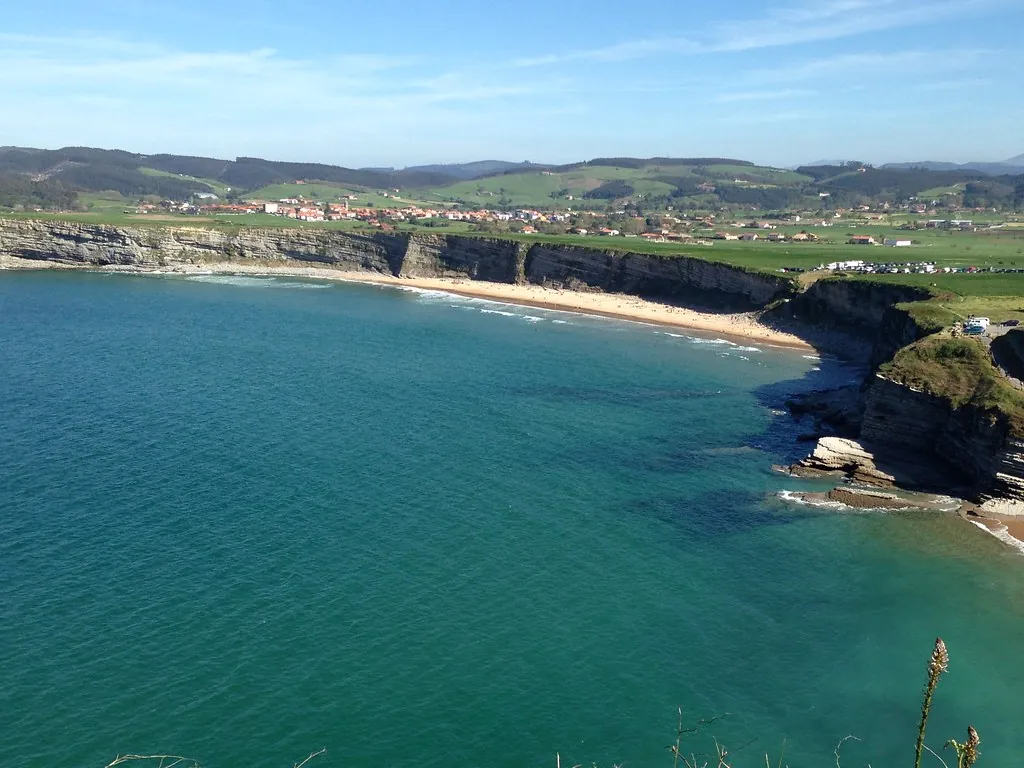
Langre marca un cambio claro en el litoral. El terreno se vuelve más abrupto, con acantilados altos, prados arriba y una playa contenida abajo.
Llegar a la arena implica bajar por un camino escalonado que serpentea entre la vegetación. Desde arriba no se ve la playa completa; va apareciendo según se desciende. Cuando hay marejada, se oye el sonido de las olas rompiendo contra la roca antes de ver el mar.
La parte superior de estos acantilados sigue usándose como pasto. A menudo se ven vacas cerca del borde, mientras que más abajo entran al agua surfistas y bañistas.
Senderos costeros y el Camino del Norte
El Camino de Santiago del Norte atraviesa el municipio por el interior, cerca de la costa. Entra por Somo y continúa hacia Galizano por carreteras locales, cruzando prados y barrios dispersos.
Galizano conserva una estructura más tradicional, con casas de piedra alineadas junto al camino y pequeñas huertas cerca. En esta zona, el paisaje vuelve a sentirse claramente rural, a poca distancia del mar.
Para quien prefiera caminar lejos de la carretera, hay varios senderos que recorren los acantilados y la línea de costa. Son otra forma de atravesar este tramo de Cantabria manteniéndose cerca del borde cambiante entre tierra y agua.
Cómo moverse por Ribamontán al Mar
El transporte público une Somo con Santander mediante el servicio de barcas, que funciona con regularidad. En tierra, una carretera principal recorre el municipio de oeste a este, pasando por los distintos núcleos. Para llegar a algunas playas o calas es necesario desviarse por caminos locales.
La bicicleta es un medio práctico para desplazarse entre pueblos, dada la relativa llanura del terreno junto a la costa. Los caminos rurales suelen tener poco tráfico.
Conviene consultar los horarios de las mareas si se planea caminar por la playa o acceder a determinadas zonas rocosas. El viento suele soplar con fuerza por las tardes, especialmente en primavera.