Full Article
about Ribamontán al Monte
Interior of Trasmiera
Hide article Read full article
Leaving the Coast Behind
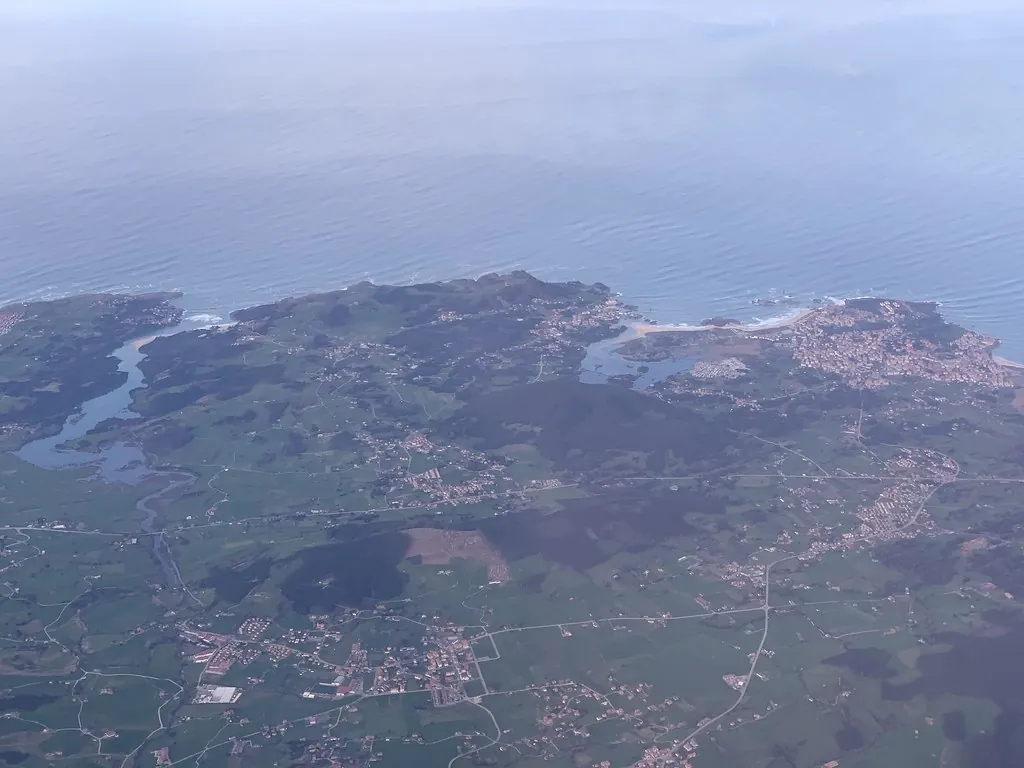
There is a moment, just after turning off the A‑8 and heading inland, when the air changes. It is hard to pin down exactly why. It smells of cows, freshly cut grass and something that immediately reads as proper countryside. Anyone travelling to Ribamontán al Monte tends to notice it right then, that subtle shift that signals the coast is no longer the centre of things, even if the sea is still only a short drive away.
The transition feels quick. One minute the landscape is tied to the shoreline, the next it opens into green valleys and scattered farms. The roads narrow, the pace slows, and the surroundings become less about movement and more about staying put.
Hoz de Anero, a Quiet Centre
Hoz de Anero, the administrative centre of the municipality, does not announce itself in any grand way. Arrival can be slightly disorienting. There is no formal entrance, no large square that marks it out as a capital. It is the sort of place that could easily be passed through without noticing.
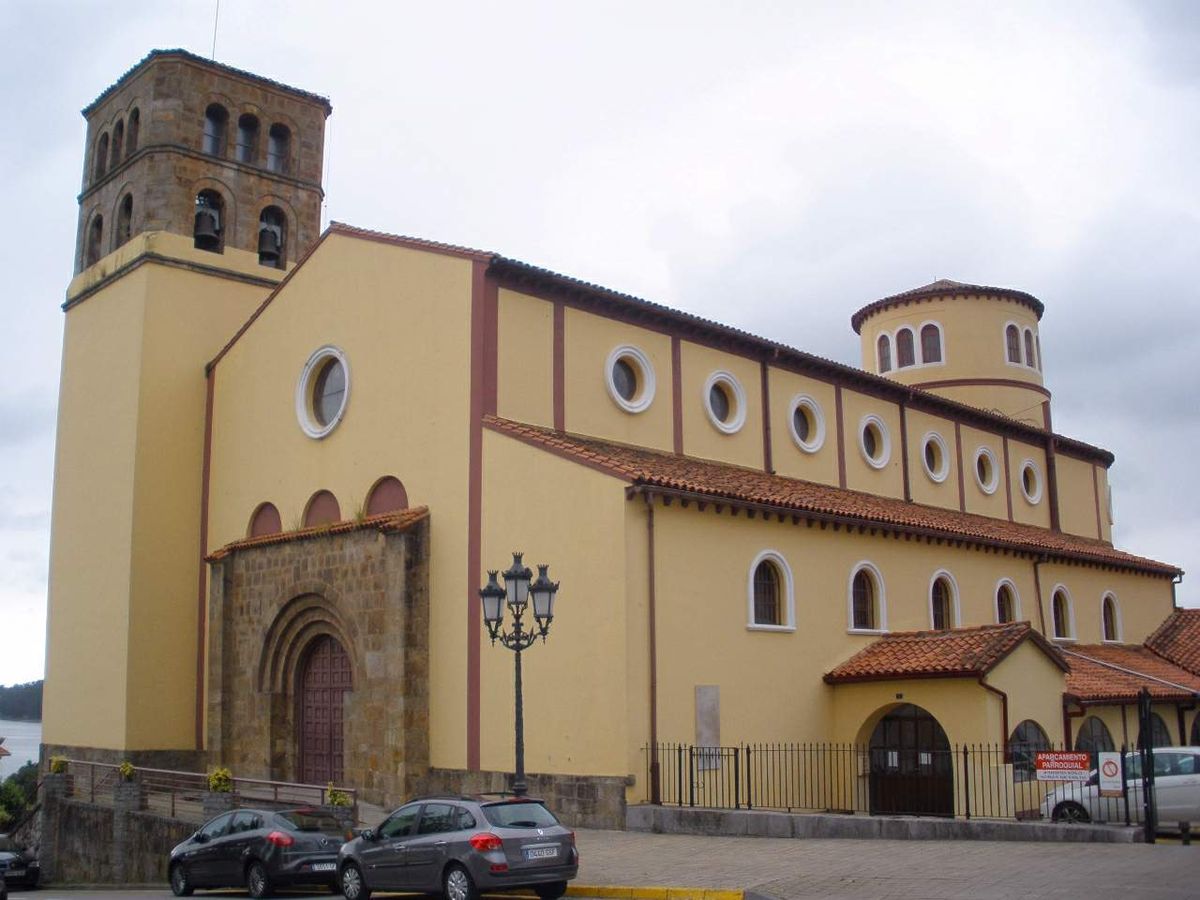
Yet it holds something unusual for Cantabria: the Desierto de San José. This Carmelite monastery was built at the beginning of the 20th century, after the community relocated from elsewhere. The building stands in a peaceful, slightly elevated spot overlooking the valley.
It is not decorative or ornate. The structure is sober, almost austere, as if designed more for inward life than outward display. Approaching it, the most striking feature is the quiet. Not complete silence, but the layered sounds of rural life: distant cowbells, the occasional tractor, and little else.
Where Cattle Shape the Landscape
Ribamontán al Monte lies within Trasmiera, a region where livestock farming remains a visible and active part of daily life. No explanation is needed to understand this. The landscape makes it clear.
Fields are enclosed by stone walls, barns are well kept, and cows graze steadily across the slopes. Their pace seems to set the rhythm of the place. For visitors arriving from urban areas, there is often a pause, a moment spent leaning on a gate or standing by a path, looking out over the valley without any particular purpose. It becomes easy to see why people choose to live here.
That connection to pasture and livestock carries through to local food. Quesada appears frequently in the area, a traditional Cantabrian dessert with subtle variations from place to place. Some versions are softer, others more compact. The kind that tends to stand out is the one that almost falls apart under a fork, leaving sweet crumbs across the plate.
Then there is cocido montañés, a hearty stew typical of inland Cantabria. It reflects a way of cooking shaped by colder weather and physically demanding work in the countryside. The dish feels practical and direct, with no attempt to soften its origins.
Walking the Valley
One of the most satisfying ways to experience Ribamontán al Monte is simply to walk. There is no need for detailed planning. A network of rural paths links small villages, open fields and patches of woodland.
Some routes begin in Hoz de Anero and loop through the surrounding valley. They are sometimes described as moderate, a term that can feel vague. There are hills, but nothing extreme if taken at a steady pace.
The appeal lies less in the challenge and more in the surroundings. Stone walls covered in moss run alongside the paths, wooden gates mark transitions between fields, and cows often look up as people pass, as if mildly surprised by the interruption.
Encounters tend to be few. A local resident might offer a brief greeting before continuing on their way. A dog might appear briefly, observe the situation, and disappear down another track. The sense of space is uninterrupted, and the experience unfolds quietly.
August and Local Festivities
During summer, especially in August, Ribamontán al Monte celebrates its local patron saint festivals. These are not large-scale events that draw major crowds or organised tour groups, but they are important within the community.
The setup is familiar in many rural parts of Spain. A stage is placed in a square or open field, plastic chairs are arranged, and families gather while music plays. Children move freely through the space, and conversations stretch late into the evening.
The atmosphere reflects village life at its most social. Older residents often stay out well into the night, partly because such occasions have long been central to maintaining connections. It is less about spectacle and more about shared presence.
A Different Kind of Place
Ribamontán al Monte does not try to impress. It does not rely on famous viewpoints or widely known monuments. Instead, it offers something quieter: a piece of inland Cantabria that remains close to the coast yet feels separate from it.
The defining elements are simple. Open fields, small settlements, calm roads and an unhurried pace that is increasingly difficult to find. The experience works best when approached in the same spirit.
A visit might include a walk through Hoz de Anero, time spent near the Desierto de San José, and a route along the valley paths. After that, the coast is still within easy reach, closer than expected.
Ribamontán al Monte leaves an impression that is subtle rather than overwhelming. It resembles a small introduction before something larger, a place that prepares the ground for exploring more of Trasmiera. And in that role, it has plenty to offer.