Full Article
about Albalate de Zorita
Alcarrian town with residential developments and natural surroundings near the Tajo; history tied to the Order of Calatrava
Hide article Read full article
A small town that keeps its own pace
If you are planning to visit Albalate de Zorita, bring a car and a bit of patience for narrow streets. Parking is easier on the edges of the town centre, then it is a short walk downhill into the middle. The centre itself is compact and can be seen in a fairly short time. At certain hours the main square fills with neighbours chatting while children run about. That everyday scene says more about the place than any guidebook.
From the city of Guadalajara it is just over an hour by road. From Madrid, roughly the same if traffic is kind. This is not a destination set up for coaches or extended opening hours. Life here follows its own rhythm, and visitors fit around it rather than the other way round.
Albalate de Zorita has around a thousand inhabitants. There is no frequent public transport and no large tourist infrastructure. The usual approach is by car along the A-2, then on through regional roads. It feels a little removed, though not especially far.
The essentials in the centre
The Iglesia de San Andrés marks the heart of the town. Its tall tower is visible from almost any street, a steady point of reference as you move around. The building combines older sections with later alterations, reflecting the long history common to many parish churches in rural Spain. Inside there is a retablo, an ornate altarpiece, which tends to draw the attention of anyone interested in religious art.
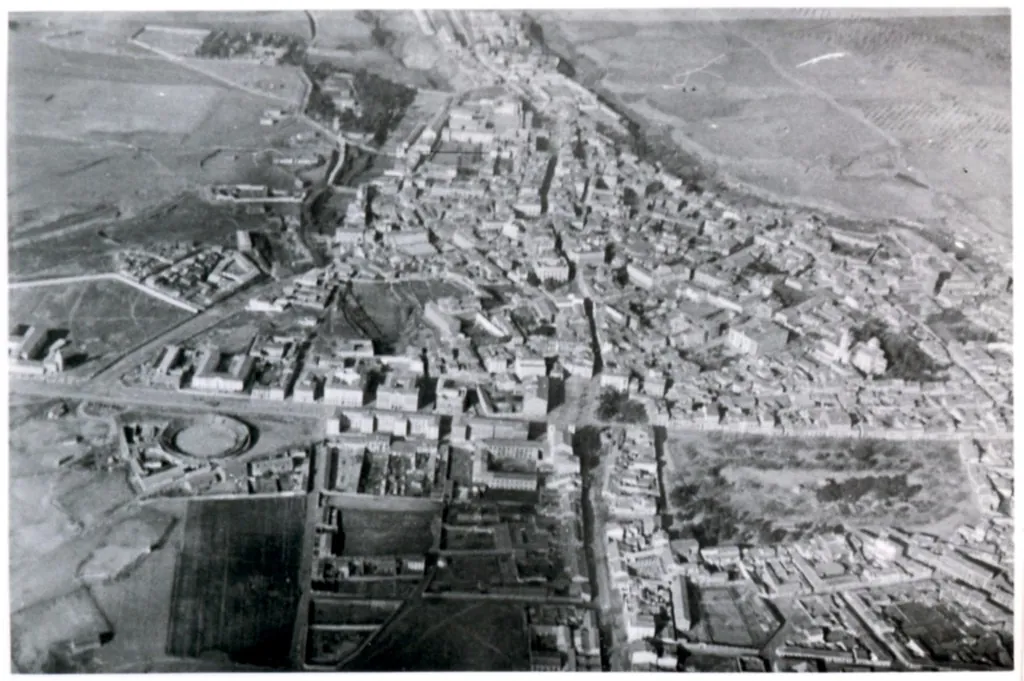
Beyond the church, the old quarter looks much as you would expect in the Alcarria, the natural region that stretches across part of the province of Guadalajara. Stone walls and whitewashed façades line the streets. Large wooden gateways once opened into courtyards where animals were kept. Here and there, a wooden balcony projects over the street. It is not a monumental ensemble in the grand sense. It is a working town that has adapted over time without turning itself into a museum.
The Plaza Mayor acts as the meeting point. There are benches, unhurried conversations and little else competing for attention. Spending a while sitting there makes it easier to understand how daily life is organised. News circulates by word of mouth. People greet each other by name. The scale is intimate.
Fields, hills and the wider Alcarria
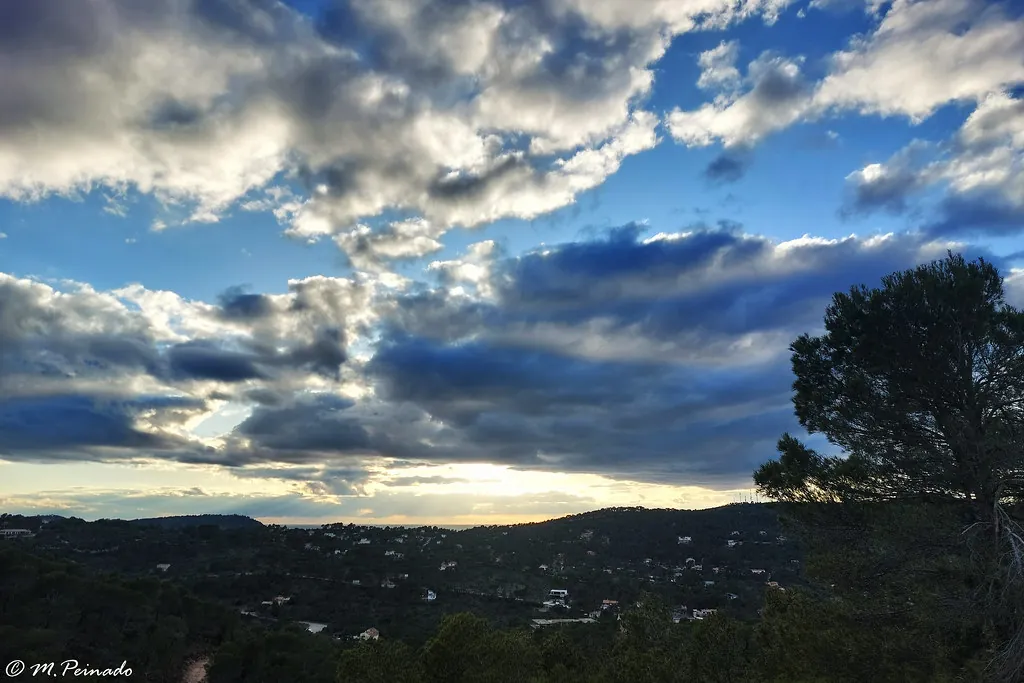
Albalate de Zorita lies squarely within the Alcarria. The landscape is open, shaped by gentle hills and broad fields that shift in colour with the seasons. Wheat and barley dominate, along with old olive groves. It is not dramatic scenery. It is recognisable and consistent, especially for anyone familiar with central Spain.
Rural tracks leave the town in several directions. Many have been used by farmers for decades. Some are suitable for walking without much difficulty. Spring is the most forgiving season, when the fields show more colour and the air is softer. In summer the sun is strong and shade is limited, so any walk requires a bit more planning.
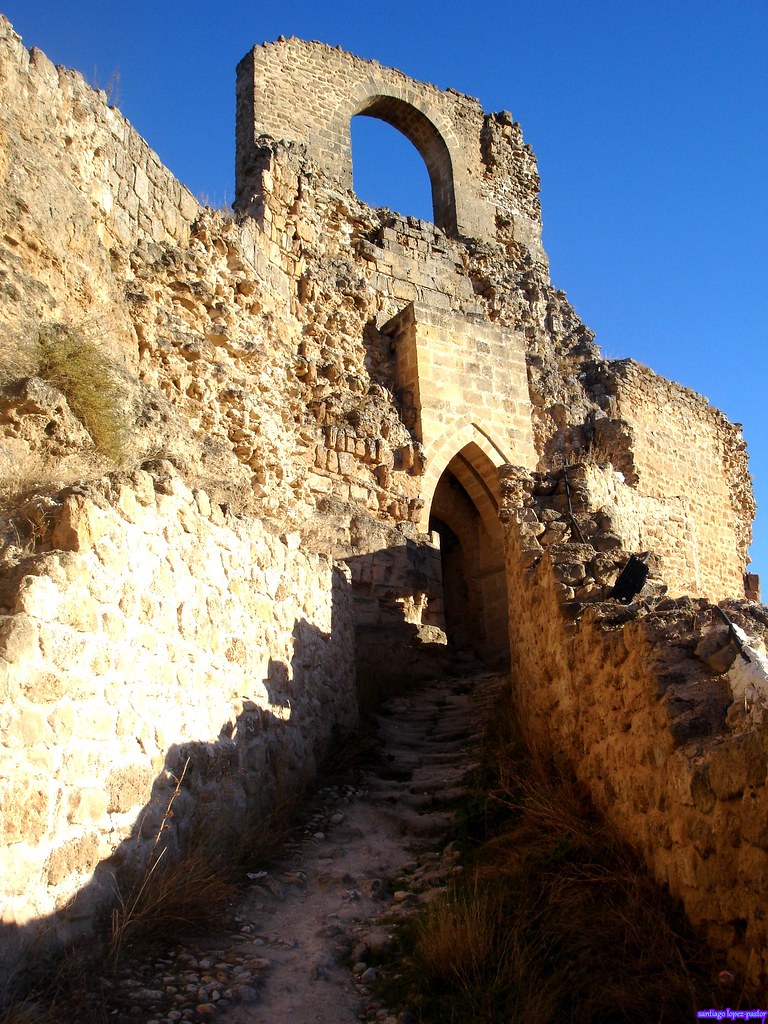
Very close by is Zorita de los Canes. For those interested in the medieval history of this part of Guadalajara, it is worth the detour. The castle there overlooks the river and helps explain the strategic importance the area once held over several centuries. Seen from a distance, its position above the water makes that history easier to picture.
Walking, cycling and the Ruta del Cid
The surrounding area works well for walking or cycling along secondary roads. Traffic is usually light, which makes for a quieter experience. The terrain, however, includes long climbs that are noticeable, especially in heat or wind. What looks gentle on a map can feel more demanding in practice.
Sections associated with the Ruta del Cid also pass through this area. This cultural and historical route follows the figure of El Cid, a medieval knight whose story forms part of Spain’s literary tradition. Here it is not a technical hiking trail. Instead, it consists of tracks and agricultural paths linking villages across the region. It offers a way to move between places at a measured pace, with the landscape as the constant backdrop.
In the small local shops, products typical of the Alcarria appear on the shelves. Honey remains especially important in the area and is closely linked to the region’s identity. Traditional dishes also feature, including cordero asado, roast lamb, migas made from fried breadcrumbs, and gazpachos manchegos. Despite the name, gazpachos manchegos has nothing to do with the chilled tomato soup from Andalusia. It is a hearty, meat-based dish associated with inland Castilla La Mancha.
Festive dates in the calendar
The fiestas of San Andrés take place at the end of November. The weather is cold, yet many families return to the town for those days. The increase in activity is noticeable in the streets, with more movement and conversation than usual.
In summer there are usually celebrations in August, with open-air dances known as verbenas and simple activities organised for residents and visitors. The atmosphere remains modest. It is more about coming together than staging a large spectacle.
Semana Santa, Holy Week, is observed with sober processions. The streets are quiet and the route through the centre is short. The tone matches the scale of the town: restrained and close to home.
Before setting off
Albalate de Zorita does not try to impress with grand attractions or a packed programme of sights. Its appeal lies in its ordinariness and in the landscape that surrounds it. The centre can be understood quickly. The wider Alcarria requires more time, whether on foot, by bicycle or by car along the smaller roads.
A straightforward plan works best. Spend a calm morning walking through the old streets, pausing in the Plaza Mayor and stepping into the Iglesia de San Andrés. Then head out towards the surrounding fields or on to nearby Zorita de los Canes to place the town within its broader setting.
This is a place where the daily routine still shapes the visitor’s experience. There are no grand gestures, only steady continuity. For those willing to slow down and accept that rhythm, Albalate de Zorita offers a clear view of life in this part of Castilla La Mancha.