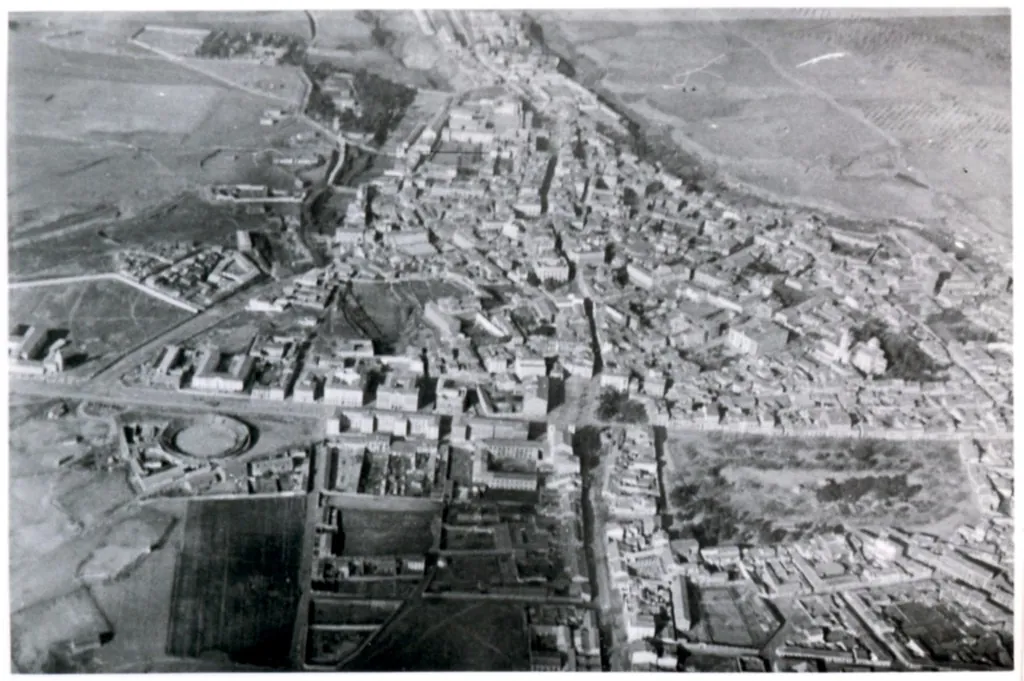
Vista aérea de Albendea
Instituto Geográfico Nacional · CC-BY 4.0 scne.es
Castilla-La Mancha · Land of Don Quixote

Albendea

The church bell strikes noon and nobody appears. Not a soul emerges from Albendea's handful of stone houses, not a single tractor rumbles across th...

132 inhabitants · INE 2025
740m Altitude

Why Visit

Llanes Mausoleum (Hermitage) Mushroom-hunting trails

Best Time to Visit

spring

San Antonio Festival (June) junio

Things to See & Do
in Albendea

Heritage

  • Llanes Mausoleum (Hermitage)
  • Church of the Assumption

Activities

  • Mushroom-hunting trails
  • Visit to the Roman mausoleum

Festivals
& & Traditions

Fecha junio

Fiestas de San Antonio (junio)

Las fiestas locales son el momento perfecto para vivir la autenticidad de Albendea.

Full Article
about Albendea

Municipality near the Guadiela River; noted for its Visigothic hermitage, unique in the region.

Ocultar artículo Leer artículo completo

The church bell strikes noon and nobody appears. Not a soul emerges from Albendea's handful of stone houses, not a single tractor rumbles across the surrounding wheat fields. At 740 metres above sea level, this tiny Castilian village keeps time differently—days measured by the angle of sunlight on ochre walls, seasons by the colour shift of cereal crops stretching to every horizon.

Welcome to La Alcarria, the high plateau east of Cuenca where Spain's rural exodus becomes visible in stone and silence. Albendea's population has slipped to 122 souls, give or take. The village lacks a petrol station, cash machine, even a proper shop. What it possesses instead is an almost shocking sense of space: a dome of sky that feels three times normal size, wheat fields that glow amber at dusk, and nights so dark the Milky Way casts shadows.

The Architecture of Absence

A five-minute walk covers the entire village. Thick-walled houses in local stone line narrow lanes just wide enough for a donkey cart, their wooden doors painted Mediterranean blues and greens that have faded to soft pastels. Architectural flourishes are few—Castilian farmers never saw the point. Instead you'll find practical details: wooden granaries perched on stilts to deter rats, stone troughs where generations watered livestock, boot scrapers by every doorway.

The 16th-century church of San Juan Bautista dominates this miniature skyline, its modest bell tower visible from kilometres away across the empty plain. Inside, the single nave holds a baroque altarpiece gilded with American gold—money that never returned to these fields. Weekday mass draws perhaps a dozen worshippers, their voices echoing in the cool darkness.

Outside, the village square contains nothing more than a stone bench and a drinking fountain. Nobody sits. The bench faces fields where wheat ripples like water in the constant breeze. It's furniture arranged for contemplating absence.

Walking Through Earth's Geometry

Albendea sits at the precise point where Spain's central plateau begins tilting gently toward the Tagus valley. The result is walking country of almost hypnotic simplicity. Ancient farm tracks radiate outward between rectangular fields, their boundaries marked by dry stone walls and solitary holm oaks. These paths demand no technical skill—just the ability to appreciate subtle variations in a seemingly flat landscape.

Spring brings the most dramatic transformation. By late April, wheat shoots stand ankle-high in luminous green rows. Poppies explode in scarlet patches between fields. The air carries scent of wild thyme and carries larksong impossible distances. Temperatures hover around 22°C—perfect walking weather before the Castilian furnace ignites in July.

Autumn offers equal rewards. Harvest leaves stubbled fields the colour of pale ale. Vine leaves in scattered vineyards turn burnt orange. Local farmers burn the stubble at dusk, sending fragrant smoke drifting across paths where you'll meet nobody for hours.

The most rewarding route follows the old drove road south toward Villar de la Encina, three kilometres distant. This medieval livestock route, now a grassy track, passes abandoned stone huts where shepherds once sheltered from summer storms. The return journey offers Albendea's signature view: the village silhouette against empty sky, looking less like a settlement than a ship adrift on a wheat ocean.

Food for Empty Spaces

Traditional Alcarrian cooking evolved to fill stomachs after dawn-to-dusk labour in unforgiving terrain. Local specialities arrive at table with the subtlety of a farm implement. Morteruelo, a pâté of pork liver and game, gets spread thickly on rough bread. Gachas, a porridge of flour and water enriched with anything available, sticks to ribs with medieval efficiency. Portions are massive—calories required for working land that yields grudgingly.

The region's famous honey provides rare sweetness. Local beekeepers sell thick, almost chewy honey with notes of rosemary and thyme from the surrounding scrubland. Prices run about €8 per kilo—buy directly from farm gates marked "Miel" on approach roads.

Albendea itself offers exactly one dining option. Bar Los Ángeles opens unpredictably, typically weekends when children of villagers return from Madrid or Valencia. When the door stands open, order migas—fried breadcrumbs with garlic and chorizo—washed down with rough red wine from bulk containers. The television plays football matches to empty chairs. Nobody seems to mind.

When Silence Becomes Uncomfortable

This level of rural abandonment carries undeniable melancholy. Houses stand empty, their windows gaping like eye sockets. The primary school closed in 1998; village children now endure 40-minute bus rides to Cuenca. Even the cemetery feels temporary—most graves belong to people who died elsewhere, bodies returned for burial alongside parents who never left.

Summer weekends bring brief resurrection. Cars bearing Madrid licence plates arrive bearing families who still own ancestral houses. Children chase footballs through silent streets. Elderly neighbours emerge to gossip, voices carrying across the plaza. By Sunday evening they're gone again, leaving only the echo of tyres on empty roads.

Winter strips the landscape bare. Temperatures drop to -5°C at night. The famous Castilian wind, the cierzo, roars across the plateau for days, driving residents indoors. Snow falls rarely but when it does, the village becomes unreachable. Stocks of firewood appear beside every door—nobody relies on distant authorities for survival.

Practical Notes for the Curious

Reaching Albendea requires deliberate effort. The village lies 25 kilometres east of Cuenca along the CM-210, a decent two-lane road that sees more agricultural machinery than tourist traffic. Buses run twice daily on weekdays, once on Saturdays, never on Sundays or holidays. Renting a car becomes essential for exploring the surrounding countryside—Hertz in Cuenca offers small vehicles from €35 daily.

Accommodation options remain limited. The nearest hotel sits 15 kilometres away in San Clemente, a former convent converted to three-star standards at €70 nightly. Albendea itself offers two rural houses for rent—Casa Rural La Plaza (€80 nightly, sleeps four) and Casa del Párroco (€120 nightly, sleeps six). Both maintain original features like beamed ceilings and stone fireplaces while adding modern bathrooms and WiFi that functions sporadically at best.

Bring cash. The nearest cash machine requires a 20-kilometre drive to Villanueva de la Jara. Mobile phone coverage varies by provider—Vodafone works reasonably, O2 barely functions. Download offline maps before arrival.

Visit in late April or early October for optimal walking weather. Mid-summer temperatures regularly exceed 35°C with brutal sun exposure across treeless fields. Winter brings sharp frosts and that penetrating wind.

Albendea offers no Instagram moments, no souvenir shops, no organised entertainment. What it provides instead is rarer: the chance to experience Spain's high plateau in its raw state, stripped of tourist infrastructure and pretence. Come prepared for your own company, for long silences broken only by wind through wheat, for a landscape that reveals its beauty slowly, grudgingly, to those willing to look without hurry.

The bell will strike noon again tomorrow. Still nobody will appear. The wheat will continue growing, the sky will remain enormous, and Albendea will persist in its quiet defiance of modern Spain's frantic rhythms. Whether that's tragic or magnificent depends entirely on your capacity for stillness.

Key Facts

Region
Castilla-La Mancha
District
La Alcarria
INE Code
16006
Coast
No
Mountain
No
Season
spring

Livability & Services

Key data for living or remote work

2024
Connectivity5G available
EducationElementary school
Housing~5€/m² rent · Affordable
CoastBeach nearby
Sources: INE, CNMC, Ministry of Health, AEMET

Official Data

Institutional records and open data (when available).

  • MAUSOLEO ERMITA DE LLANES
    bic Monumento ~3.9 km
  • IGLESIA PARROQUIAL DE NTRA. SRA. DE LA ASUNCIÓN
    bic Monumento ~0.5 km

Planning Your Visit?

Discover more villages in the La Alcarria.

View full region →

More villages in La Alcarria

Traveler Reviews