Full Article
about Alhóndiga
Town nestled in a valley; well-preserved vernacular architecture and welcoming atmosphere.
Hide article Read full article
A Village That Makes You Slow Down
There are villages you drive through without noticing. Then there are others that make you ease off the accelerator, even when there is no obvious sight to tick off a list. Alhóndiga, in the heart of La Alcarria in Castilla La Mancha, belongs to the second group.
You arrive, park, look around and quickly understand what this place is about.
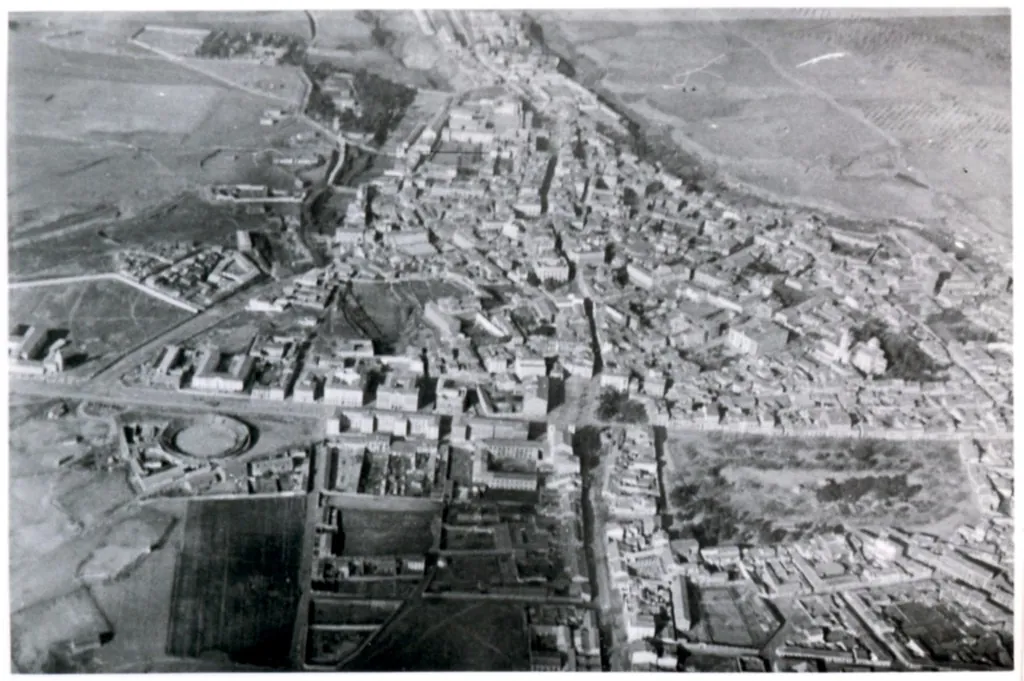
Tourism in Alhóndiga does not revolve around monuments or organised activities. With around 185 residents and open countryside stretching in every direction, life here follows the pace of the village itself. Quiet streets, the occasional conversation drifting from one doorway to another, and the feeling that time moves differently.
A Small Village With Nothing to Prove
Alhóndiga makes no attempt to be anything other than what it is. Stone houses with thick walls, façades designed for practicality rather than photographs. Many were built with the harsh winters of La Alcarria in mind, not future visitors with cameras.
In the centre stands the church of San Pedro, rising just enough above the rooftops to be noticed. It is not monumental. Instead, it is the kind of church that has served as the village meeting point for centuries, without grand decoration or display.
That, in many ways, defines the place.
There is no effort to reshape the past into something more polished. The buildings speak of function, of a rural economy and of daily routines that have changed little in spirit. It is a setting that feels lived in rather than presented.
Wandering Without a Plan
A map is unnecessary here. In fact, it is better not to have one.
The streets are short and slightly irregular, lined with large wooden gates that hint at former stables or courtyards behind them. Barns and agricultural outbuildings still sit among the houses. They have not been restored for display. They remain because they have always been there.
Some places feel as though they continue to operate much as they did decades ago. Alhóndiga gives that impression. There is no sense of staging or reinvention. The rhythm is unforced, shaped by routine rather than by visitors.
A slow walk through the village centre is enough to take it in. In less than an hour, you will have seen almost everything. Yet the experience is less about checking corners and more about absorbing the atmosphere. The soundscape is simple: a door closing, voices carrying lightly across the street, perhaps the wind moving through open spaces.
The Wide Horizons of La Alcarria
Step beyond the last houses and the countryside of La Alcarria begins immediately. This historic comarca, or rural district, is known for its open terrain and sweeping views. Dirt tracks lead away from the village in several directions, drawing you into a landscape of long horizons.
There are scattered holm oaks, patches of olive groves and wide stretches of cereal crops. The character of the land shifts with the seasons. In spring, green dominates the fields. By late summer, the tones turn dry and almost golden.
For those who enjoy unhurried walks, the agricultural tracks provide simple routes into the surrounding countryside. Not all are signposted, so common sense is advisable, as is keeping a charged mobile phone to hand. The terrain is open rather than dramatic, but that openness is part of its appeal.
Birds of prey can sometimes be seen riding the warm air rising from the fields. With a bit of luck, a roe deer might dart away through the scrub. These are not staged encounters, just part of the natural rhythm of the area.
The scale of the landscape becomes clearer the longer you look. The eye travels easily across gentle rises and broad fields, with very little to interrupt the view.
Quiet Roads, Long Views
The secondary roads around Alhóndiga carry little traffic. That makes them popular with cyclists exploring La Alcarria on longer routes.
There are no high mountain passes here. Instead, expect short climbs that feel steeper than they first appear, and extended stretches with little shade. In return, the views open up in every direction. Fields, soft hills and villages appearing in the distance on slight elevations define the scene.
By car, the experience is equally enjoyable, particularly for those who prefer to drive without haste. It is the kind of place where stopping at the roadside simply to look at the landscape feels entirely natural.
The emphasis is not on reaching a particular landmark but on moving through a broad rural setting that changes subtly with light and season.
When the Village Comes Alive
For much of the year, Alhóndiga is extremely quiet. In summer, that changes slightly. People with family homes in the village return, and there is more movement in the streets.
The patron saint festivities tend to gather most of that activity into a few days when the village fills out a little more than usual. They are not large-scale celebrations, but for residents they remain significant. Holy Week is also observed, with simple acts that have been maintained for many years.
Outside these periods, the calm is striking. That calm is not presented as an attraction, yet it becomes one.
A Brief Stop That Lingers
Alhóndiga is not a destination for a packed itinerary. It is somewhere to pause and understand what this part of La Alcarria looks like without spotlights or famous routes.
If you are travelling through the region, it makes sense to stop. Park, take a short walk and look out towards the fields that surround the village. In under an hour, you will have covered almost everything.
And yet there is a good chance you will remain a little longer.
Silence can be more compelling than expected.