Full Article
about Almadrones
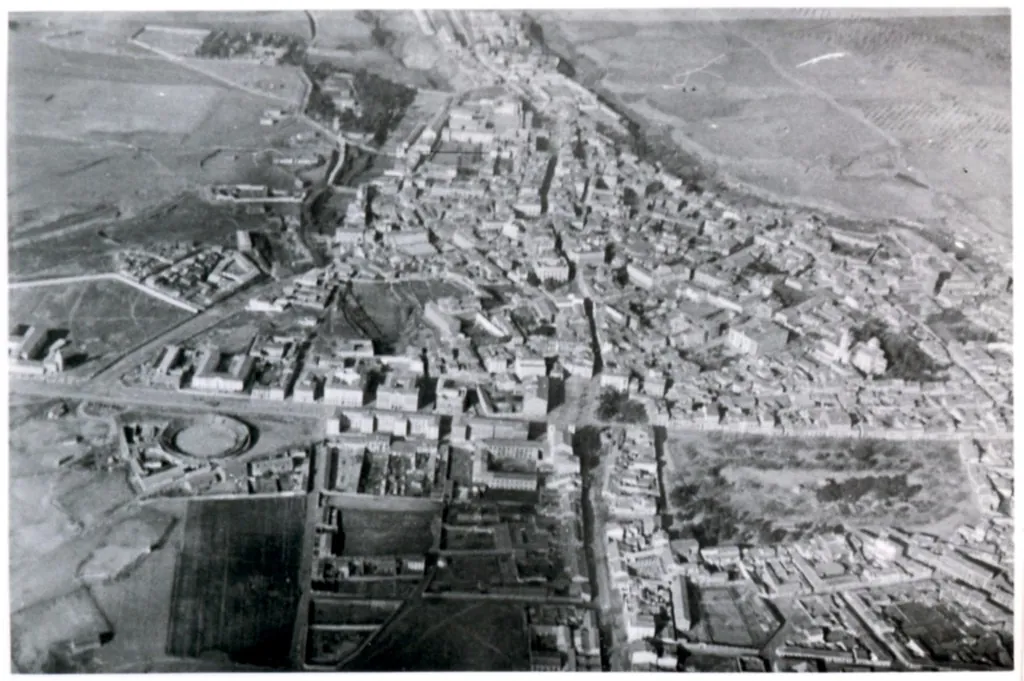
Former post stop on the Barcelona road; retains a linear layout
Hide article Read full article
A Hilltop Village at Its Own Pace
Drive through La Alcarria in the province of Guadalajara and, sooner or later, a small village appears on top of a hill. A handful of well-kept houses, open countryside all around, and the feeling that time moves differently here. That is Almadrones.
Fewer than seventy people live here. Even so, visitors do make the journey, usually for one clear reason: to slow down. There are no headline attractions or packed itineraries waiting. Instead, the appeal lies in the whole picture. Silence. Wind moving across fields of grain. Stone houses that have stood firm through decades of winter.
Almadrones sits in the Alcarria region of Guadalajara, surrounded by wide, open farmland that shifts dramatically with the seasons. Spring brings a strong green across the fields. Summer turns everything gold. In winter the landscape becomes harsher, the air sharper, the plateau showing a more austere side. At any time of year, the horizon feels broad and uninterrupted.
Walking through the village, one thing is clear. This is not a rural stage set. It is a lived-in place. The streets are short, some of them sloping. Old courtyards still hint at their former use for livestock. Facades show which houses have been here for generations. There is no attempt to polish away the marks of time.
Nuestra Señora and the Details That Matter
The parish church dedicated to Nuestra Señora is usually the first building to catch the eye. It is not monumental, yet it feels solid and grounded, built with local materials and designed to last. In villages like this, the church is often the centre around which daily life has revolved.
Beyond the church, the real pleasure comes from wandering without a plan. The streets invite slow exploration. Old wooden doors, stone walls mixed with adobe, former ovens or animal pens now integrated into houses. These details offer clues to what life was like when agriculture set the rhythm of everything.
The surrounding landscape plays a major role in the experience. Almadrones stands in an elevated position, and that height opens up long views over the countryside. Fields of cereal ripple in the wind. An isolated holm oak may appear in the distance. The skyline stretches far, typical of La Alcarria.
Readers familiar with Viaje a la Alcarria by Camilo José Cela may find themselves thinking of certain passages. Cela’s travel book, published in the mid-20th century, described this region in a direct and observant way. Almadrones is not singled out in the text, yet the atmosphere he wrote about still lingers in the landscape: simple, expansive, faintly hypnotic if you stand still and look long enough.
Walking, Sky and Open Country
Activity in Almadrones is uncomplicated. The main thing to do is walk. Tracks leave the village and lead into farmland and open plateau. There are no signposts every few metres and no interpretive panels explaining what you are seeing. This is a place for unhurried strolls, turning back whenever you feel like it.
With a bit of luck, a bird of prey may be visible overhead, taking advantage of air currents. Flocks sometimes move across the surrounding fields. The terrain is so open that you can see movement from far away, which adds to the sense of space.
Night brings another quiet attraction. Artificial light is limited, and on clear evenings the sky can be striking. Locals often keep things simple: a short walk to the edge of the village or to a threshing floor, then a pause to look up. The stars tend to appear with remarkable clarity.
Photography also draws people here. Not because of grand monuments, but because of light and texture. Weathered walls catch the sun in different ways throughout the day. Old doors show layers of age. Fields change colour as the hours pass. The appeal lies in subtle shifts rather than dramatic landmarks.
Food requires a little planning. Options within the village itself are very limited, so many visitors head to a nearby municipality if they want a proper meal, or bring something with them if they plan to spend a few hours walking. Almadrones is best approached with simple expectations.
Summer Gatherings and Local Traditions
Festivities in Almadrones are usually concentrated in summer, when the village becomes livelier as people return for a few days. Numbers grow, streets fill out, and familiar faces reappear.
Celebrations are modest. Religious events form part of the programme, along with short processions through the streets and gatherings among neighbours and families. There are no large stages or packed schedules. The atmosphere is that of a small community where most people know one another and the main purpose is reunion.
Anyone visiting during those days will notice the change immediately. Doors stay open longer. Conversations spill into the street. The pace remains calm, yet there is a shared sense of occasion.
The Road into La Alcarria
Almadrones lies around 50 kilometres from the city of Guadalajara. The usual approach is via the A‑2 motorway in the direction of Zaragoza, followed by local roads that lead into the Alcarria region.
The final stretch runs along secondary roads. It is best taken without hurry. Open fields extend on either side. A small village may appear along the way. Gradually, the sense of leaving urban noise behind becomes part of the journey itself.
Reaching Almadrones is not about ticking off sights. It is about arriving somewhere that has changed little in its essentials. A hilltop. A church dedicated to Nuestra Señora. Stone houses that have seen many winters. Wind over cereal fields. For some travellers, that is more than enough.