Full Article
about Almoguera
Town with a notable past and its own reservoir; its Renaissance church stands out.
Ocultar artículo Leer artículo completo
The church bell tolls at noon, but nobody checks their watch. In Almoguera's main square, farmers instead glance at the sun's position and discuss whether the wheat will be ready next week or the one after. This village of 1,400 souls sits 659 metres above sea level, commanding views across Castilla-La Mancha's rolling cereal fields that stretch towards Guadalajara, 50 kilometres north-east.
The Architecture of Daily Life
Almoguera's modest skyline belongs to the 16th-century Church of Nuestra Señora de la Asunción, whose tower serves as both spiritual beacon and practical landmark for anyone who's wandered too far into the surrounding olive groves. The building's late-Gothic doorway gives way to a Renaissance nave that houses a Baroque altarpiece—architectural layers that reflect centuries of gradual adaptation rather than grand ambition.
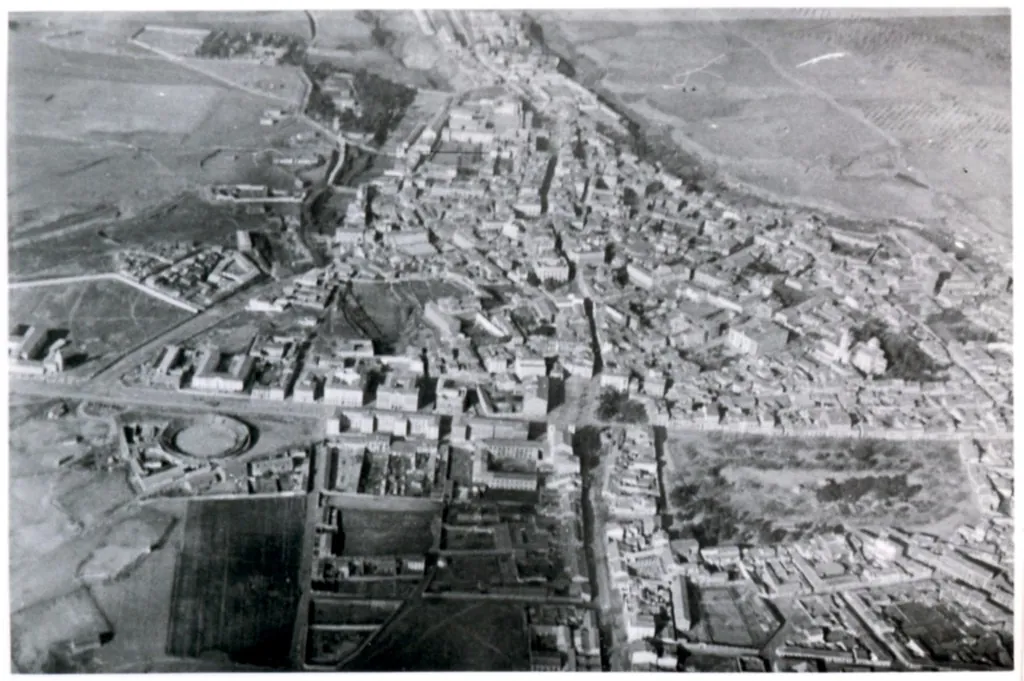
Wander the quiet streets and you'll notice how the houses talk to each other across narrow lanes. Thick stone walls, painted ochre or left bare, support terracotta roofs that overhang just enough to create pools of shade. Wooden balconies, some sagging with age, hold geraniums that survive the fierce summer heat through careful tending rather than any natural propensity for life. These aren't show homes but working buildings, their weathered facades testament to generations who've modified, repaired and adapted them to changing needs.
The village layout makes sense once you understand the climate. Streets twist unexpectedly, creating wind tunnels that funnel cooling breezes through the settlement during July and August when temperatures regularly exceed 35°C. In winter, the same configuration provides shelter from winds that sweep across the plateau, dropping temperatures to near freezing.
Between Earth and Sky
The relationship with land defines Almoguera more than any monument. Fields of wheat, barley and oats surround the village in a patchwork that shifts from emerald green in April to golden brown by late June. Traditional olive groves, some with trees over a century old, punctuate the cereal monoculture. Their gnarled trunks and silver-green leaves create natural sculpture gardens that photographers love, though local farmers see them primarily as retirement insurance—olive prices remain steady when grain markets fluctuate.
Walking tracks radiate from the village like spokes, following ancient rights of way between fields. The Ruta de los Cortijos, a 12-kilometre circuit, passes abandoned farmsteads where swallows nest in empty window frames. Early morning walks offer the best experience; by 11 am, summer heat makes exertion unpleasant. Spring brings wild asparagus and thyme to forage, while autumn sees mushrooms appear after rain—though you'll need local knowledge to distinguish edible from deadly varieties.
Birdwatchers should bring binoculars. The open farmland attracts raptors—kestrels hover overhead, while buzzards circle higher up. At dusk, stone curlews call from field boundaries with their distinctive wailing cry that sounds uncannily like a crying child.
The Taste of Place
Food here reflects agricultural reality rather than tourist expectations. Local honey carries the subtle flavour of thyme and rosemary that grows wild in field margins. The Denominación de Origen Alcarria ensures quality, though prices—around €8-12 for a 500g jar—seem steep until you taste the difference from supermarket equivalents.
Olive oil production remains small-scale. Visit the cooperative on Calle de la Cruz during November or December and you can watch olives being pressed. They'll sell you oil in unlabeled five-litre containers for about €25—bring your own bottles and funnel for practical transport home.
The village's two bars serve food that would disappoint Michelin inspectors but satisfies agricultural workers. Expect hearty portions of migas—fried breadcrumbs with garlic and chorizo—or judías blancas con chorizo, white beans stewed with paprika-spiced sausage. Both cost under €10 and arrive with crusty bread that soaks up the juices. Vegetarian options remain limited; even the tortilla española usually contains chorizo.
Living with the Seasons
Almoguera's calendar revolves around agricultural and religious cycles rather than tourism. The fiesta principal, honouring the Assumption of Mary around 15 August, transforms the village. Emigrants return from Madrid and Barcelona, swelling numbers to perhaps double the usual population. Processions wind through decorated streets while temporary bars serve beer and tapas until dawn. Visitors are welcome but accommodation becomes impossible to find—book months ahead or stay in Guadalajara.
San Antón on 17 January marks winter's midpoint with bonfires and animal blessings. Farmers bring mules and tractors for priestly benediction, while children roast chestnuts in street fires that temporarily warm the cold evening air. It's photogenic but practical—the blessing serves as agricultural insurance policy against year's uncertainties.
Semana Santa (Holy Week) processions feel more intimate than Seville's famous spectacles. Locals carry statues through streets barely wide enough for the platforms. The atmosphere combines solemnity with social occasion—grandmothers gossip quietly while maintaining appropriate devotional expressions.
Getting There, Staying Put
Access requires private transport. From Madrid, take the A-2 towards Barcelona, exit at km 55 for Guadalajara, then follow the CM-2002 through Pastrana. The final 20 kilometres wind through agricultural landscapes that prepare you for Almoguera's rural reality. Allow 90 minutes from Madrid Barajas airport—longer if you stop for photographs.
Public transport proves unreliable at best. Buses from Guadalajara run three times weekly, though schedules change without notice. Taxis from Guadalajara cost approximately €60—arrange return transport or risk extended stays.
Accommodation options remain limited. The village has no hotels, though Casa Rural La Panera offers three self-catering apartments from €60 nightly. Book directly—online platforms add 15% commission. Alternative bases include Pastrana's Parador (luxury state hotel) or Guadalajara's business hotels, both 30-45 minutes drive.
When to visit depends on tolerance for extremes. April-May and September-October offer comfortable temperatures around 20°C. Summer brings relentless sun and 35°C+ heat that makes afternoon activity impossible. Winter days can be crisp and clear at 10°C, but nights drop below freezing. Rain falls mainly in April and October—pack accordingly.
Almoguera won't change your life. It offers no Instagram moments or bucket-list experiences. Instead, it provides something increasingly rare—authenticity without performance, where daily life continues regardless of visitor presence. Come prepared for that reality, and the village reveals its quiet rewards.