Full Article
about Argecilla
A town with a noble past; it keeps its medieval layout and noble houses.
Hide article Read full article
A village shaped by height and quiet
Any look at tourism in Argecilla begins with a glance at the map of La Alcarria, a historic region in the province of Guadalajara. The village sits close to 1,000 metres above sea level, in one of the higher areas of the plateau where small settlements have endured with very limited populations. Today, only a few dozen residents remain, around seventy according to recent municipal counts. Many houses stay closed for much of the year and only come back to life in summer or over long weekends. The pace here follows the seasons more than the calendar.
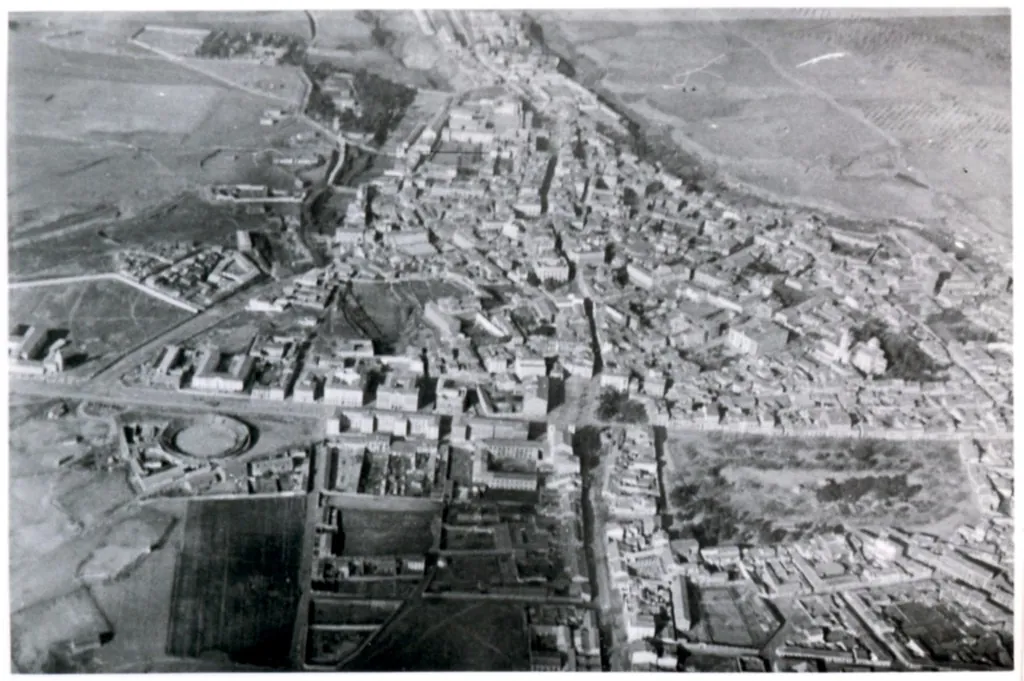
Argecilla stands on a rocky promontory overlooking the surrounding countryside. This position explains the shape of the village itself. Streets rise and fall in short, sometimes steep stretches, adjusting to the terrain rather than following any regular grid. The buildings reflect the traditional style of this part of La Alcarria: stone masonry walls, adobe reinforcements, and large gateways once designed for yards or storage spaces.
From the edges of the village, the wider landscape becomes clear. The terrain opens out into the páramos of La Alcarria, high plains marked by broad fields and shallow valleys cutting between low hills. Colour shifts noticeably through the year, especially when cereal crops move from green growth to the dry yellow tones of summer.
San Pedro and the historic heart
The parish church, dedicated to San Pedro Apóstol, occupies the most visible point in the settlement. The current structure dates back to a 16th-century building that was later modified. It is not a large or imposing church, which is typical in villages of this size, yet it preserves a modest Baroque altarpiece. This detail hints at a time when the community had a slightly larger population and more resources than today.
Around the church lies the oldest part of Argecilla. Here, houses with thick walls cluster together, often organised around interior courtyards once used to keep tools or animals. Some façades still display carefully worked stone lintels and wide entrances, a reminder that homes were also places of labour.
A walk through the village does not take long. In less than an hour, most streets can be covered. What stands out is not scale but detail: attached pens, patched walls made from different types of stone, and houses that reveal extensions added over time. Each element reflects small adjustments rather than large transformations.
Paths across fields and scrubland
The area around Argecilla maintains the traditional agricultural structure of La Alcarria. Plots of cereal crops alternate with small holm oak woods and patches of low scrub, often within short distances of each other. Old paths run between them, once linking the village with neighbouring settlements.
Some of these routes are still in use today, either for walking or for reaching farmland. They do not involve major changes in elevation, although the ground can be uneven in places. From these paths, it is easy to spot birdlife typical of open plateau landscapes. Birds of prey are a frequent presence, especially when the wind creates rising currents over the plains.
The sense of space becomes more apparent once outside the built area. Fields stretch out without interruption, and the horizon remains wide and low. It is a landscape defined less by landmarks than by its continuity.
Traditions tied to the calendar
Social life in Argecilla continues to revolve around the religious calendar and the return of families during the summer months. The feast of San Pedro, held at the end of June, usually brings together both residents and those who still have family ties or homes in the village. During these days, the population briefly increases and the village regains some of the activity it had decades ago.
In domestic life, certain customs linked to rural traditions still persist. The preparation of cured meats after the matanza, the traditional slaughter and processing of livestock, remains part of local memory. Seasonal produce is also used in ways that reflect older habits of self-sufficiency. These practices are no longer always carried out collectively, but they continue to shape how the village understands its past and present.
Moving around and taking it in
Argecilla is small enough to explore entirely on foot without difficulty. It makes sense to leave a vehicle at the entrance and continue along the narrower streets on foot. Walking allows a closer look at the construction details and the way the village adapts to its terrain.
To understand the setting more fully, it is worth following one of the paths that lead out towards the fields. From there, the scale of the landscape becomes clearer, and the relationship between the village and the surrounding plains of La Alcarria comes into focus.