Full Article
about Armuña de Tajuña
Small town in the Tajuña valley; it still has traces of its medieval past.
Hide article Read full article
A slow start in La Alcarria
Early in the morning, when the sun is still low over the rooftops, Armuña de Tajuña carries the scent of damp earth and cereal crops. A car passes slowly along the main road through the village and then quiet returns: wind brushing the valley trees, a dog barking somewhere behind a gate. With around 280 inhabitants and just over an hour from Guadalajara, this small settlement in Castilla La Mancha moves at a pace best understood on foot. The simplest way to approach it is to wander without a fixed plan, letting the streets lead towards the square or out along the tracks that head into open country.
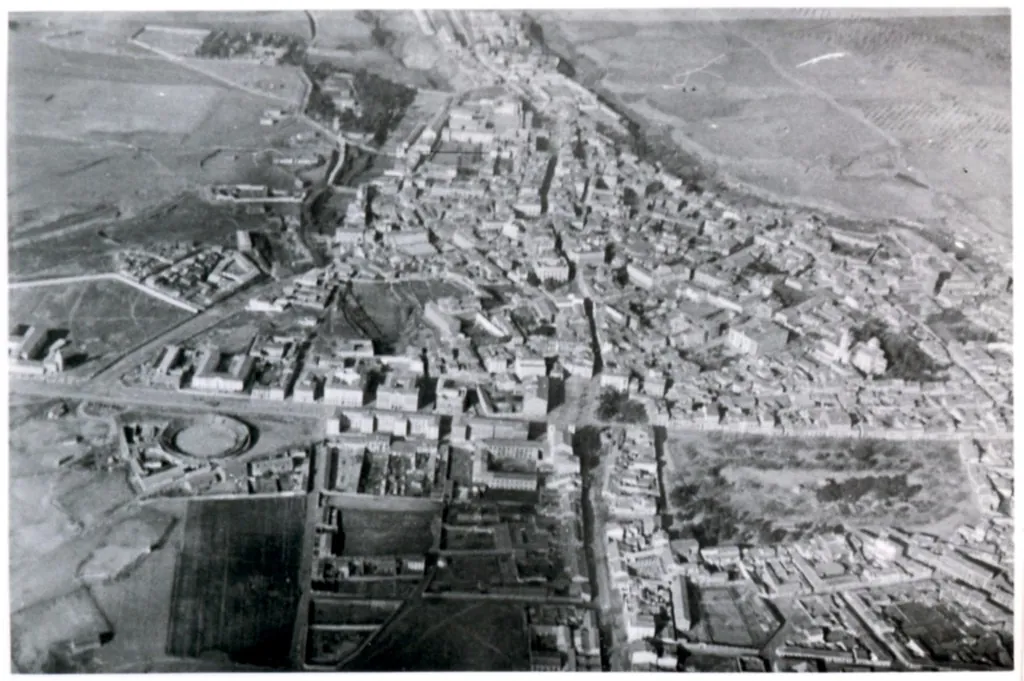
The houses mix stone and brick, many with large gateways that hint at their agricultural past. Rough masonry, inner courtyards and former animal pens point to a place where the farming calendar still shapes daily life. From the edge of the village the land opens into the gentle cultivated hills typical of La Alcarria, while the valley of the River Tajuña traces a greener strip in the distance.
Armuña de Tajuña is not arranged around a grand landmark or a carefully curated historic centre. Its character lies in its relationship with the surrounding fields and in the steady rural rhythm that continues to define it.
The church and the older heart of the village
The parish church of the Asunción stands out straight away for its solid volume and stone darkened by time. It is not an ornate building, yet it has ordered village life for generations. The tower can be seen from several streets and helps with orientation when walking through the compact centre.
Around it are some of the oldest houses. Wooden balconies project above deep entranceways. On certain façades, stone shows through layers of whitewash. In several homes, former haylofts or animal quarters can still be identified. Some are now closed off or adapted for other uses, but their original function remains visible in the size of the doors and the height of the walls.
These streets reward an unhurried walk, particularly in mid-morning or towards sunset when the light slides across the façades. At those times the village fills with small routines: someone sweeping a doorway, a brief exchange on a corner, the rattle of a shutter being raised. There is no need for a checklist of sights. The appeal lies in observing how space and habit still fit together.
Down to the valley of the Tajuña
A short walk from the built-up area, the ground begins to fall away towards the valley of the Tajuña. The landscape shifts here. More trees appear, brambles line the margins and poplars move in the breeze. The river runs relatively close, although in certain stretches it is hidden by vegetation.
The agricultural tracks around Armuña de Tajuña are simple and largely flat. They are suitable for walking and for relaxed cycling, linking cereal fields, small vegetable plots and scattered farm huts across the landscape. In summer it makes sense to head out early or wait until evening. The sun bears down on the open hills and there is very little shade.
Winter brings a different challenge. The wind that sweeps across the Meseta, Spain’s high central plateau, can be noticeable. The cold tends to be dry and persistent, particularly on exposed paths. Time outdoors is still possible, but it calls for preparation.
Among the crops, it is fairly common to spot birds typical of this agricultural environment. Kestrels can be seen hovering above the fields. Small flocks move along the boundaries between plots. These details reinforce the sense that the village and its surroundings form a single landscape rather than two separate spaces.
August evenings and local traditions
August often marks a change in tempo. Many residents who live elsewhere return for a few days and the square fills again in the evening. Conversations stretch out, children run from one side to the other, and music finds its place during the fiestas.
Religious celebrations continue to hold weight in the local calendar. At times they include processions along nearby tracks or gatherings at hermitages in the surrounding area, something common in many villages in this part of the province of Guadalajara. These occasions bring movement to paths that for much of the year remain quiet.
Outside those days, everyday life returns to its usual calm. In autumn, recently ploughed fields release a distinctive scent of soil across the whole municipality, especially after a brief shower. The change in season is noticeable not through events but through the land itself.
Choosing the right season
Spring is often one of the most rewarding times to explore Armuña de Tajuña and the paths along the valley. Temperatures are mild and the fields remain green before the cereal turns golden.
Autumn shifts the palette towards ochre tones. The air feels clearer after the heat of summer. These months suit longer walks in the surrounding countryside.
Summer afternoons are hot, as is typical in this part of La Alcarria, so it pays to plan around the sun. Early starts or waiting until dusk make time outdoors more comfortable. Winter leaves the village very quiet. The cold can be intense if the wind picks up, which is worth bearing in mind when planning to spend time outside.
Looking outward to understand the village
Armuña de Tajuña does not revolve around major monuments or streets designed for photographs. What defines it lies beyond the last houses: the fields encircling the settlement, the nearby valley and the agricultural cadence that still shows in many doorways and courtyards.
The most fitting plan is a straightforward one. Walk until the village is behind you. Pause to look across the cultivated hills. Return as the light begins to fade. That is when Armuña de Tajuña settles back into the silence that shapes most of its days, a silence rooted in land, weather and routine rather than spectacle.