Full Article
about Budia
A town with a noble air and a porticoed main square; mentioned in *Journey to La Alcarria*.
Hide article Read full article
A village you pass through slowly
Some villages are not so much visited as eased into. You find yourself driving along a secondary road, fields stretching out on either side, and almost without thinking you pull over because something suggests it is worth stepping out for a while. Tourism in Budia is very much like that.
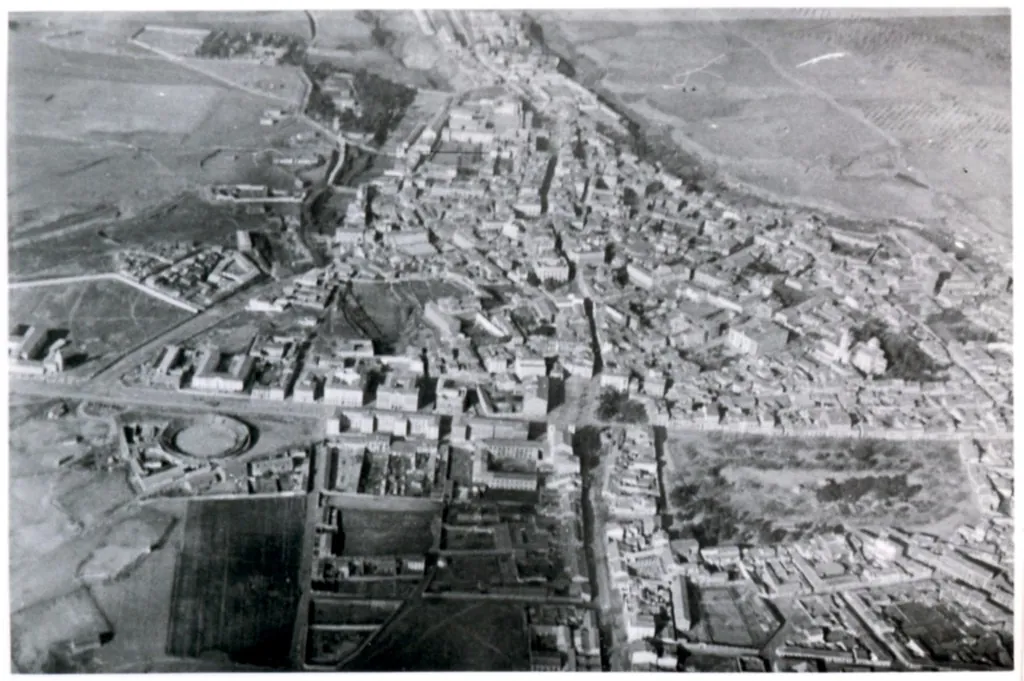
This small village in La Alcarria, a rural region in the province of Guadalajara, has just over two hundred residents. On paper, not much happens here. That is precisely the appeal. Budia sits a little over an hour from the city of Guadalajara, reached by quiet roads that cut through open countryside. There is no dramatic arrival. Just stone houses, streets that climb without warning and the particular weekday stillness common to many villages in La Alcarria.
It is the kind of place where the pace adjusts as soon as you step out of the car.
Uphill streets and old doors
The layout of Budia encourages unhurried wandering. Streets twist and rise, some of them steep enough to make you slow down whether you intend to or not. Wooden gates line the way, heavy and worn, as if they have been there longer than the tarmac on the approach road.
The parish church dominates the village skyline. Built in stone, it blends architectural styles from different periods. It is not a grand cathedral, yet the passing centuries are visible in its walls. Nearby stands the historic town hall, constructed in tufa stone and notably restrained in appearance.
Beyond these landmarks, it is the overall setting that draws attention. A walk through the centre becomes an exercise in noticing small details: flaking façades, an old coat of arms carved above a doorway, an iron grille shaped by hand. There is no single headline sight. Instead, Budia rewards anyone willing to look closely.
The square where life gathers
The Plaza Mayor forms the heart of daily life. It is modest in size, yet it concentrates much of what happens in the village.
There is usually a kiosk and a handful of benches where neighbours sit in the late afternoon when the weather allows. In summer the atmosphere shifts. Children run across the open space, conversations stretch out, and there is a sense that most people recognise one another.
Visit in winter or on a weekday and the mood changes again. Shutters are half lowered, footsteps echo as you cross the square, and silence settles more firmly. Budia does not stage itself for visitors. What you see depends largely on when you arrive.
The landscape of La Alcarria
Around Budia, La Alcarria appears much as it does in many parts of this central Spanish region. Wide fields extend towards the horizon. Holm oaks are scattered across the terrain. Dirt tracks leave the village in several directions, heading into open farmland.
This is not a landscape of mountains or dramatic viewpoints. It is horizontal and expansive, with the sky often taking centre stage. In spring, the scent of thyme can be noticeable along the edges of the paths. In autumn, the earth turns a deeper ochre.
For those who enjoy walking, there are agricultural tracks that can be followed without too much difficulty. They are broad routes designed for tractors rather than hikers, yet they offer a clear sense of how the land is worked and how closely the village remains tied to it.
Shade is limited when the sun is strong. In warmer months, protection from the heat makes a difference.
Traditional flavours of the area
Food in and around Budia follows the pattern found in many villages across the province of Guadalajara. It is hearty cooking, closely connected to the countryside.
Roast lamb often appears at celebrations or during weekends. Gachas, a thick savoury dish associated with rural Castilian cuisine, is another common sight, along with cured meats and cheeses from nearby villages. And then there is the honey of La Alcarria. In this comarca, or local district, honey is as much a part of the landscape as the holm oaks.
Budia is not a gastronomic destination in a modern sense. The cooking here is rooted in tradition, direct and uncomplicated. It reflects the rhythms of village life rather than culinary trends.
A natural stop on a route through La Alcarria
Budia works best as a pause within a broader journey through La Alcarria rather than as a base for several days. It is the kind of village where you arrive, wander for an hour or so, sit for a while in the square and then continue on your way.
Reaching Budia is most practical by car. The roads in the area are secondary but generally in good condition. Public transport does exist, though timetables are usually limited.
For travellers drawn to quiet villages that do not feature on every list, Budia fits comfortably into that category. It does not attempt to impress. Instead, it reveals itself gradually, like an unhurried conversation in the middle of La Alcarria.