Full Article
about Cañaveras
Known for its stone pine and forested surroundings; gateway to the sierra
Hide article Read full article
Cañaveras is the sort of place you can understand in under an hour. It sits in the province of Cuenca, within the region known as La Alcarria, a broad rural area of central Spain. Just over two hundred people live here. There are no big landmarks drawing crowds, no steady stream of visitors. What you find instead is a small settlement that carries on at its own pace.
If arriving by car, there is an open space at the entrance to the village, near the church of San Pedro, where parking is straightforward and out of the way. In summer, the sun becomes intense from around midday and shade is limited, so it makes sense to come early or later in the day. The light can be unforgiving at its height, and there is little shelter in the streets.
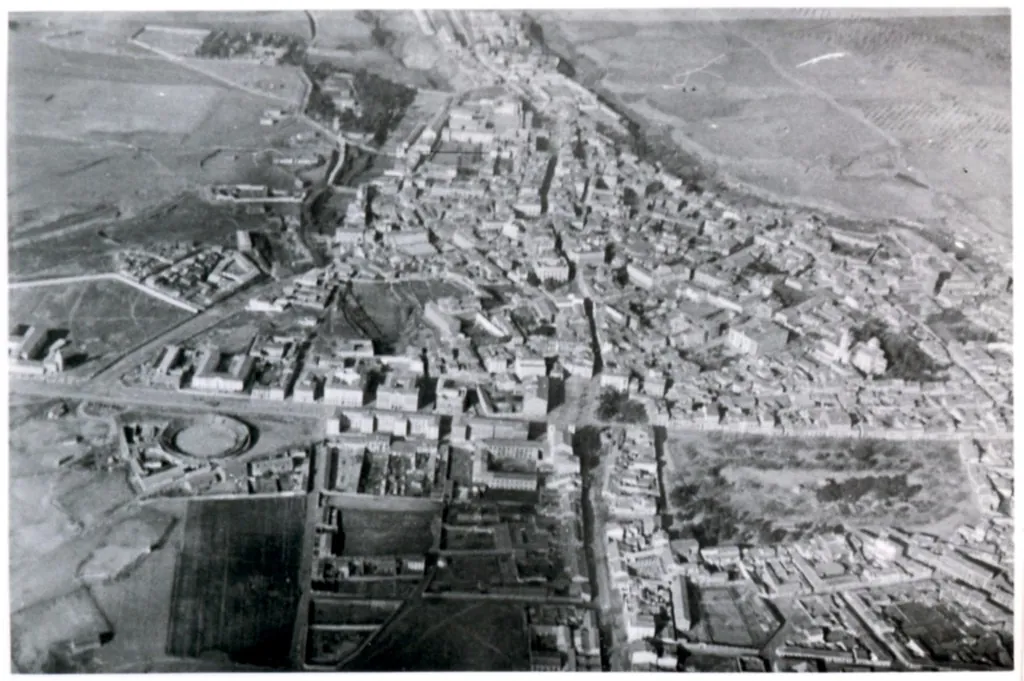
The village is compact and easy to navigate. A short walk is enough to see how it fits together and how it relates to the wide fields that surround it.
Around the Plaza and San Pedro
The centre of Cañaveras is small. Half a dozen short streets circle the main square, where the Iglesia de San Pedro stands as the dominant building. Its structure is old and, like many rural churches in Spain, it has been repaired and altered over time. This gradual adaptation is part of its character rather than a distraction from it.
The square itself is simple and functional. Several fountains are dotted around, and some are still in working order. On a quiet weekday, there may be almost no one passing through apart from residents heading in or out of their homes. There is little traffic and even less noise.
The houses around the plaza and along the adjoining streets are typical of this part of Cuenca province. Stone, adobe and curved roof tiles define the look of the village. Renovations are limited, so much of the building stock retains its traditional appearance. The streets are short and practical rather than decorative. It is a place shaped by necessity and climate, especially the cold winters that define life in inland Castilla La Mancha.
There are no grand civic buildings competing for attention, no carefully curated historic quarter. The church and the square form the natural focal point, and everything else radiates quietly from there.
Fields of La Alcarria
Beyond the last row of houses, the landscape opens immediately. Cañaveras is surrounded by farmland, with cereal crops covering much of the area for most of the year. The character of the countryside shifts with the seasons. In spring the fields turn green, softening the horizon. As the heat builds, the colours dry out and the land takes on more muted tones.
From the edges of the village, the plain of the Cuenca section of La Alcarria stretches into the distance. There are no marked viewpoints or information boards explaining what you are seeing. The views are informal and unframed. Walk up any of the tracks that lead out towards the fields and the panorama unfolds without effort.
The terrain is open rather than dramatic. There are no steep gorges or dense forests here, just cultivated land and sky. That simplicity is part of the area’s identity. It reflects an agricultural way of life that has shaped settlements like Cañaveras for generations.
Tracks Between Small Villages
Several agricultural tracks leave the built-up area. These are dirt roads used mainly by tractors and farm vehicles. After rain they can become muddy. In summer they are dry and dusty, with fine earth rising underfoot or tyre.
These tracks link Cañaveras to other small villages in the area, including Villarejo de la Peñuela and Valdecolmenares. The scenery between them remains consistent: open fields and houses designed to withstand harsh winters. Settlements are spaced apart, each one modest in scale and similar in layout.
There is no special infrastructure for walkers or cyclists mentioned, and no signposted routes. The appeal lies in the straightforward act of walking out of the village and into working countryside. It is practical terrain, not landscaped for visitors.
Anyone planning to explore should keep in mind the conditions. Mud in wet weather and dust in high summer are part of the experience. The environment has not been adapted for tourism, and that is evident.
Daily Life and August Festivities
On an ordinary day, Cañaveras is very quiet. There is little movement and limited services. It is wise to bring water or something to eat rather than expect shops or cafés to be open. The village is not geared towards tourism and does not attempt to present itself as such.
This changes somewhat in summer. Many people return to family homes during the warmer months, and the atmosphere shifts for a few days. The most noticeable moment comes with the village festivities, traditionally held in August. These include religious events and simple open-air dances known in Spain as verbenas. For a short period, the streets that are usually empty fill with conversation and activity.
Outside those dates, daily life follows a steady rhythm. The scale of the place means that news travels quickly and routines are visible. There are no attractions to tick off, no long list of experiences to schedule.
A Short, Honest Stop
Cañaveras does not demand a full day. It works best as a brief pause while travelling through La Alcarria. Park near the church of San Pedro, walk around the square, notice the fountains and the traditional houses, then head out along one of the tracks for a short stretch into the fields.
An hour is enough to grasp how this corner of Cuenca province functions. The village offers a snapshot of rural Castilla La Mancha without embellishment. If continuing a route through the comarca, it fits naturally as a short stop between other destinations.
There are no monuments to chase and no long itinerary to follow. What Cañaveras provides is simpler: a clear view of everyday life in a small agricultural community, set against the wide plain of La Alcarria.