Full Article
about Escariche
Village with stone mansions and coats of arms; farming tradition
Ocultar artículo Leer artículo completo
The church bell strikes noon, yet nobody appears. Not a single bar terrace fills with workers on their lunch break, no gossip echoes through the stone alleyways. At 788 metres above sea level, Escariche keeps its own timetable—one that most visitors from Britain will recognise from pre-war photographs of rural Yorkshire rather than twenty-first-century Spain.
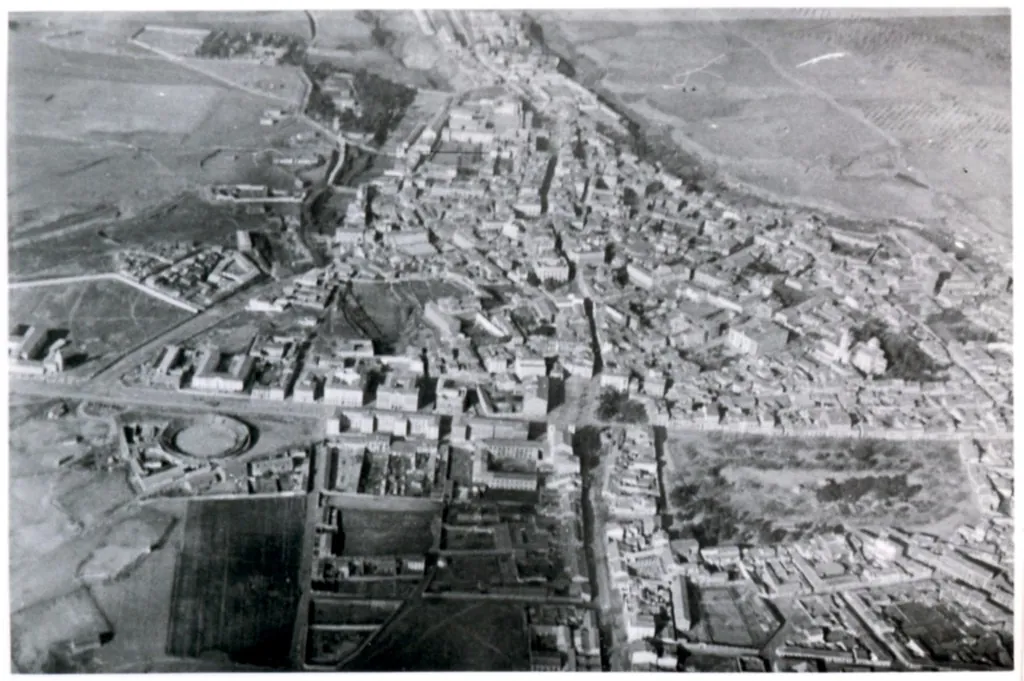
This hamlet of 186 souls sits on a gentle rise in La Alcarria, the sun-baked buffer zone between Madrid's meseta and the mountains of Cuenca. From the village edge, cereal fields roll away in every direction until they merge with low oak scrub and, finally, the sky. The horizon is so wide that clouds cast shadows the size of small counties, dark bruises that glide across blond stubble and turn it gold, then silver, then gold again.
Stone, Sun, and the Smell of Thyme
Escariche is built from what lay underneath it: honey-coloured stone, sandy mortar, clay tiles that blush orange when the evening light hits. Houses grow directly from the bedrock, many still fronted by timber doors wide enough for a mule and cart. Those entrances lead onto corridors so narrow that neighbours can shake hands across them without leaving their doorsteps. Walk quietly and you'll hear swallows nesting under medieval eaves; walk more quietly still and you might catch the hush of underground cellars where wine once fermented in clay tinajas. Most are padlocked now, but the earth still smells of must and wild thyme.
There is no formal tourist office, no glossy leaflet listing opening hours. The parish church of San Pedro keeps its own rhythm: unlocked at dawn, locked again after the single Sunday mass. Inside, the air is cool enough to make arm-hair rise; outside, the plaza is simply a widening of the street, big enough for a game of football if the ball is half-inflated and nobody minds the slope. A wooden bench faces the portico—unpainted, initials carved deep, the varnish long since sun-blistered away. Sit there long enough and someone will nod hello, or at least flick the ash from a Ducados cigarette in your direction.
Walking Without Waymarks
Maps exist, but they lie. The footpaths that radiate from Escariche are farm tracks bulldozed for tractors, not ramblers. One lane heads north towards the Ermita de la Soledad, a chapel that appears on the horizon like a stone shoebox, then vanishes when the path dips. Another drifts south-east towards the salt-tanged marshes of the River Tajuña, twelve kilometres distant. Neither route is signposted; both are public, the right-of-way assured by medieval precedent rather than modern statute. Spring brings fistfuls of red poppies among the wheat; by July the same fields have been shaved to stubble that cracks underfoot like Weetabix. Take water—lots of it—and a hat that ties under the chin. The wind at this altitude carries grit fine enough to scour sunglasses.
Birdlife compensates for the lack of shade. Calandra larks rise vertically, spitting metallic calls; little bustards occasionally stalk the fallow, though you'll need patience and a scope to pick out their chess-board plumage. Bring binoculars and you can pass a morning without taking more than a kilometre, simply by standing still while the landscape re-arranges itself around you.
What Passes for Entertainment
Evenings begin when the sun slips behind the telecom mast on the western ridge and the temperature drops ten degrees in as many minutes. Swifts screech overhead, then suddenly fall silent. Somewhere a dog barks once, as if out of duty. By nine o'clock the plaza holds six men on metal chairs brought out from a kitchen. They talk harvest forecasts, the price of diesel, whether the new mayor (elected unopposed) will tarmac the upper street. Conversation is slow, punctuated by the rustle of cellophane as another packet of cigars is opened. If you want to join in, a basic grasp of Spanish helps, though the local accent turns every final 'd' into a soft 'th'—ask for a cerveza and you'll get one; ask for directions to the sendero and you may be met with blank politeness.
Food options are limited to what you can cook yourself. The last village shop closed when its proprietor, Doña Rosario, died in 2018. Guadalajara's supermarkets lie 80 minutes away by car, so self-catering guests arrive with cool-boxes the size of coffins. Those without transport knock on doors marked Miel or Queso; honey and cheese appear in unlabelled jars, prices scrawled on the lid in felt-tip. A kilo of raw Alcarria honey—amber, peppery, the smell of sun-baked broom—costs around eight euros. Try paying with a fifty and you'll witness the Alcarrian shrug: shoulders up, palms turned skyward, a gesture that conveys both apology and absolute finality.
When the Weather Turns
Winter arrives overnight, usually between the 10th and 15th of November. One morning the stone gutters are laced with ice, the communal water trough frozen solid. Roads become glassy; the council spreads grit only after someone phones to complain, and the council phone is answered only on Tuesdays. Snow is rare but not unknown—February 2021 brought 18 cm, enough to collapse the old school roof and cut the village off for three days. Book accommodation with a fireplace and bring chains if you insist on a Christmas visit.
Summer, by contrast, is relentless. Daytime highs of 38 °C are routine; the record stands at 43.6 °C, measured in the shade of the church wall. Afternoons become a test of endurance: metal doorhandles burn, the smell of hot pine drifts from roof beams, even lizards seek shade inside shoes left outside. Sensible visitors adopt the siesta without protest, re-emerging at seven when the shadows lengthen and the stone begins to exhale the day's heat.
Getting There, Getting Away
No train comes closer than Guadalajara, itself only an hour from Madrid by AVE. From the provincial capital, the CM-202 and CM-2204 wind south-east through olive groves and the surreal aqueduct of Brihuega. The final twelve kilometres are single-track, tarmac blistered into tar bubbles that flick against the wheel arches. Meeting a combine harvester here requires one party to reverse; locals assume it will be you, and they're usually right. Petrol stations are non-existent once you leave the N-320—fill the tank in Humanes or risk an expensive lesson in Spanish farming vernacular.
Leave time for the return journey. The same horizon that looked inviting at dawn becomes hypnotic at dusk, the road a charcoal ribbon laid across fields the colour of digestive biscuits. Pull over, engine ticking, and the silence is so complete you can hear your own pulse. That is Escariche's real monument: not a church, not a castle, but an audible pause between one human noise and the next. Take it with you—there's no entry fee, and nobody will check your ticket on the way out.