Full Article
about Espinosa de Henares
Set on the Henares plain; it has a train station and a medieval bridge.
Hide article Read full article
A village that slows the day
Towards the end of the afternoon, when the sun drops over the cereal fields, the air in the main square cools and swifts begin tracing quick circles above the rooftops. That moment says a lot about tourism in Espinosa de Henares. It is calm, with few fixed attractions and plenty of room simply to look around. Stone and brick façades take on a soft orange light, and the streets settle into near silence.
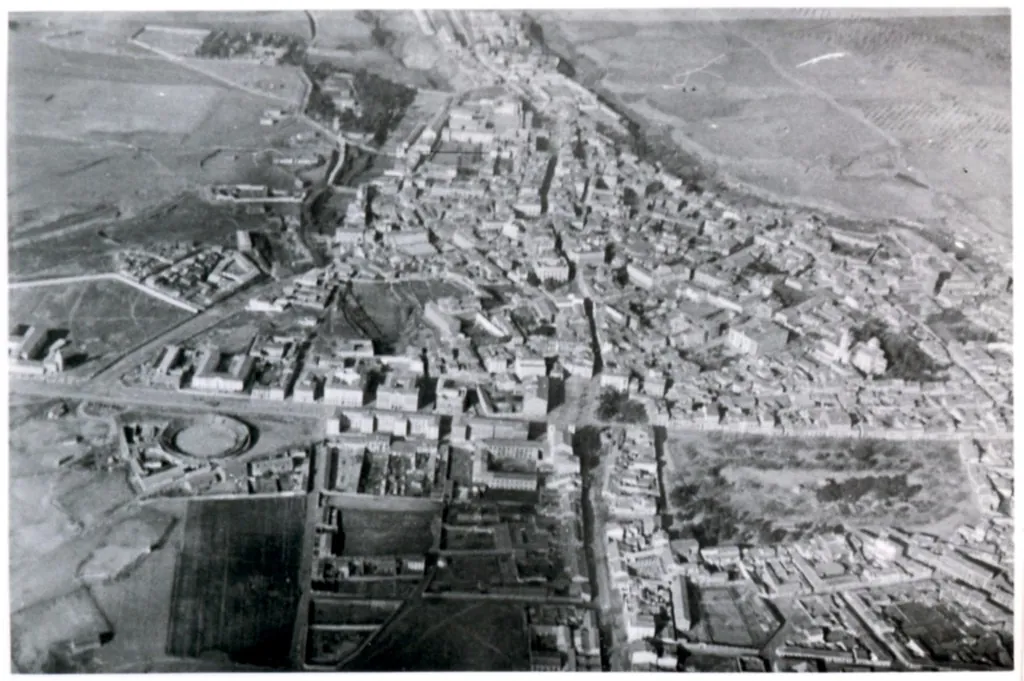
Espinosa de Henares sits in La Alcarria, a region in central Spain known for its open countryside and gentle terrain. This particular spot lies between wide farmland and the first low rises of the surrounding area. Just over seven hundred people live here, around 715 according to the latest municipal figures. Life still follows an agricultural rhythm. In spring the edges of the village turn green, while by mid-summer the landscape becomes dry and yellow, with the dusty scent of freshly cut cereal hanging in the air.
The square and the church
The church of San Juan Bautista stands over the square with a solid, restrained presence in pale stone. The current building is usually dated to the 16th century, although later repairs are visible in its walls. Looking closely, those layers become clear: uneven stretches of masonry, sections of newer brick, and a more carefully finished entrance.
In the afternoon the square is often half empty. A neighbour passes slowly, a window opens, the metallic rattle of a shutter closing carries across the space. The houses around the church combine stone, adobe and brick. Many still have iron window grilles and heavy wooden doors darkened by time.
Short streets and inner courtyards
Espinosa is easy to walk through in a short time. Streets are not long, and they often end in small squares or open courtyards where vegetable plots appear behind fences made from old boards. Some entrances still show worn hydraulic tiles on the floor and low benches fixed against the wall.
By mid-morning the village has a different sound. Chickens can be heard in a yard, a tractor starts somewhere further down the street, and neighbours exchange brief conversations as they pass. This is not a place defined by a long list of monuments. Its interest lies in small details that appear when walking without hurry.
Paths through cereal fields and olive groves
Agricultural tracks begin just beyond the last houses. These are wide, pale dirt paths that stretch between cultivated plots. The land is fairly flat, making it easy to walk without much effort. In milder months, partridges cross quickly from one side to another, while birds of prey circle high above.
Water is worth bringing in summer. Trees are scarce and shade is limited. At sunrise or late in the day, though, the landscape changes noticeably. Wind moves through the cereal fields and the surface seems to ripple like golden water.
The area also works well for cycling, whether on a road bike or gravel bike. The smaller roads linking nearby villages tend to have very little traffic.
The hermitage beyond the village
At some distance from the built-up area stands the hermitage of Nuestra Señora de la Encarnación. It is a small and simple building, with light-coloured walls and a modest roof, without elaborate decoration.
On certain dates in the religious calendar, residents walk out in procession or gather for mass. The atmosphere is familiar and local. People who live elsewhere during the year return to the village, tables appear under nearby trees, and conversations continue long after the religious part of the day has finished.
At other times there is no activity at all. On many days the hermitage simply remains there in silence, surrounded by open countryside.
When to visit and how it feels to arrive
August is when Espinosa de Henares sees the most movement. The local fiestas bring back many residents who spend the rest of the year elsewhere. Streets fill up more, and the atmosphere shifts. For a quieter visit, spring or early autumn is a better choice.
From the city of Guadalajara, the journey takes about twenty minutes by car along regional roads. The landscape opens quickly: wide fields, the occasional agricultural building standing alone, and small villages that appear suddenly after a gentle bend.
Arrival is understated. There are no large entrance signs or prepared viewpoints. The village comes into view without announcement: first the fields, then the first houses, and finally the church tower rising above the rooftops. It is a place best understood by walking slowly and paying attention to what happens around you.