Full Article
about Fuencemillán
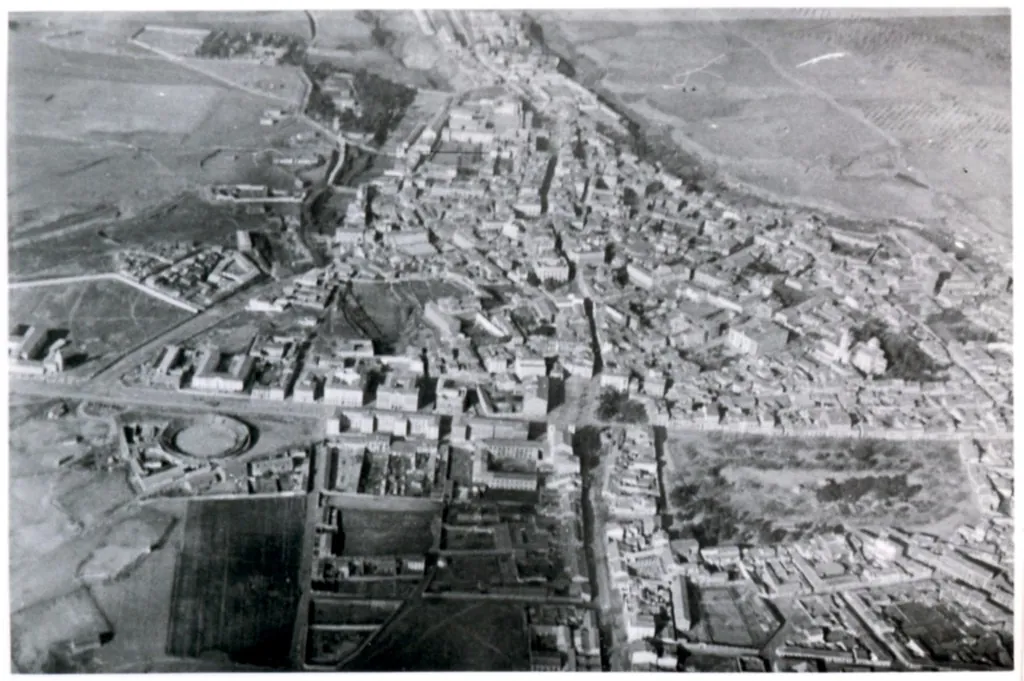
Town on the Henares plain; still has a pillory and manor houses.
Hide article Read full article
Anyone planning tourism in Fuencemillán should arrive prepared. There are no shops, no cash machine and no petrol station. There are no bars either. A visit consists of parking up, walking around and little more. Cars are usually left without difficulty at the entrance to the village, beside the first houses.
This is not a place for a long stay. The time you spend here depends on how long it takes to walk a handful of short streets. In summer the heat presses down hard, as there is very little shade. In winter frost is common. Spring and early autumn are the most comfortable seasons for walking in and around the village.
Fuencemillán is very small. Only a few dozen people live here, and it shows in the stillness and the lack of movement. For travellers exploring the wider region of La Alcarria, it works as a brief pause rather than a destination in its own right.
Getting There
Fuencemillán is reached by car. There is no regular public transport.
From Guadalajara, the usual route follows the A‑2 towards Zaragoza before continuing along secondary roads through the surrounding comarca. In the final kilometres, signposting is not always clear, so it helps to have a map on your phone.
The road into the village is narrow and effectively ends at the first houses. There is no through traffic, no main square busy with vehicles, just a quiet arrival point that marks the start of the settlement.
A Walk Through the Village and Its Surroundings
The interest of Fuencemillán lies in everyday details. Stone and adobe houses line the streets, many of them whitewashed. Wooden doors show years of wear. Roofs are covered with curved clay tiles typical of this part of La Alcarria. There is nothing unusual in these features for the region, yet here they form a fairly uniform whole.
The streets are short and calm. Some houses still have corrals and old stone walls. Small details appear in lintels and gateways, traces of local building traditions rather than grand architecture. This is not a monumental ensemble or a historic complex filled with landmarks. It is simply a rural village that has changed slowly.
At the centre stands the Iglesia de San Juan Bautista. It is a simple rural church, similar to many found across Castilla. It serves as the gathering point when there are celebrations, a focal space in a village where shared moments matter.
Step beyond the last houses and the urban area gives way immediately to open fields. Cereal crops dominate the landscape. The terrain is broad and largely treeless. In spring the fields turn green; by mid-summer they shift to yellow and dry tones. Agricultural tracks cut across the land, used by tractors and local farmers. They can also be followed on foot for a short walk if stretching your legs appeals.
At night the sky is notably clear. With little artificial light in the surrounding area, the darkness feels complete once the sun has set.
Rural Rhythms and Seasonal Life
Life in Fuencemillán remains closely tied to the land. Wheat and barley are the main crops, with some olive trees in the surrounding area. In summer, the harvest brings machinery onto the tracks and adds movement to otherwise quiet days.
The patron saint festivities are usually held in summer. At that time, people who have family roots in the village but live elsewhere return for a few days. The atmosphere is small and distinctly local, more a gathering of neighbours and relatives than a large-scale festival. Outside these dates, the village is very calm for most of the year.
This agricultural cycle shapes the rhythm of daily life. Activity rises and falls with the seasons, and the contrast between the busier harvest period and the stillness of winter is clear.
Practical Considerations Before You Go
Fuencemillán has no basic services for visitors. There are no shops, no cash machine and no petrol station within the village. Anyone needing to buy food or eat out will have to travel to other towns in the area.
There is no accommodation in the municipality itself. Some nearby villages do offer rural houses, but nothing is located within Fuencemillán.
If planning to walk along the surrounding tracks, especially in summer, it is sensible to bring water. Mobile phone coverage cannot be relied upon everywhere.
For most travellers, an hour is enough. Arrive, walk the streets, take in the church and the fields, then continue your route through La Alcarria. Fuencemillán does not try to be more than it is. It is a very small village, quiet for much of the year, where the landscape and the ordinary details of rural life define the experience.