Full Article
about Fuentelencina
Historic town with notable heritage; its arcaded square and fountain stand out.
Hide article Read full article
A slow morning in the Alcarria
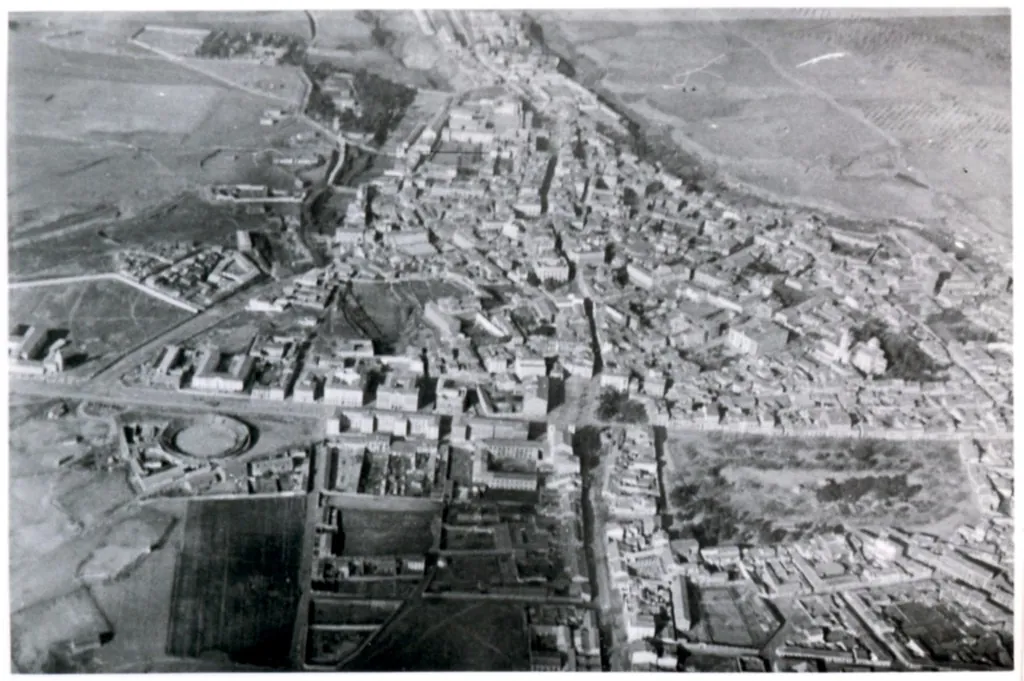
Just outside the main square, on a summer morning, the air still holds a trace of the night’s dampness. In Fuentelencina at that early hour, the streets are almost empty, and the clearest sound is your own footsteps on the pavement. From the small junction where the main streets meet, the village stretches out in straight lines of stone houses: façades marked by old rain stains, slightly bent iron grilles, wooden doors faded by time. In the distance, a rooster calls; somewhere in a yard, a dog shifts. Little else.
Fuentelencina sits in the heart of the Alcarria, with around three hundred residents. Life here moves at the pace of a place shaped more by the land than by visitors. The surrounding landscape is open, with gentle hills, scattered holm oaks and cereal fields that turn a pale straw colour in summer, typical of this part of central Spain. Even in July, nights tend to cool down. Once the sun drops, the air changes and the streets carry that dry-earth smell that rises after the day’s heat.
Stone, shade and quiet details
Walking through Fuentelencina is about noticing small things. Many houses are built from local stone and finished with long eaves that cast shade over the doorway. Some still keep old metal fittings or large gates that hint at their agricultural past. It is not unusual to see open yards or former stables now adapted as garages.
The parish church appears suddenly among the houses, without grand gestures. It is a sober building, very much in keeping with this part of the province of Guadalajara. Inside, there are usually religious images with local significance and an altarpiece that seems to date back several centuries, although the exact details vary depending on who you ask in the village. Nearby, there are also stone fountains and old washhouses, some of which are still used from time to time.
A short walk towards the edges of the village is enough for the built area to give way to open countryside. From there, you can see the cereal plots and the low hills that surround Fuentelencina. There are no marked viewpoints or information boards, just farm tracks that slip out between the houses and continue towards neighbouring villages.
Tracks across open land
The routes that begin in Fuentelencina are, in essence, working paths. Dirt tracks used by tractors that also lend themselves to long walks where you might not encounter anyone for hours.
The terrain is gentle, with long but gradual slopes and no sudden changes in level. In spring, the fields look very different, with taller grass and small flowers lining the verges. In autumn, after several days of rain, nearby wooded areas can produce níscalos or setas de cardo, varieties of wild mushrooms known and gathered locally. Caution matters here, as people in the village are careful to distinguish between what is safe to pick and what is not.
The sky often feels wide and uninterrupted. Birds of prey are easy to spot gliding above the fields, taking advantage of the rising air currents from the hills. Buzzards are common, and occasionally a short-toed eagle appears overhead.
Food shaped by the land
Cooking in Fuentelencina follows the pattern of the inland Alcarria: hearty dishes built on simple ingredients. Roast lamb tends to appear at family celebrations, migas remain a staple in winter, and stews shift with the seasons and whatever the countryside provides.
Honey is part of the wider identity of the region. Thyme or rosemary honey is the most common, and it often turns up at breakfast, spread over toasted bread or mixed into homemade desserts. It is a small detail, but one that reflects the connection between the landscape and everyday life.
Festivities and the passing year
The village changes noticeably in August. During those days, many former residents return, and the streets take on a liveliness that is largely absent for the rest of the year. The patron saint festivities bring together processions, shared meals and activities organised by the residents themselves.
Easter, or Semana Santa, is more subdued, with simple processions through the older streets. Throughout the year, some rural customs still continue. These include blessings of the fields or prayers for rain when dry spells stretch on too long, a concern that remains close in this dry landscape.
Reaching Fuentelencina
Fuentelencina lies in the Alcarria region of Guadalajara and is reached via secondary roads that cross open fields and small villages. The final stretch is usually along quiet local roads, with gentle bends and slight changes in elevation.
It is best approached by car. Once there, the easiest way to explore is on foot, leaving the vehicle near the main square. Anyone planning to walk the countryside tracks should bring comfortable footwear and water, especially in summer. Shade is limited, and the Alcarria sun falls directly from midday onwards.