Full Article
about Gajanejos
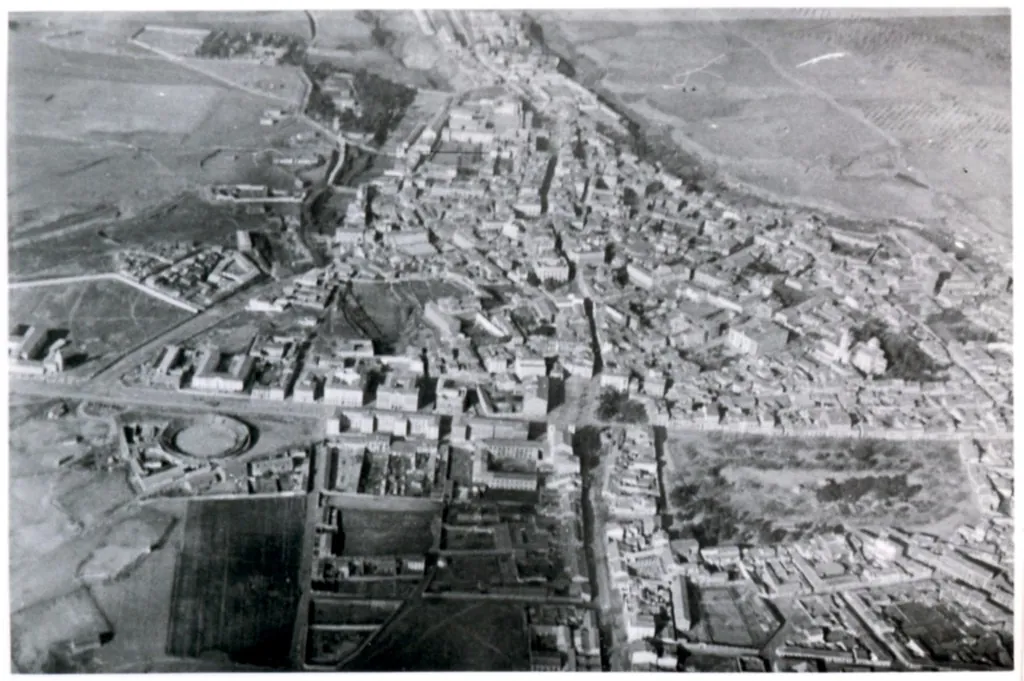
Rebuilt after the war; located on the A-2 motorway.
Hide article Read full article
A dot on the map in La Alcarria
There are places you pass through expecting to be gone in ten minutes, only to find yourself lingering far longer. Tourism in Gajanejos has that effect. On the map it is barely a speck in the middle of La Alcarria, with just over fifty residents, yet it carries a calm that slows the pace almost without notice.
Gajanejos sits in the province of Guadalajara, in the upper part of La Alcarria, a historic rural region of Castilla La Mancha known for its open landscapes and agricultural tradition. The approach is along secondary roads lined with cereal fields and very little traffic. When the village sign appears, it feels as though you have arrived somewhere that moves several steps behind the clock.
There are no grand attractions waiting at the entrance. Instead, there is space, silence and a sense that daily life unfolds without hurry.
A glimpse of rural Castilla as it was
There are no headline monuments here, no streets designed to look good on social media. Gajanejos works more as a small window onto what many villages in this part of Castilla were like before people left for the cities.
The Iglesia de San Pedro remains the point around which everything turns. It is a simple stone building with a tower visible from almost anywhere in the village. Its importance lies less in artistic treasures and more in what it has represented over centuries. This was the place where the community gathered, where festivals and processions were organised, where village life revolved.
The houses follow the traditional style common in La Alcarria: low, solid masonry constructions built to withstand harsh winters and dry summers. Many once had a corral or inner courtyard. A slow walk reveals small details that tell their own story. On the outskirts there are old threshing floors, once used to separate grain from chaff. There may be a stone washhouse carved out for communal laundry, or walls marking out small vegetable plots and animal enclosures.
Beyond the last houses, the landscape opens completely. The Alcarrian plateau is defined by long horizons, scattered holm oaks and cereal fields that shift in colour with the seasons. In winter the earth turns pale under the cold. In summer everything becomes gold. From the highest part of the village, distant mountain ranges can be made out on clear days.
Wandering without a plan
Gajanejos can be covered quickly. There is no need for a map or careful planning. Start in the plaza and follow whichever of the few streets leads away from it.
Calle Mayor runs through much of the village and connects with the church. Along the way you may come across elements that tell the story of the place without the need for explanation boards: an old fountain, a washhouse, large wooden gates once designed to store tools or shelter animals.
The interest here does not lie in ticking off landmarks. It lies in observing how the houses are built, how the courtyards are arranged, how stone walls define each small property. In Gajanejos it becomes clear how an agricultural village in La Alcarria was organised and how closely daily life was tied to the land.
Step just beyond the built-up area and dirt tracks begin, the same ones used by local farmers. They are flat and easy to follow. For those who enjoy walking without a fixed route, this is the kind of place where it is possible to wander for quite some time without encountering anyone.
The sense of space is part of the experience. Fields stretch out in every direction, and the only sounds are likely to be wind, distant machinery or birds overhead.
Simple pleasures in open country
The most sensible plan here is the simplest: walk. Leave the village along any of the agricultural tracks and continue between the cereal fields. There are no steep gradients and no complex signposted routes. It is open terrain and generally easy to explore.
Early in the morning or towards sunset, birds of prey can often be seen gliding over the fields. This part of La Alcarria offers good territory for them. Sometimes it is enough to stand still for a few minutes and watch as they ride the air currents.
Photography suits Gajanejos best when it focuses on detail rather than grand panoramas. Worn wooden doors, slightly leaning stone walls, old tools resting against a façade. In the softer light of late afternoon, the appearance of the village shifts noticeably and textures stand out.
When it comes to food, it is wise to arrive prepared or to stop in another village in the area beforehand. Gajanejos is very small and services are limited. For those interested in local flavours, this region is known for honey, especially Miel de la Alcarria, which has a strong reputation in Spain. Lamb and traditional cured sausages are also part of the wider comarca’s culinary identity.
Traditions that return each summer
As in many small villages, celebrations take on greater energy in summer. That is when relatives and people who still keep a house here, even if they no longer live year-round in Gajanejos, return.
Festivities usually revolve around the patron saint, San Pedro. They include religious acts and gatherings in the plaza. These are not large-scale events. They are meetings of neighbours, shared meals and the familiar atmosphere of a place where most people know, or at least recognise, one another.
Memories of agricultural customs also remain part of local identity. Harvests, traditional pig slaughters and family gatherings linked to work in the fields shaped the calendar for decades. Even if daily life has changed, those rhythms are still remembered in conversation and celebration.
Reaching Gajanejos
The simplest way to reach Gajanejos is by car. From the city of Guadalajara, the journey takes a little over an hour along roads that cross La Alcarria and pass through several small villages. From Madrid, the approach is similar in character, following routes that gradually leave heavier traffic behind and enter quieter countryside.
Arriving is straightforward. Understanding the pace of the place takes a little longer, because it involves adjusting to silence, open land and the absence of urgency.
Gajanejos does not compete with larger destinations. It offers something else: a clear sense of how rural life in La Alcarria has been shaped by land, weather and community. For a short stop or a slow afternoon, that can be more than enough.