Full Article
about Gascueña
Alcarrian village with a medieval layout; it still has parts of its wall and castle.
Hide article Read full article
Evening Light over La Alcarria
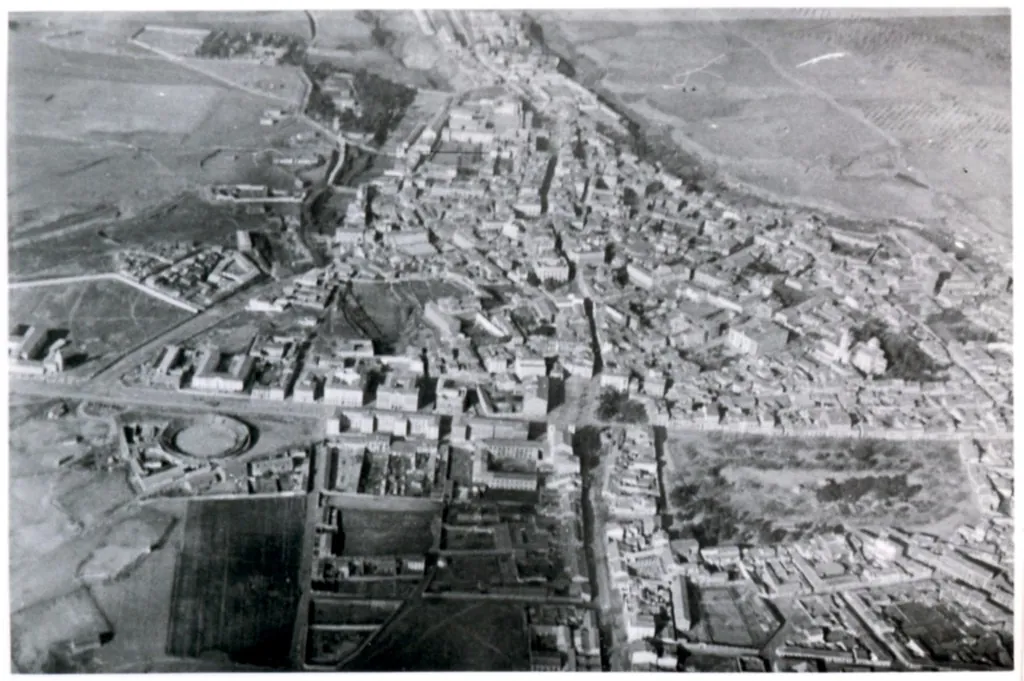
Late in the afternoon, when the sun drops behind the rolling hills of the Alcarria in Cuenca province, Gascueña falls almost completely silent. The air often carries the dry scent of earth and stubble, and from the edge of the village you can see how the red-tiled houses cluster together on the slope, without any obvious plan.
Tourism in Gascueña does not revolve around major monuments or busy streets. What you find instead is something slower, shaped by the rhythm of farming life and by a landscape that shifts noticeably as the light changes. This is a small municipality, with just over a hundred residents throughout most of the year. The scale is clear from the outset. At certain times, especially on weekdays, hardly a car passes through. The most constant sound is the wind moving through the trees in the kitchen gardens or the thud of a door closing somewhere along a narrow street.
The village sits within the Alcarria, a historic region of central Spain known for its open farmland and dry uplands. Here, daily life follows the pace of the countryside rather than any timetable set by visitors.
Stone Walls and the Church of the Natividad
Gascueña’s streets are narrow and somewhat irregular, lined with stone and whitewashed walls that show the marks of time. Some façades shift between grey and ochre tones. Others still have heavy wooden doors, darkened by decades of sun and winter frost. Old animal pens are sometimes attached directly to the houses, and small courtyards sit hidden behind low boundary walls.
At the centre stands the parish church dedicated to the Natividad, the Nativity. It is not a monumental building. The tower rises just enough above the surrounding rooftops to be noticed, and depending on the angle of the sun, the stone can take on a golden hue towards the end of the day. The small square around it tends to be where village life gathers, at least a little more than elsewhere: a neighbour pausing for a chat, someone walking home at an unhurried pace.
There is no grand architectural set piece here. The appeal lies in the texture of the place: uneven streets, weathered materials, and the quiet continuity of everyday routines.
Paths into Open Country
Beyond the last houses, the land opens out into cereal fields, gentle hills and patches of low scrub. There is no single well-known trail that defines walking in Gascueña. Instead, a network of agricultural tracks spreads out from the village, once used to connect plots of land and still followed today by those who head out on foot.
It is sensible to carry a map or have a downloaded route if the area is unfamiliar. Signposting is not always clear, and some paths fade as they cross between fields. Even so, getting your bearings is usually straightforward. From many points on the surrounding hills, the village remains visible, its cluster of roofs acting as a reference point.
Early in the day, the landscape changes dramatically. When the sun is low, shadows emphasise the furrows in the fields, and from a distance the village walls appear lighter against the earth. As the light strengthens, contrasts soften and the wide horizon takes over.
The terrain here is not extreme or dramatic. It is defined by openness and subtle shifts in elevation, by long views across farmland and by the sense that the village sits in close dialogue with its surroundings.
Birds over Fields and the Scent of Scrub
The area around Gascueña blends cultivated land with stretches of low Mediterranean scrub. Gorse grows among rosemary and thyme, and in spring their scent becomes especially noticeable when the breeze picks up.
Birdlife is part of the atmosphere. Birds of prey are often seen gliding above the open fields. Thrushes and greenfinches can be heard, and sometimes a partridge calls from the edges of the fields. Those interested in observing birds usually have better luck early in the morning or as evening approaches, when the countryside regains some of its activity.
Wind is a constant presence across these hills. It moves through crops and shrubs, carries the aroma of wild herbs and reinforces the feeling of space. The experience is simple but immersive, shaped more by sound and scent than by dramatic landmarks.
Traditional Cooking in La Alcarria
Food in this part of Castilla La Mancha remains closely tied to the traditional cooking of the Alcarria. Recipes are hearty and rooted in rural life. Stews feature prominently, roast lamb appears on many tables, and migas, a dish made from fried breadcrumbs often associated with colder months, are prepared when temperatures drop. Many households still make their own cured sausages.
The region is also known for miel de la Alcarria, honey produced in the wider Alcarria area. It continues to have a strong presence locally. In small villages, a quiet question is often enough to discover who keeps beehives nearby.
These dishes and products reflect the agricultural base of the community. They are not presented as culinary innovations, but as part of an ongoing domestic tradition that links present-day residents with earlier generations.
When the Streets Fill Again
For much of the year, Gascueña remains calm. Summer brings a change. In August, during the festivities dedicated to the Virgen de la Natividad, many former residents return. The population rises, the streets grow livelier, and long tables appear for shared meals. For a few days, the village recovers a level of noise and movement that is largely absent for the rest of the year.
Those who prefer a quieter atmosphere may find spring or autumn more suitable. Temperatures tend to be milder for walking, and the landscape of the Alcarria shows more tonal variation. Light and colour shift across the fields, and the hills take on different shades depending on the season.
A Place to Slow Down
Gascueña does not lend itself to a hurried visit. The most sensible approach is to park, wander without a strict plan and allow time to stretch. A short climb to the uppermost houses is often enough to see how the countryside opens out around the village.
There is little more to it than that, and that is precisely the point. The landscape does not attempt to impress. It simply exists, shaped by cultivation, wind and long continuity. As evening falls and the breeze moves across the fields, it becomes easier to understand how people have lived on these lands for generations, in step with the light and the seasons rather than with the clock.