Full Article
about Guadalajara
Provincial capital in the center of the peninsula; noted for the Palacio del Infantado.
Hide article Read full article
At the hour when shutters begin to lift in the centre, the River Henares moves quietly past Guadalajara. Some days the water runs cloudy, other days clearer, and the poplars along the bank lean over the current with a soft rustle. From the iron bridge, the outline of the Palacio del Infantado rises above the rooftops. The air often carries the scent of fresh bread and watered gardens before the heat of La Alcarria begins to press down.
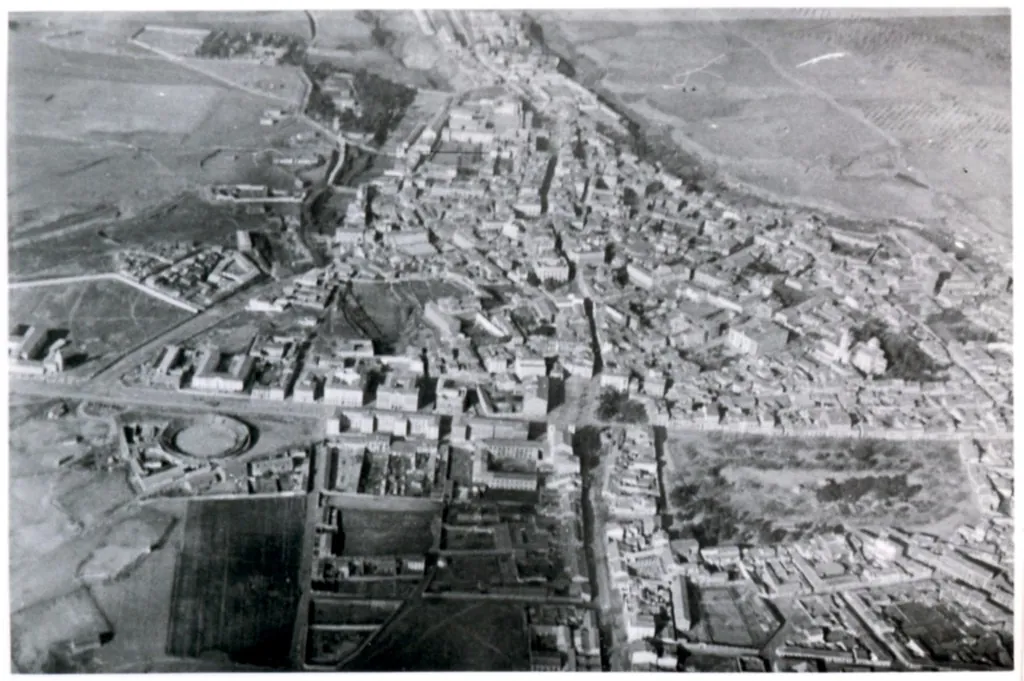
Guadalajara does not immediately overwhelm. Its history sits in plain view, spread between open squares, older buildings and more recent neighbourhoods. It reveals itself by walking, by noticing how the river, the hill and the centre connect.
The palace that still defines the centre
For centuries, the Palacio del Infantado has dominated the city. The pale stone of its façade reacts sharply to light. In the morning it appears almost matte, drained of colour. By late afternoon it turns warmer, as if the surface has stored the day’s sun. The Gothic gallery of windows and the diamond-point reliefs on the façade catch the eye even of those crossing the square in a hurry.
The Mendoza family established their principal residence here, turning Guadalajara into an important cultural focus during the Renaissance. That legacy is still visible in the building’s scale and ambition. Today the palace remains in public use, and part of its interior can be visited.
Inside, the Patio de los Leones is where the passage of time feels most tangible. Stone columns have been polished by centuries of hands. Footsteps echo beneath the galleries. When a group enters and looks up, there is often a brief hush, as if the space asks for it.
It is worth arriving early or towards the end of the afternoon. At midday the square is fully exposed to the sun, particularly in summer, and the light can feel relentless against the pale stone.
On the hill of the former Alcázar
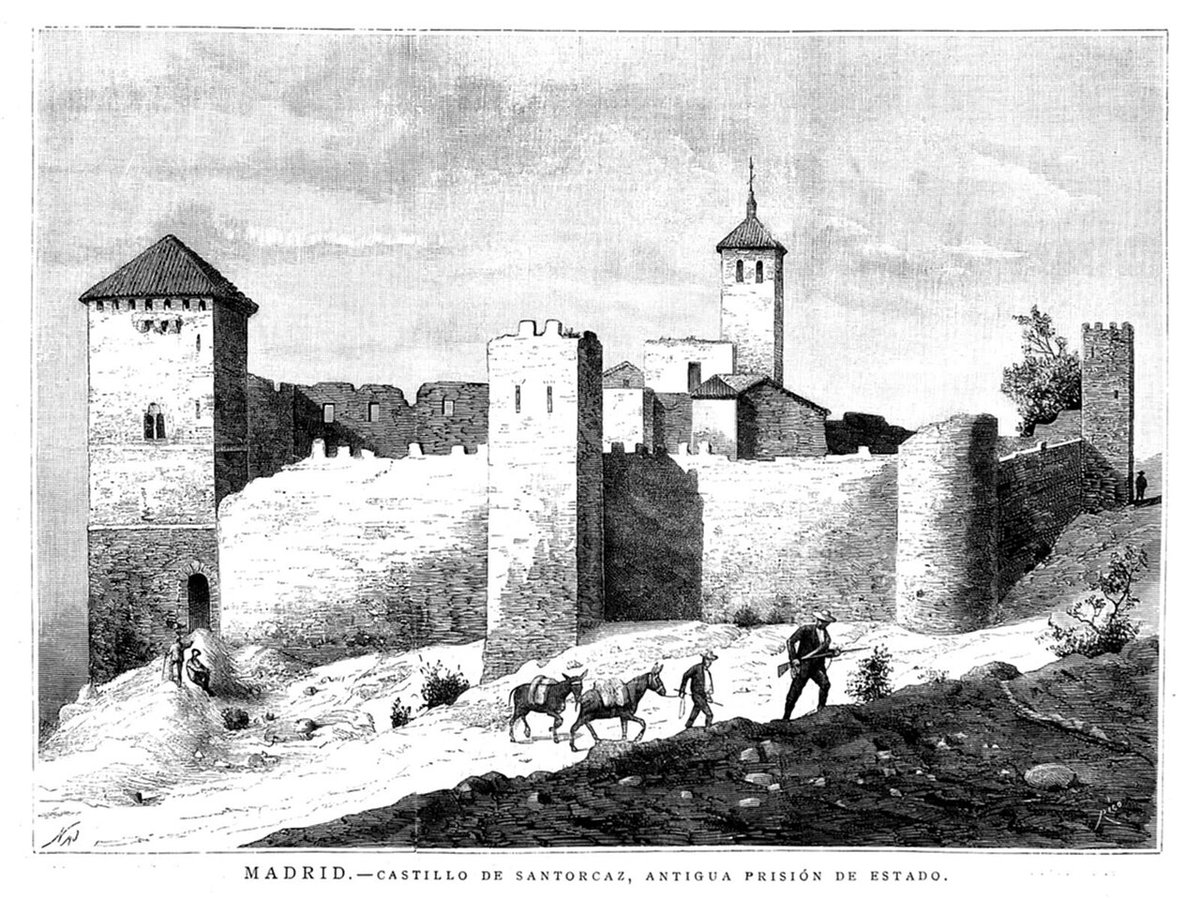
The Alcázar Real occupies a clear position above the Henares valley. What remains today are sections of wall and excavated structures, enough to understand that this was once a significant fortress when the city stood on frontier territory. From the top, the course of the river is visible, along with the natural corridor that connects to the wider Henares valley.
Even on hot days there are cooler corners, especially beside the thicker stretches of wall. Narrow openings from former arrow slits can still be seen in some sections. The site is straightforward, without large-scale reconstructions, which makes it easier to imagine how the fortress once functioned.
Descending towards the centre brings you to the concatedral de Santa María. A concatedral is a church that shares cathedral status with another in the same diocese, and here it has the feel of a large neighbourhood parish rather than a monumental cathedral. The exterior shows brickwork in the Mudéjar style, a tradition that blends Christian and Islamic influences, alongside later additions. Inside, dark wood dominates the choir, and there is a faint scent of wax. People step in from the calle Mayor, sit for a moment, then return to the street.
Flavours of the colder months
Food in Guadalajara follows the rhythm of the seasons. In many central bars, traditional small game dishes appear when the weather turns cold. Morteruelo is one of the most common. Served in an earthenware dish, it is thick and heavily spiced, designed to be eaten slowly with bread. It is a substantial preparation, more usual in the colder months and suited to unhurried meals.
Sweet baking has a visible presence from early morning. Some pastry shops work through the night, and by mid-morning the smell of butter and toasted sugar drifts under the arcades of calle Mayor. Puff pastry cakes filled with cream are among the creations most often prepared for family celebrations. Their popularity means they are a familiar sight in display windows, especially at weekends.
These culinary details do not shout for attention. They are part of daily life in the centre, woven into routines rather than staged for visitors.
When the city shifts into celebration
In mid-August, Guadalajara changes noticeably during the fiestas de San Roque. Red and white scarves appear on balconies and in squares. From early on there is movement in the streets of the old quarter. The morning encierros, or running of the bulls, draw regular runners as well as neighbours watching from windows above. The atmosphere is energetic, concentrated in the historic centre.
Semana Santa, Holy Week before Easter, has a different tone. Processions move through the centre as evening falls, and drums echo beneath the arcades of the plaza de Santo Domingo. At certain moments, particularly in some of the night processions, silence takes over. The only sound may be the fabric of robes brushing against the stone. The shift from the colour and noise of August to the restraint of Holy Week shows another side of the city’s character.
A recognisable Castilian rhythm
Guadalajara moves at a pace familiar to anyone who knows the medium-sized cities of Castilla. By mid-morning, the Alameda fills with people strolling beneath the plane trees and sitting on benches near the bandstand. At weekends, entire families cross the park on their way towards the centre.
Driving around the city is generally straightforward outside peak commuting hours. The centre includes regulated parking areas, and it is important to pay attention to signage. The layout is manageable, and distances within the urban area are not large.
Summer heat is intense from midday until well into the afternoon. April and October are usually more pleasant months for walking through the historic centre and heading down to the banks of the Henares. The river offers a sense of openness, a counterpoint to the stone façades and paved squares.
At the end of the day, the area around the Alcázar provides a broad view over the vega, the fertile plain by the river. The Henares lies at the back of the scene, and on the horizon a bluish line of hills marks the sierra. From here, the structure of Guadalajara becomes clear: river below, hill above, palace anchoring the centre.
Guadalajara does not make excessive noise about its past. It does not rely on grand gestures. Its history is present in the Palacio del Infantado, in the remnants of the Alcázar Real, in the brickwork of Santa María and in the rhythm of its festivals. To begin to understand it, time on foot is essential, moving between riverbank, square and hill until the connections settle into place.