Full Article
about Horche
Town with a strong winemaking tradition and underground cellars; views over the Ungría valley
Hide article Read full article
Crossing into a different rhythm
There is a moment, just as you cross the bridge over the Tajuña river, when Horche looks fairly ordinary. Brick houses, the odd 1990s chalet, a typical industrial estate on the way in. Then you turn right, climb up the Cuesta de San Pedro, and the atmosphere shifts. It feels like flicking from daytime television to an old film.
That contrast sums up tourism in Horche quite well. From the outside it can seem like another stop along the Guadalajara road, but once inside the old quarter, the tone changes. Streets begin to show their age, small squares open up, and the pace settles into something distinctly alcarreño, slower and more deliberate.
The scent of olive and everyday life
The first thing that stands out is the smell. Not the polished countryside fragrance you might expect from adverts, but something more grounded: earth, olive trees and, depending on the time of day, fresh bread drifting out from a nearby house.
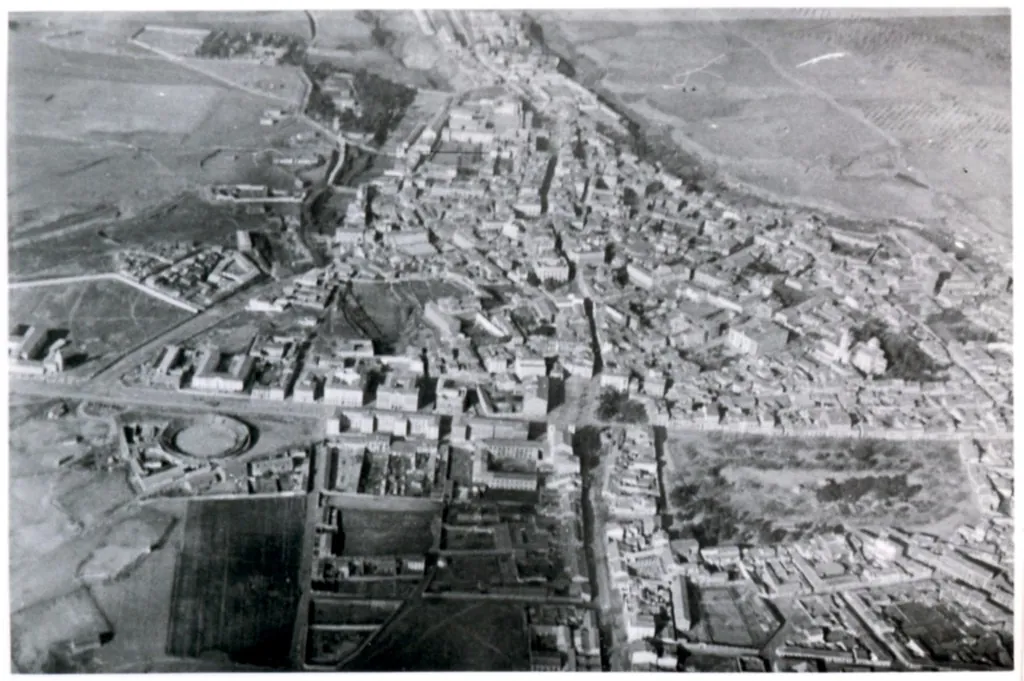
Horche has around 3,000 inhabitants, and the centre has an interesting layout. Long, fairly straight streets suddenly give way to small squares. At times it feels as though someone began designing the town with a ruler, then let it grow freely.
On a Sunday morning, the rhythm becomes clear. People step out to buy bread, others linger in the square talking, and there is always someone feeding the pigeons. Nothing feels staged. It is simply what a weekend morning looks like here.
Inside a local bar, the scene continues much the same way: tables with people playing cards, families having breakfast, conversations flowing without urgency. A coffee arrives in a thick glass tumbler, the kind that seems almost impossible to break. It is straightforward and unpretentious, and often better than more elaborate versions found elsewhere.
San Pedro, watching from above
The church of San Pedro stands at the highest point of the old town. It is not the sort of cathedral that dominates the skyline from miles away, yet once you reach the atrium, its role as a landmark becomes clear.
For a town of this size, the building is notably large. Inside, it has the character of an old Castilian church: stone, wood and a deep sense of quiet. Enter when it is empty and the silence is striking. Voices drop automatically, even when there is no one else around.
Outside, there is usually more movement. People sit along the wall, children run across the square, and nearby nests are often occupied by storks. For years, they nested on the tower itself, later shifting to posts and rooftops around it. In the Alcarria region, this is quite common. Storks seem to choose the calmest spot rather than the highest one.
When lunch smells like Sunday
By midday, Horche changes tone again. The air begins to carry the scent of wood and roasting meat, the kind that makes you check the time even if you are not yet hungry.
Lamb holds an important place in the local cooking. There is no theatrical presentation or modern styling. It comes in clay dishes, cooked in an oven with time and patience. The skin turns crisp while the meat remains tender, almost falling away from the bone.
It is not presented as the finest lamb anywhere, that is always open to debate, but it fits perfectly with what you expect from a village in the Alcarria. The dishes are hearty, the approach is simple, and there is a sense that the method has not changed for generations.
Evening paths through olive groves
Late afternoon is when Horche becomes easiest to understand. The town quiets, traffic fades, and neighbours begin to appear, walking without hurry.
Around the edge of the town, several dirt tracks lead into olive groves. These are not carefully marked routes or curated walking trails. They are traditional agricultural paths, used by tractors and by those taking an evening stroll.
Climb slightly along any of them and views open up quickly. From above, the town looks compact, with reddish roof tiles and towers rising among a wide stretch of olive trees. On clear days, the Tajuña valley can be seen in detail.
This is one of the quieter moments of the day. The light softens, a dog barks somewhere in the distance, and as the air cools, a thin line of smoke might rise from a chimney.
Returning to the centre, the town shifts into evening. People step out to take the rubbish and end up chatting for a while. Doors remain half open, and the sound of a television carries from inside a house.
There are no souvenir shops or displays designed with visitors in mind. Horche continues with its daily life as you pass through it. And sometimes, that is exactly what makes the visit worthwhile.