Full Article
about Huete
Noble, monumental Alcarria town; rich in convents and churches.
Hide article Read full article
A Slow Morning in the Alcarria
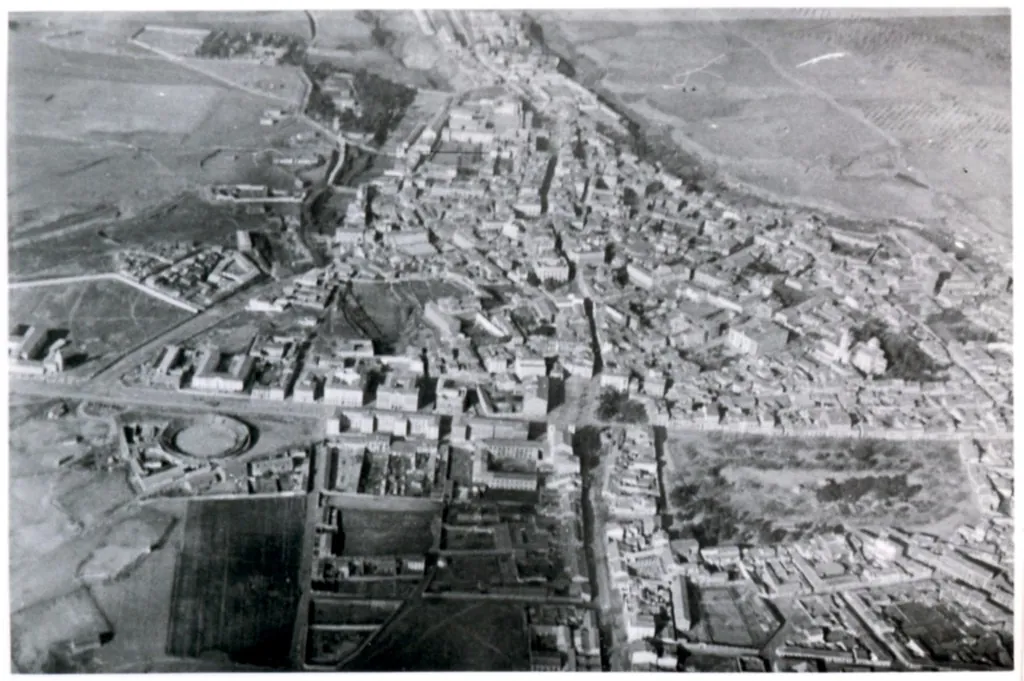
Early in the morning, before the sun clears the rooftops, Huete smells of cold stone and damp earth. A shutter opens with a sharp clatter. A car rolls slowly across the main square and silence returns. Tourism in Huete begins in that quiet register: walking without hurry through a place where time seems to move more slowly than in other parts of the Alcarria, the historic region of rolling countryside in Castilla La Mancha.
The town stands at around 800 metres above sea level, surrounded by wide cereal fields and soft hills. From a distance it barely stands out. A few towers and reddish roofs rise above the pale tones of the land, but nothing demands attention. Huete does not try to impress at first glance. Its interest lies in the details that reveal themselves once inside: a worn stone coat of arms, an old iron grille, a wooden door that has endured many winters.
The Old Quarter and Plaza Mayor
Plaza Mayor is the natural starting point. Long and slightly narrow, it is lined with wooden arcades that cast shade in summer. Mornings are usually quiet. Footsteps echo, a brief exchange drifts past, a chair scrapes against stone.
From here, narrow streets branch off in no obvious pattern, rising and dipping as they go. The uneven stone paving forces a slower pace. Many houses retain old entrances decorated with noble coats of arms. They are not always restored. Cracks split the façades, patches of plaster have fallen away, and it is precisely in these imperfections that the age of the place becomes clear.
Those arriving by car are better off parking in a more open area and continuing on foot. The centre is made up of tight streets and awkward turns that suit walking far more than driving.
The Monasterio de la Merced
The former Monasterio de la Merced appears suddenly between the houses. The complex is large and somewhat irregular, with some sections better preserved than others. Its church retains a Gothic structure, with pointed arches and high walls that filter the light so that it falls softly inside.
There is a particular hush common to old religious buildings. Within these walls it feels dense and settled. Repairs from different periods are visible across the surfaces. Darkened stone contrasts with lighter sections, traces of abandonment alongside attempts at recovery. The overall impression is of a place that has endured change rather than resisting it.
Towers, Arches and Traces of the Past
Huete once had several churches within its urban perimeter. Some still stand; others survive as fragments or buildings that have gradually been transformed over time.
Iglesia de Atienza is one of the most striking when walking through the town. Its Mudejar tower rises above the cluster of houses. From certain narrow streets it appears between rooftops and overhead cables, a constant point of reference as you move around. Mudejar architecture, developed in medieval Spain, blends Christian and Islamic influences, and here that mixture is expressed in the brickwork and form of the tower.
Another reminder of Huete’s past is the Arco de Almazán, once one of the entrances through the town walls. Passing through it subtly alters the atmosphere. The streets grow quieter and larger houses begin to appear, their stone doorways carefully worked. The change is not dramatic, but it is noticeable, as though the town shifts gear for a moment.
Looking Out Over the River Mayor
At several higher points in Huete, views open out over the valley of the River Mayor. There is no need to search for a marked viewpoint. Simply follow certain streets to their end and the landscape unfolds.
The scenery changes significantly with the seasons. In spring the fields around Huete turn green, and the air carries the scent of damp grass. In summer, straw-coloured tones dominate once the cereal has been cut, and the heat presses more firmly against the hills.
Light transforms the town as much as the countryside. Late afternoon tends to be the most rewarding time. Facades take on an orange glow, and elongated shadows emphasise the rough texture of the stone. It is then that the contrast between rooftops and open fields becomes clearest.
Paths Beyond the Town
Beyond the built-up area, agricultural tracks lead out towards small nearby hamlets. Some cross land dotted with scattered holm oaks and old threshing floors once used to separate grain. Others descend towards the river.
Not all these paths are signposted, yet many can be walked without difficulty if approached calmly. On quiet days the only sounds are the wind moving through the ears of grain or the passage of a large bird gliding above the escarpments.
In summer it is wise to avoid the central hours of the day. The terrain is open and shade is limited, so the sun can feel relentless.
When to Visit Huete
Spring is often the most agreeable season. The countryside is green and the air remains cool into the evening. Autumn also suits the town well, with lower light that brings out the colours of the stone.
In mid-August, festivities linked to the Asunción take place. During those days Huete changes noticeably. More people fill the streets, music carries across the centre, and processions move through the old quarter. For visitors unfamiliar with Spanish traditions, the Asunción refers to the Assumption of the Virgin Mary, a widely celebrated date in many towns and villages.
Outside these periods, Huete returns to its usual rhythm. What defines it then becomes easier to hear: the echo of footsteps on stone streets and the wind arriving from the open fields of the Alcarria. There are no grand gestures here, no spectacle laid on for effect. The appeal lies in moving slowly, looking closely and allowing the town to reveal itself in its own time.