Full Article
about Illana
Stately town with palaces and picturesque quarters; olive-growing tradition
Ocultar artículo Leer artículo completo
First glimpse
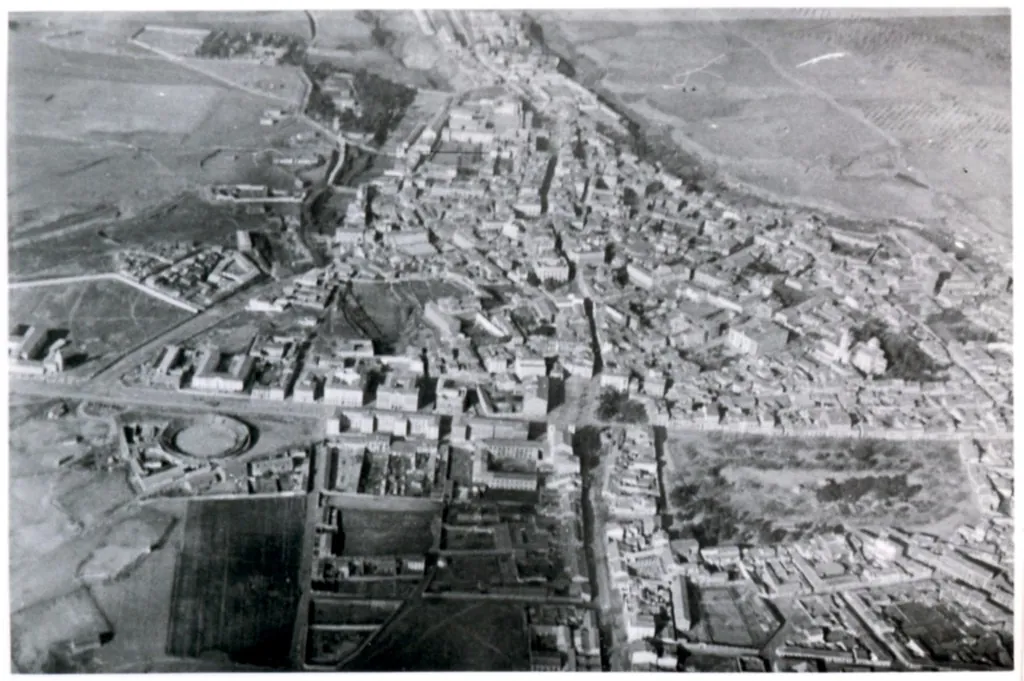
The first thing you notice is the hush. At 750 m above sea level the wind combs the wheat stalks with a papery rustle loud enough to hear a car coming five minutes before it appears. Illana sits on a low ridge above the Tagus, 90 km east of Madrid, and the horizon is so wide that summer clouds throw blue-purple shadows the size of counties. Population 878, plus one British couple who arrived for a long weekend in 2019 and never sold the house.
A slow circuit of the village
Start at the Plaza de la Constitución, the only patch of level tarmac for miles. The church tower of Nuestra Señora de la Asunción keeps watch from the east side; its brickwork turns rose-gold after 6 pm, a useful clock if you’ve forgotten your phone. Walk south past the stone bench where the older men sit in strict order of arrival – don’t expect a nod until the third day. The side streets are barely two metres wide; residents leave wooden gates ajar so you can admire pocket courtyards filled with geraniums and the smell of bread from the Thursday baker’s round.
Most houses are built from the same ochre stone that lies just under the topsoil, giving the village a camouflaged look in dry weather. Here and there a grander doorway sports a cracked coat of arms – a reminder that Illana once supplied mules to the Toledo clergy and grain to Madrid’s hospitals. The prosperity is gone but the masonry lingers, patched with cement the colour of weak tea.
Working countryside
Outside the ring of houses the land drops away in every direction. Olive groves occupy the poorer slopes; the better soil is rotated between wheat, barley and the odd field of chickpeas that flowers white in April and looks like snow from a distance. Footpaths are still the ones Cela walked for Journey to the Alcarria: signed only by the ruts of a Massey-Ferguson and the occasional spray-painted “P” for perdiz (partridge hunters). A 40-minute loop east brings you to the ruined casilla – a Victorian-looking brick hut where shepherds once slept – with a 180-degree view across the Entrepeñas reservoir. On very clear days the water flashes like a dropped coin 12 km away.
Cyclists like the CM-200 that snakes west toward Sacedón: 25 km of near-empty road, one short ramp of 8 %, otherwise gentle rollers where buzzards outnumber cars. Joggers are regarded as eccentric but harmless; dogs will accompany you for the company and abandon you at the municipal boundary.
What you’ll eat and where
Illana keeps no restaurants in the British sense. Meals happen in private houses or at Bar Hermanas García, which unlocks its shutters at 07:30 for coffee and opens again at 13:00 for lunch. The €9 menú del día is written on the inside of a cardboard box lid: soup or salad, a plate of pisto manchego topped with a fried egg, and stewed pears from somebody’s garden. Order before 14:30 or the chef goes home. Evening service is Fridays only; locals phone their order in while the rice is still warm.
If you want lamb, drive three minutes south to Villa Marqués del Río, a farmhouse with four tables on the patio. Their cordero al estilo de Illana is roasted for five hours with rosemary and a splash of local tinto; you must reserve before noon and bring your own wine – the village shop charges €3.50 for a perfectly drinkable crianza. Vegetarians survive on migas (fried breadcrumbs with grapes) and the pizzería in the next village, 8 km away, which does a thin-crust prosciutto-and-rocket that keeps teenagers from rebellion.
Saturday morning a white van toots in the square: the honey man. His miel de La Alcarria is mild, almost citrusy, bottled in old jam jars with the labels soaked off. Buy two; one will be drizzled over yoghurt in your Airbnb and the other smuggled home to prove you went somewhere real.
When the village parties
For 51 weeks Illana glides along in low gear. Then, around 15 August, the population doubles. The fiestas de la Virgen de la Asunción turn the plaza into an open-air ballroom with a sound system balanced on a fork-lift. Brass bands march at 02:00; children chase each other between fireworks and the bakery runs a 24-hour shift. Visitors are welcome but beds vanish fast – book in March or be prepared to sleep in the park with the returning students.
Mid-January brings the hogueras de San Antón. Bonfires made from vine prunings light up the lanes; neighbours stand around with long forks toasting chorizo and telling the same jokes every year. The temperature can dip to –5 °C after midnight; bring gloves and accept the plastic cup of anís that appears in your hand.
The practical grit
There is no cash machine. The nearest ATM is in Sacedón, 15 min down the CM-200, and it sometimes runs out of €20 notes on Sunday evening. Fuel is sold from a lonely Repsol pump on the outskirts; card payments only after 20:00 when the attendant clocks off. Stock up in Guadalajara (45 min) or Madrid before you arrive – the village grocer carries UHT milk, tinned tuna and not much else.
Mobile coverage is patchy. Vodafone and EE flicker between one bar and “SOS only”; a Spanish Movistar SIM gives three solid bars on the church steps and nowhere in the bakery. Wi-Fi exists in most rentals but bandwidth is politely rationed – don’t plan to stream the rugby.
Where to lay your head
Illana has one official hotel, Hostal Fuente Vieja, and a handful of village houses on Airbnb. Recent British reviews warn of rock-hard mattresses and a faint drain smell when the wind drops. Better value is Casa Rural La Solana, 3 km outside the boundary: thick walls, wood-burner and a pool that feels like champagne after a July bike ride. Expect €90 a night for two, plus €20 if you want the owners to leave a vat of gazpacho pastor in the fridge.
Getting here – and away
From Madrid-Barajas take the A-2 east to Tarancón, then the CM-202 north through olive plantations. The final 10 km narrow to a single-track road with no white lines; sat-nav adds 20 min of optimistic arithmetic. Arrive in daylight – there are no streetlights and the verge drops sheer into a barley field. Buses run twice daily from Guadalajara except Sundays, when the service rests as God intended.
Worth it?
Illana will not change your life. It offers no souvenir shops, no Michelin stars, no sunrise yoga on paddleboards. What it does give is space to breathe, a church bell that marks the hours more accurately than any phone, and the small, steady pleasure of being recognised in the bakery on the third morning. If that sounds like enough, come before the rest of Britain realises what it’s missing.