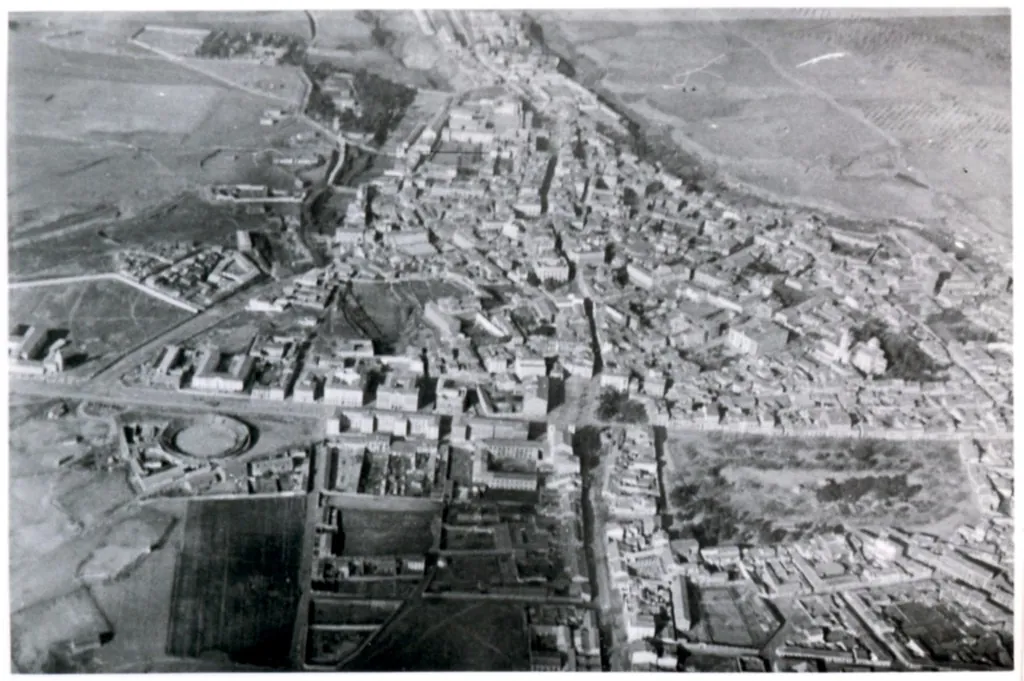
Vista aérea de Lupiana
Instituto Geográfico Nacional · CC-BY 4.0 scne.es
Castilla-La Mancha · Land of Don Quixote

Lupiana

The fifteenth-century monks chose their spot well. From the monastery walls they could watch wheat turn gold across rolling hills that stretch, unb...

344 inhabitants · INE 2025
773m Altitude

Why Visit

San Bartolomé Monastery Visit to the Monastery (events)

Best Time to Visit

spring

Fiestas de la Virgen de los Remedios (August) agosto

Things to See & Do
in Lupiana

Heritage

  • San Bartolomé Monastery
  • San Pedro Church
  • pillory

Activities

  • Visit to the Monastery (events)
  • Hiking

Festivals
& & Traditions

Fecha agosto

Fiestas de la Virgen de los Remedios (agosto)

Las fiestas locales son el momento perfecto para vivir la autenticidad de Lupiana.

Full Article
about Lupiana

Home of the Monasterio de San Bartolomé; birthplace of the Jerónima Order

Ocultar artículo Leer artículo completo

The fifteenth-century monks chose their spot well. From the monastery walls they could watch wheat turn gold across rolling hills that stretch, unbroken, to the Guadalajara horizon. Seven centuries later the grain has gone but the building remains, roofless in places, its Gothic doorway still sharp enough to cut shadows across the dust.

Lupiana sits 713 metres above sea level on Spain’s central plateau, a ten-minute detour from the A-2 motorway that shuttles traffic between Madrid and Barcelona. Most drivers flash past the turn-off, which explains why the village head-count stays just under three hundred. Those who do swing off the carriageway find a single-lane road that snakes between stone farmhouses and fields of lavender grown for the perfume trade. The first houses appear without fanfare: low, ochre-coloured, topped with terracotta tiles that have darkened to the colour of strong tea.

The Quiet Heart of La Alcarria

The region’s Moorish name, Al-caría, means “the land of castles”, though Lupiana never bothered with battlements. defence came from distance rather than stone. What it did acquire, in 1461, was a Jerónimo monastery whose charter pledged prayer for the Crown in exchange for tracts of grazing land. The Monasterio de San Bartolomé still dominates the western edge of the village, though today its cloisters are open to the sky and swallows nest in the ribs of the vaulted chapter house.

Entry is free but irregular. The regional tourist board runs guided visits roughly twice a month; turn up on any other day and a caretaker may, or may not, appear with a key. If the door opens, climb the narrow stair to the choir loft where fragments of fresco cling to the plaster like bruises. The guide will point out Mudéjar brickwork in the cloister—an Islamic craft executed for Catholic masters—then leave you to wander alone among the cells. Bring a torch: the electricity was cut off years ago.

Back in the village proper, the parish church of the same name is a quieter affair. Rebuilt piecemeal after a fire in 1705, it mixes Baroque plasterwork with a Romanesque font that predates the monastery. Mass is held at 11 a.m. on Sundays; the bell rings five minutes beforehand, audible across the entire settlement. Midweek the building stays locked—Father Miguel drives over from Guadalajara and keeps the key in his glove box.

Walking the Grain Belt

Lupiana makes no claim to dramatic scenery. The pleasure lies in scale: paths that fit single file between wheat stubble and holm-oak hedges, where the loudest sound is the rasp of cicadas. A four-kilometre loop, way-marked with yellow dashes, leaves from the cemetery gate and climbs gently to a ridge that gives views north to the snow-tipped Sierra de Guadarrama. In April the fields are green and flecked with crimson poppy; by July the earth has baked to biscuit and every footstep raises a puff of pale dust.

Serious walkers can stitch together sections of the GR-160 long-distance route which passes 3 km south of the village, but carry more water than you think you’ll need—shade is scarce and the nearest bar lies back in Lupiana. Summer temperatures sit in the mid-thirties; start early or wait for the two-hour dusk that begins around eight.

Food at Village Hours

Hunger is best planned in advance. The only grocery, Ultramarinos Pilar, opens 9–1 and 5–7, stocks tinned tuna, UHT milk and locally jarred honey labelled miel de la Alcarria. The honey carries a protected designation—bees work the lavender and thyme that fringe the fields—and costs €6 for a 500 g jar. For anything perishable drive to Guadalajara (15 min) before midday; Spanish supermarkets close earlier than British ones and most shut for siesta by 2 p.m.

The village bar, Casa Curro, serves lunch from 1.30 sharp. Tables fill with day labourers who order the menú del día—three courses, bread and a quarter-litre of house wine for €12. Expect caldereta de cordero, a slow-cooked lamb stew thick enough to stand a spoon in, followed by arroz con leche dusted with cinnamon. Vegetarians get judías estofadas (white-bean stew) but little else; vegan visitors should consider self-catering.

Evening service is erratic. If the owner fancies an early night the metal shutters roll down at six and won’t reopen. British visitors used to pub hours find this baffling; locals shrug and remind you that Guadalajara has neon fast-food strips if desperation strikes.

A Place to Pause, Not a Base to Roam

Accommodation is limited to three casas rurales, all converted farmhouses with stone walls deep enough to swallow mobile signal. The largest, Casa Rural Lupiana, sleeps six and offers underfloor heating—welcome in April when night temperatures drop below 10 °C. Prices hover round €90 per night for the entire house, cheaper per head than a Travelodge outside the M25. The English-speaking owner leaves a jar of honey and a bottle of vino tinto from Brihuega on the kitchen table; both are restocked if you stay longer than four nights.

Don’t arrive expecting hotel service. Towels are changed mid-week, bins go out on Tuesday night, and the nearest ATM is back beside the motorway. Bring cash and a phrasebook; even the younger villagers speak little English, though they will slow their Spanish to a polite crawl if you try.

Spring and autumn reward the detour most kindly. In February the wind that barrels across the plateau can knife through three layers of fleece; August pushes the mercury past 38 °C and the monastery courtyard offers no shade. May brings storks nesting on the bell tower and the first cutting of lavender; September smells of baked earth and new wine.

The Last Word

Stay a night, maybe two, then move on. Lupiana works as a punctuation mark between Madrid’s galleries and Barcelona’s bustle, not as a destination in itself. The monastery will not dazzle like the Mezquita; the landscape lacks the theatre of the Picos. What the village offers is an unfiltered shot of rural Castile: bread at village price, silence after ten o’clock, and the knowledge that the same stone walls have watched wheat grow and wither for longer than Britain has had a Protestant church. Take it for what it is, or stay on the motorway and leave the monks in peace.

Key Facts

Region
Castilla-La Mancha
District
La Alcarria
INE Code
19161
Coast
No
Mountain
No
Season
spring

Livability & Services

Key data for living or remote work

2024
Connectivity5G available
TransportTrain nearby
HealthcareHospital 7 km away
Housing~5€/m² rent · Affordable
Sources: INE, CNMC, Ministry of Health, AEMET

Official Data

Institutional records and open data (when available).

  • POBLADO DE VILLAFLORES
    bic Conjunto histórico ~5.4 km
  • MONASTERIO DE LUPIANA
    bic Monumento ~1.8 km
  • CASA CON ESCUDO
    bic Genérico ~0.9 km
  • CRUZ DE LA VIRGEN DE LA SOLEDAD. CRUZ DE TÉRMINO
    bic Genérico ~0.9 km
  • PICOTA
    bic Genérico ~0.8 km
  • CRUZ DE SAN JUAN. CRUZ DE TÉRMINO
    bic Genérico ~0.7 km
Ver más (2)
  • LA POSADA (ESCUDO)
    bic Genérico
  • CRUZ DE SAN ANTONIO. CRUZ DE TÉRMINO
    bic Genérico

Planning Your Visit?

Discover more villages in the La Alcarria.

View full region →

More villages in La Alcarria

Traveler Reviews