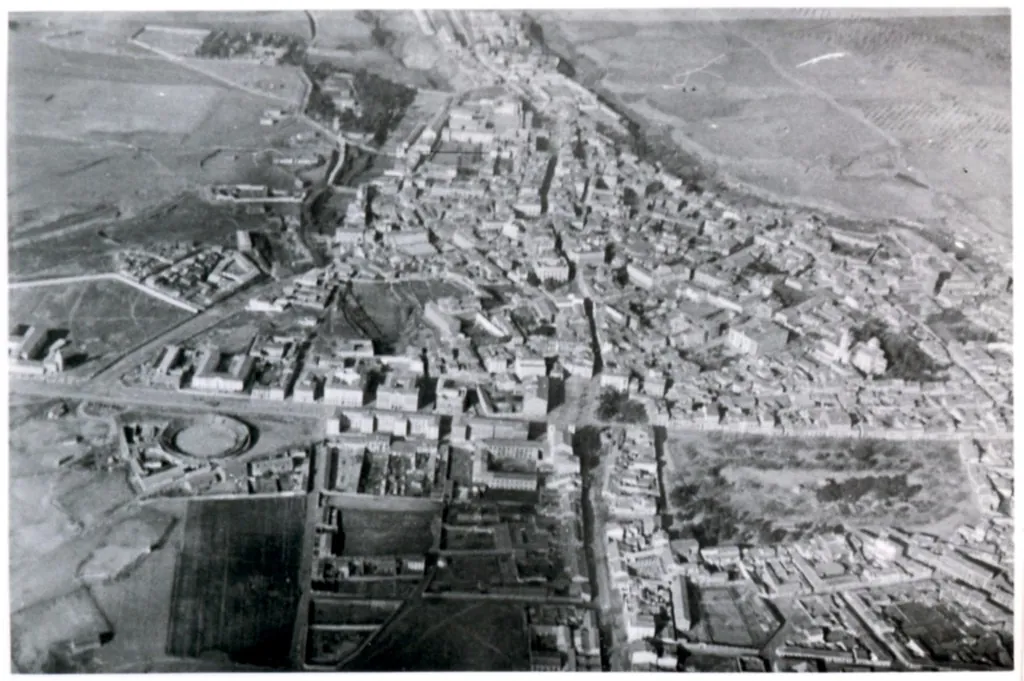
Vista aérea de Masegoso de Tajuña
Instituto Geográfico Nacional · CC-BY 4.0 scne.es
Castilla-La Mancha · Land of Don Quixote

Masegoso de Tajuña

The church bell strikes noon and only two things move: a tractor crawling towards the wheat fields and a single cloud’s shadow sliding over the sto...

84 inhabitants · INE 2025
897m Altitude

Why Visit

Mountain Church of San Martín River hiking

Best Time to Visit

summer

San Martín Festival (November) agosto

Things to See & Do
in Masegoso de Tajuña

Heritage

  • Church of San Martín
  • Caves

Activities

  • River hiking
  • Fishing

Festivals
& & Traditions

Fecha agosto

Fiestas de San Martín (noviembre)

Las fiestas locales son el momento perfecto para vivir la autenticidad de Masegoso de Tajuña.

Full Article
about Masegoso de Tajuña

Small village in the Tajuña valley; caves and riverside setting

Ocultar artículo Leer artículo completo

The church bell strikes noon and only two things move: a tractor crawling towards the wheat fields and a single cloud’s shadow sliding over the stone roofs. At 900 m above sea level, Masegoso de Tajuña is high enough for the air to feel rinsed, yet low enough for the horizon to roll away in every direction like a calm yellow sea. Fifty-six residents, one parish priest on Sundays, and zero traffic lights. That is the entire inventory.

Most motorists barrel past the turn-off on the CM-201, intent on the lavender shops of Brihuega ten minutes farther north. Those who do swing left are greeted by a hand-painted board: “Masegoso de Tajuña, bienvenidos”, the paint already flaking after a single winter. The lane narrows immediately; wing mirrors brush rosemary hedges that smell sharp under hot sun. First rule: if you meet another car, whoever is closer to the passing place reverses. No one honks. Time is not that precious here.

Stone, adobe and the sound of your own footsteps

The houses are low, the doorways even lower. Timber gates hang on medieval iron straps; keyholes are big enough for a Victorian fist. Granite mixes with adobe, the colour of dry biscuits, all of it settling comfortably into the ridge. There is no centre square in the British sense, just a slight widening where the church sits sideways to the slope. The Iglesia de San Pedro is the size of a parish hall in the Cotswolds, its bell-tower open to the sky like a stone picture frame. Step inside and the temperature drops ten degrees; the smell is of candle wax and centuries of grain stored next door.

Walk on. Every third doorway reveals a tiny stable now used for firewood or a motorbike. A woman in an apron hoses the dust off her threshold; she nods, carries on, does not offer a souvenir. This is not rudeness—commerce simply never arrived. The last shop closed when the proprietor died in 1998; the nearest loaf of bread is 8 km away in Anguita. Bring your own picnic, or plan to be hungry.

What the plateau actually looks like when no one edits it

Leave the last house behind and the caminos reales start immediately—old drove roads wide enough for two mules and a cart. They snake between wheat and barley, rising just enough to let you see the next village, and the next, each one a grey comma on the horizon. Skylarks go up like fireworks; a Montagu’s harrier quarters the field, wings in a perfect V. Spring turns the earth an almost Irish green, then by late June everything is gold except the occasional stripe of purple vetch. Underfoot the soil is thin and stony; after rain it smells of iron. This is not a dramatic landscape, it is a patient one, and it rewards the patient walker.

There are no signed circular routes, so navigation is old-school: keep the tower of Masegoso behind you, aim for the pine knob on the far ridge, turn round when you feel like it. A comfortable out-and-back is 7 km, taking in an abandoned grain threshing floor where the stone is polished smooth by centuries of boots. Sunset adds a peach filter that makes even the rusted ploughshare look dignified.

When the village remembers it once had neighbours

August drags the population back to triple figures. Emigrants who left for Guadalajara, Madrid or Valencia in the seventies return with folding chairs and cool boxes. The fiestas are organised in 48 hours: one evening mass, one brass band, one paella cooked in a pan the size of a satellite dish. Visitors are welcome but not announced; if you want to join the queue for rice, bring your own plate and fork. Fireworks are let off at head height—health and safety has not reached the plateau. The party finishes at 02:00 sharp because the baker from Anguita delivers bread at 06:00 and someone has to be sober enough to sign for it.

Any other weekend the only communal activity is the Saturday evening card game in the former schoolhouse. The door is ajar; peek in and you will be handed a chair and a glass of warm lager. Stakes are twenty cents, language is Castilian with a rural drawl that drops every final “s”. You will lose, but the €2 donation is cheaper than a museum ticket.

How to arrive without swearing at the sat-nav

Fly to Madrid, collect a hire car at Barajas, join the A-2 towards Zaragoza for 70 minutes, then peel off on the CM-201 signposted Brihuega. After 12 km a small white stone indicates the left turn; if you reach the lavender museum you have overshot. The last 3 km are narrow but paved; meeting a combine harvester is possible in July—reverse politely. Total driving time from the airport: 2 h 15 min. Petrol stations exist in Brihuega and Cifuentes; nowhere in between.

There is no bus. A taxi from Guadalajara will cost around €90 and the driver will ask twice if you are sure. Winter tyres are unnecessary unless snow is forecast, but the final slope can freeze; carry a pair of old-fashioned snow chains if visiting between December and February.

Where to sleep, eat and answer the call of nature

Accommodation inside the hamlet: zero. The sensible plan is to base yourself in Brihuega where Hotel Spa de la Villa (doubles from €85) has decent Wi-Fi and a rooftop pool overlooking the Tajuña gorge. Hostal Rural Los Ánades is cheaper at €55 and the owner will pack you a bocadillo for the walk.

Food in Masegoso itself is whatever you bring. For a proper meal drive ten minutes to Brihuega’s Plaza del Coso: order judiones de La Granja—giant butter beans stewed with chorizo, mild enough for timid British palates. A plate costs €9, a glass of house red another €2. Public toilets: none. The discreet hedge is traditional; carry tissues.

The honest verdict

Masegoso de Tajuña is not life-changing. It is life-slowing. If you need gift shops, interpretive centres or even a coffee machine, stay on the motorway. If you are happy to walk, listen and accept that the most exciting event may be a shepherd leading thirty sheep through the main street, then the hamlet delivers a rare commodity: unprocessed Spain. Arrive mid-morning, walk until the sun sits on your shoulders, eat your sandwich on the church steps, leave before the afternoon wind picks up. You will not tick any bucket-list boxes, but you will remember what quiet sounds like.

Key Facts

Region
Castilla-La Mancha
District
La Alcarria
INE Code
19172
Coast
No
Mountain
Yes
Season
summer

Livability & Services

Key data for living or remote work

2024
Housing~5€/m² rent · Affordable
CoastBeach 16 km away
Sources: INE, CNMC, Ministry of Health, AEMET

Planning Your Visit?

Discover more villages in the La Alcarria.

View full region →

More villages in La Alcarria

Traveler Reviews