Full Article
about Peñalver
Known for its honey and the Su Peso en Miel prize; a picturesque town
Ocultar artículo Leer artículo completo
The church bell strikes noon, yet only a handful of swallows circle the tower. At 950 metres above sea level, Peñalver's silence carries differently—thinner, sharper, as if the altitude has stripped away everything unnecessary. Fifty-three residents remain. Their houses, built from the same limestone that breaks through the surrounding scrub, stand shoulder-to-shoulder against wind that whips across La Alcarria's high plateau nine months a year.
This is Spain's interior stripped bare. No souvenir shops. No weekend craft markets. Just stone, sky, and the gradual realisation that you've reached the edge of somewhere rather than the centre of anywhere. The village sits 48 kilometres northeast of Guadalajara along the CM-101, a road that feels increasingly theoretical the further you drive. Mobile phone coverage becomes patchy at best. The last petrol station passed fifteen minutes back. By the time Peñalver's modest church spire appears, civilisation has thinned to occasional farm tracks disappearing into holm oak scrub.
Stone Against Sky
The Iglesia de San Pedro occupies what passes for a centre—though calling it a square would flatter the uneven triangle of cracked concrete where three lanes converge. Built from local stone sometime after the Reconquista, its modest dimensions speak of communities that measured wealth in rainfall rather than silver. Weathered sandstone blocks rise barely twenty metres. A simple belfry holds two bells whose bronze has oxidised to the same grey-green as the surrounding oaks. Inside, the air carries centuries of incense and candle wax, plus something else: the faint mustiness of buildings that spend half the year fighting damp, the other half battling dust.
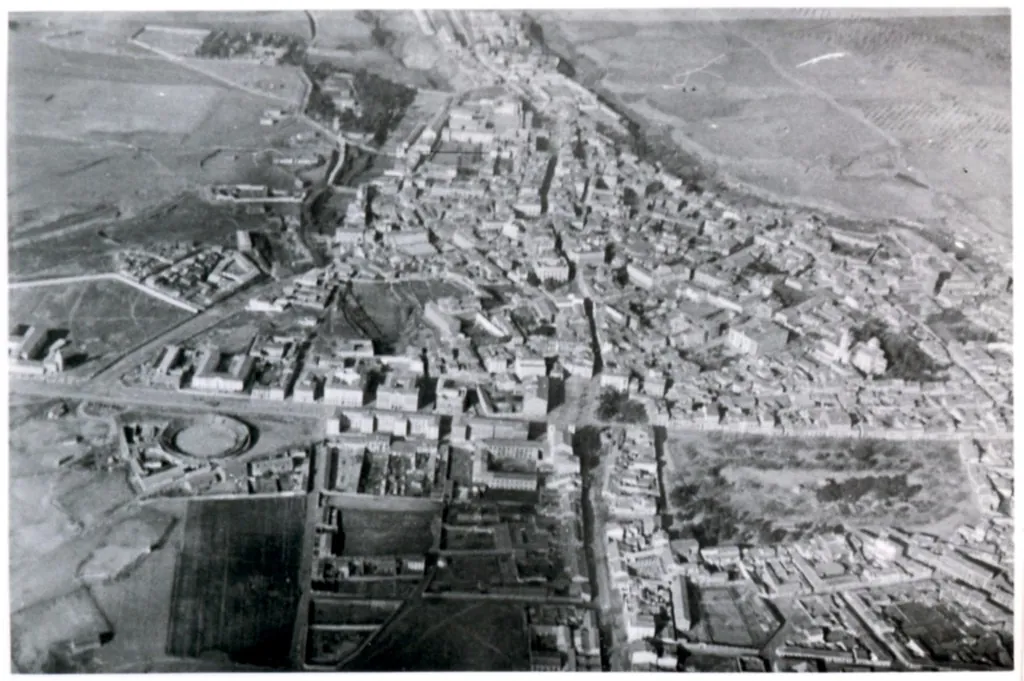
Around the church, Peñalver's houses follow an older logic than modern planning. Thick walls—eighteen inches in places—keep interiors cool during summer's forty-degree spells, though they can't quite banish January's chill when temperatures drop to minus eight. Wooden doors, hand-forged ironwork, and the occasional coat of paint in colours that once might have been vibrant: ochre fading to mustard, blue bleached almost white by altitude sun. Some properties stand restored, their rooflines crisp. Others slump gently, roofs collapsed inward like broken eggshells. Planning permission means little here; restoration happens when someone inherits, or when Madrid money finally trickles down.
The village spreads uphill along a single main street that becomes a track after the last inhabited house. Beyond lies the páramo—high, windswept plateau where limestone outcrops break through thin soil like bones through skin. This landscape defeated even Spain's notorious hunger for cultivation. Olives won't survive the frost. Vines struggle against spring hail. Instead, tough grasses support free-roaming sheep whose milk becomes the region's Manchego, while apiaries produce honey thick with wild thyme and rosemary. Both products reach Madrid markets labelled 'artisanal' and priced accordingly; here they're simply Tuesday's breakfast.
Walking the Empty Alcarria
Three marked footpaths depart from Peñalver's upper edge. The shortest—barely four kilometres—follows an ancient drove road down to the Guadiela river, where willows provide shade and the water runs clear enough to drink. Longer routes strike out across the plateau, connecting abandoned hamlets whose names appear only on military maps. These aren't Lake District strolls; the terrain demands proper boots, water, and awareness that rescue won't arrive quickly. Mobile signals die completely in the valleys. Summer heat kills dogs and the occasional overconfident German hiker. Spring brings flash floods that turn dry gullies into torrents within minutes. Autumn offers the best walking: cool mornings, clear air that carries twenty kilometres of visibility, and the satisfaction of having a landscape entirely to yourself.
Birdlife provides the only consistent company. Griffon vultures—wingspans wider than a London bus—ride thermals above the village, scanning for carrion. Smaller Bonelli's eagles nest in cliff faces where limestone has collapsed into the river gorge. During migration periods, April and late September, the sky fills with storks and honey buzzards following routes older than any human settlement. Bring binoculars. The birds are habituated enough to allow approach within reasonable distance, though the vultures maintain a healthy respect for anything still breathing.
What Passes for Civilisation
Practicalities first: Peñalver contains no hotel, no restaurant, no shop. The nearest cash machine stands twenty-two kilometres away in Cifuentes, where the sole bar also serves as bakery, tobacconist, and unofficial village noticeboard. Timing matters. Many establishments close without warning—sometimes for lunch, sometimes for weeks—depending on family commitments, illness, or sheer ennui. Visitors arrive provisioned or not at all.
Accommodation options cluster in three directions. South-east, the parador at Sigüenza offers castle luxury at €180 nightly, plus the novelty of sleeping somewhere the Moors once besieged. North-west, converted farmhouses around Albanchez de Mágina provide self-catering from €65, though directions require faith in Spanish signage and a tolerance for dirt tracks. Most practical: Guadalajara's Hotel AC, forty minutes by car, where €95 buys reliable WiFi, functioning heating, and staff who understand that British tourists require tea at improbable hours.
Food requires similar planning. Peñalver's bar closed during the 2008 crisis and never reopened. The nearest proper meal means driving to Albares, twelve kilometres away, where Casa Fermín serves roast lamb for €18 and won't hurry you. Portions defeat normal appetites; arrive hungry or prepared for leftovers wrapped in foil like Christmas presents. Their gazpacho manchego—nothing like Andalucian cold soup—combines game bird, flatbread, and saffron into something that tastes medieval in the best possible sense. Book ahead weekends; half the province seems to descend for Sunday lunch.
Seasons of Silence
Winter arrives early at this altitude. First frosts appear mid-October. By December, the village sits beneath temperature inversions that trap woodsmoke in narrow streets, creating scenes that would delight atmospheric photographers while gradually coating lungs in particulate matter. Snow falls occasionally but rarely settles deep; the serious white stuff happens thirty kilometres north where the mountains proper begin. What does accumulate lingers—north-facing slopes hold patches well into March. Heating costs bankrupt pensioners. Many houses stand empty simply because their owners can't afford to keep them warm.
Spring brings the most dramatic transformation. Within six weeks, brown scrub turns green, then erupts into colour: purple thyme, yellow broom, white rockrose. Temperature swings prove brutal—shorts weather at noon, frost overnight. Locals claim this produces the best honey; certainly it drives tourists mad trying to pack appropriately. May represents the sweet spot: warm days, cool nights, wildflowers at peak, and roads still quiet before Spanish schools break up.
Summer means heat and decisions. By July, daytime temperatures regularly exceed thirty-five degrees. Shade becomes precious; siestas essential. Smart walkers depart before dawn, returning as others emerge for coffee. The village's empty houses suddenly fill with Madrid families escaping city heat. Cars appear bearing plates from provinces you've never heard of. August brings fiestas—three days of processions, brass bands, and communal paella that feeds the entire population plus returning emigrants. Book accommodation months ahead; every spare bed within forty kilometres fills.
Autumn offers the photographers' window. Early October light turns golden, striking limestone cliffs at angles that make them glow amber. Vineyards lower down the valley harvest their palomino grapes for local wine that never quite reaches export quality but tastes perfect when served at proper temperature—something the Spanish manage effortlessly and foreigners consistently mangle. By late October, mornings require jackets. Afternoons still hit twenty degrees. The village empties again as summer residents return to cities, leaving silence that feels almost physical.
The Reality Check
Peñalver won't suit everyone. Accessibility remains challenging without private transport. Public buses run twice weekly—Tuesdays and Fridays—connecting with Guadalajara's bus station at times that seem designed to frustrate. The service gets cancelled during bad weather, which happens more often than tourism brochures admit. Mobile coverage operates on a 'when it feels like it' basis. Emergency services take forty minutes minimum; longer if the Guardia Civil are dealing with agricultural disputes elsewhere.
Yet for those seeking Spain beyond the Costas, beyond tapas tours and flamenco shows, Peñalver offers something increasingly rare: authenticity without marketing. No gift shops sell fridge magnets shaped like Don Quixote. No restaurants provide English menus. The village simply exists, as it has for centuries, adapting slowly to modernity while maintaining rhythms that follow seasons rather than social media trends. Come prepared, come respectful, and come understanding that the silence isn't broken for anyone—not even tourists willing to pay for the privilege of experiencing nothing much at all.