Full Article
about Pineda de Gigüela
Small village crossed by the Gigüela River; quiet, rural setting
Hide article Read full article
Between Fields and Pinewoods
Pineda de Gigüela sits on the western edge of the Alcarria region in the province of Cuenca, in an area where open farmland gradually gives way to increasing stretches of pine forest. It stands at around 970 metres above sea level, and that elevation shapes the climate: dry conditions, with winters that are clearly felt.
The village today has roughly sixty residents on the census, though in winter the number drops noticeably. Like many small settlements in inland Spain, its rhythm depends on the seasons and on the return of those who still maintain family homes here but live elsewhere for much of the year.
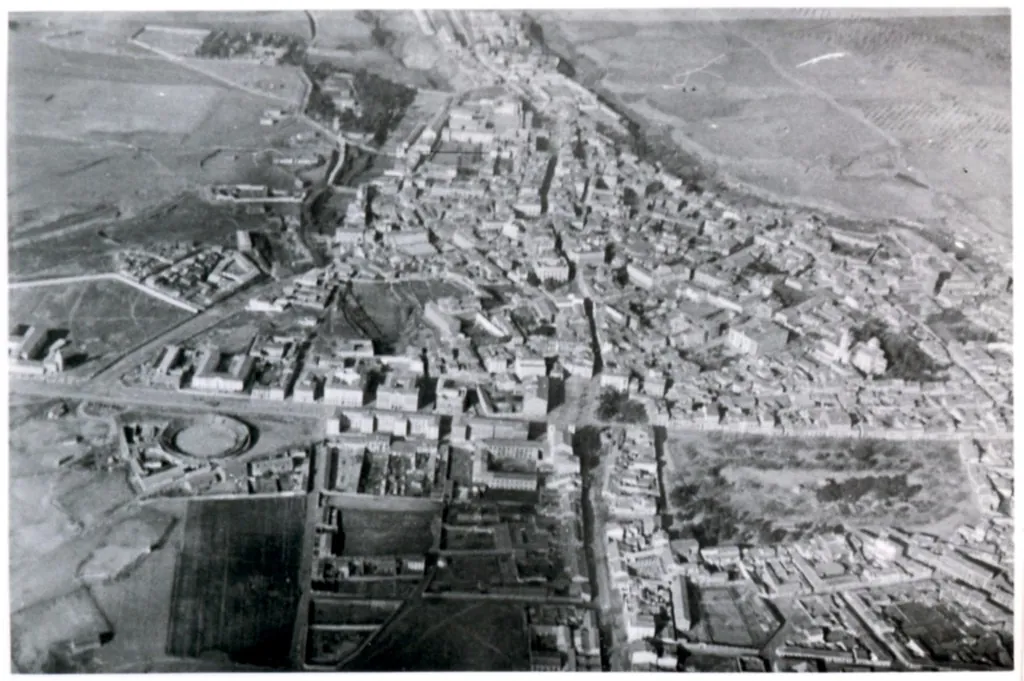
The layout of the village reflects its agricultural and livestock-raising past. Streets are short, some gently sloping, lined with masonry houses topped with traditional curved roof tiles. Many buildings lean into one another, a practical response to the winds that sweep across the high plain. There is little in the way of visitor traffic or infrastructure geared towards tourism. Daily life continues to follow a rural calendar rather than adapting to outside demand.
A Landscape of Contrast and Distance
The surroundings are typical of this part of the Alcarria. Dry farmland stretches out in wide, open expanses, broken up by patches of pine woodland. From slightly elevated points, the contrast becomes clear: brown cultivated earth set against the darker green of the pines that likely gave the village its name.
The horizon feels distant and uninterrupted. This is a landscape that does not rely on dramatic features but instead on space, light and subtle variation. In autumn, nearby pinewoods attract people searching for níscalos, a type of saffron milk cap mushroom common in Spain. Spring brings a different change, with wildflowers appearing among fallow fields.
When the sky is clear, the nights are particularly dark. With little artificial light in the area, the sense of isolation becomes more pronounced after sunset.
The Village Itself
In Pineda de Gigüela, attention naturally falls on the village as a whole rather than on individual landmarks. The houses, many whitewashed over stone, retain wide wooden gates, old corrals and spaces once used for agricultural work. Some homes remain closed during the colder months, reopening when temperatures rise or during holiday periods.
At the centre stands the parish church of San Pedro. It is a simple stone building, without elaborate decoration. In small villages across the Alcarria, churches have traditionally served more than a religious role. They functioned as meeting points and reference spaces within the settlement. That role can still be sensed here through its central position and the open area around it.
There are no grand monuments or curated attractions. The interest lies in the continuity of the built environment and in how closely it remains tied to its original purpose.
Walking the Surroundings
Paths leading out of the village are not marked hiking routes. They are agricultural tracks and forest paths, historically used to reach fields, wooded areas or old grazing land. Anyone planning to walk here should come prepared with a map or a preloaded route, as the terrain can feel repetitive and multiple tracks intersect without clear संकेत.
The landscape reflects the broader Alcarrian plateau: cereal fields, low scrub and scattered pinewoods. Walking through it offers a quiet experience rather than a structured one. With a bit of patience, birds of prey can be seen circling above the fields, while smaller birds move along hedgerows and boundaries.
From nearby low hills, the land opens up further, revealing kilometres of flat high plain. The appeal lies in that sense of scale and in the understated details: old doors, stone walls, half-empty corrals, or the clean line of the horizon at dusk.
In autumn, when conditions are right, the pinewoods become a gathering point for mushroom pickers, especially those looking for níscalos. As in the rest of the province, collecting mushrooms is regulated, so it is worth checking the current rules beforehand.
Festivities and Local Traditions
The main celebrations are dedicated to San Pedro and usually take place in summer. This is when the village briefly regains part of its population, as people return to their family homes. The events are simple and community-driven: a procession, shared meals and activities that depend largely on the involvement of local residents.
In January, around the feast of San Antón, there was traditionally a blessing of animals. This custom reflects the historical importance of livestock in the area. Other religious observances continue throughout the year, though they tend to be low-key and primarily oriented towards the village itself rather than visitors.
These occasions provide a glimpse into how the social fabric of the village still revolves around long-standing practices rather than external influences.
Getting There and What to Expect
Pineda de Gigüela is reached via secondary roads that cross the Cuenca Alcarria. From the city of Cuenca, the journey is about 50 kilometres, passing through open countryside and small villages along the way.
Mobile coverage can be unreliable in parts of the surrounding area, and signage for paths is limited. Preparing the route in advance is advisable.
There are no tourist services or shops in the village. Visitors who pass through typically bring what they need or rely on larger nearby towns. What Pineda de Gigüela offers instead is quiet, open countryside and a settlement that continues to function as a living village rather than a destination shaped for tourism.