Full Article
about Pozo de Guadalajara
Expanding municipality near the capital; retains its medieval pillory and historic inn.
Hide article Read full article
An Alcarria Afternoon
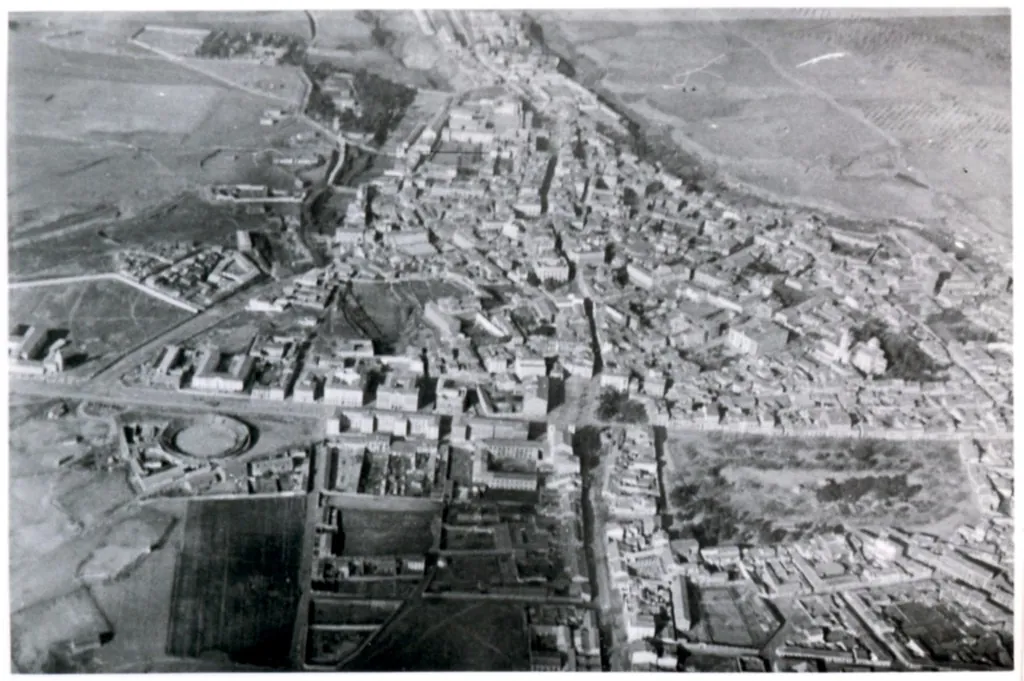
By mid-afternoon, the wind from La Alcarria stirs the leaves in an orchard behind a low wall. It is four o’clock and in Pozo de Guadalajara the air carries the smell of turned earth and firewood. From the road that comes in from the city of Guadalajara, the village appears all at once: low houses, reddish tiled roofs and a bell tower rising above the open plain.
Pozo de Guadalajara lies just a few kilometres from the provincial capital. Even so, the pace shifts as soon as you arrive. Streets follow their old layout and the countryside begins almost immediately behind the last row of houses. There is little transition between built space and open land. One moment you are beside a façade, the next you are looking at fields.
The setting is typical of this part of Castilla La Mancha, where wide skies and cultivated land define the horizon. Yet Pozo does not present itself as a spectacle. It unfolds quietly, in small details and changes of light.
The Pillory at the Centre
In the main square stands a stone pillory, usually dated to the 16th century. In Spain these structures, known as picotas, were erected as symbols of jurisdiction when a settlement was granted the right to administer justice. This one stands in the middle of the square without fencing and with little explanation.
Its surface has been worn down by sun and rain. Neighbours pass by without stopping. For many, it is simply a meeting point or the place where children cycle in circles. Look more closely and the iron fittings and notches in the stone become visible, traces of its original function.
A few steps away rises the church of San Mateo. Its outer wall has a muted ochre tone that shifts with the afternoon light. Inside, there is usually a scent of wax and cold stone. The baptismal font, commonly described in local accounts as Romanesque in date, has a greenish hue that recalls the water of the wells found across the comarca. It is a simple interior, shaped by use rather than display.
The square itself is not grand. It is a space that fills and empties over the course of the day. When the wind picks up, it moves freely across the open area and along the façades, carrying dust and the low murmur of conversation.
Streets Where Sound Softens
Turn a corner and the noise from the square drops away. The side streets are narrow. Some still preserve stretches of uneven cobbles, others are compacted earth.
Certain houses remain closed for much of the year. Others are still lived in by families who have been here for decades. A light curtain shifts at one window. At another, someone shakes out a tablecloth. Sounds arrive muffled: a radio playing somewhere indoors, the firm thud of a door, a dog lifting its head as someone passes.
The atmosphere changes subtly as you walk. There are no large monuments competing for attention, no explanatory panels guiding the way. The experience is shaped instead by texture and sound. The wind threads through gaps between buildings. Footsteps echo briefly and then fade.
Near the cemetery the olive trees begin. Before they come into view, their presence is announced by the dry brushing of branches when the wind blows. The boundary between village and farmland is porous. Olive groves, cereal fields and open tracks sit just beyond the last houses, reinforcing the sense that Pozo de Guadalajara remains closely tied to its agricultural surroundings.
An Old Façade on Calle de los Caños
On Calle de los Caños stands a house dated to the 18th century, or at least that is how some municipal inventories record it. On its façade there is still a coat of arms attributed to the Mendoza family, one of the historic noble lineages of the region.
Plaster has fallen away in several places, revealing the brick beneath. The large wooden door remains in place, dark and heavy, its iron fittings now showing rust. Around midday, the smell of cooking often drifts out through a half-open window. Inside, a radio plays at low volume and a frying pan strikes the hob.
The building does not appear in brochures or on information boards. It does not attempt to present itself as a landmark. Yet it sums up much of the character of Pozo de Guadalajara: old houses still in use, layered with time, offering few explanations.
There is no sense of the past being staged. Instead, it coexists with daily life. The coat of arms is not cordoned off. The worn plaster is not concealed. The house stands as part of the street, not apart from it.
When to Come and What to Expect
Spring alters the appearance of Pozo de Guadalajara considerably. The cereal fields surrounding the village remain green and the wind carries moisture from the Henares valley. The air feels softer, and the contrast between cultivated land and sky is less stark.
In autumn, the light sits lower. Tracks between plots of land fill with fine dust. Colours turn more subdued and the outlines of the village seem sharper against the plain.
August requires a different rhythm. It is best to arrive early in the morning or towards evening. At midday the heat falls directly onto the streets and there is barely any shade. The square empties and movement slows.
Access is straightforward via the CM‑101 from Guadalajara. At the entrance to the village there is usually space to park near the municipal sports facilities. From there, the square is just a short walk away.
If planning to stay for lunch, it is common to arrange it in advance or head to nearby villages. In local homes, lamb cooked in the Alcarreño style still appears on special occasions. This regional preparation is part of the culinary identity of La Alcarria, reflecting its pastoral traditions.
One practical detail: tap water here has a distinctly mineral taste, something common in this part of La Alcarria. Many residents prefer to bring drinking water separately.
Pozo de Guadalajara is best explored slowly. Not because there is a long list of sights to tick off, but because the village reveals itself in pauses. When the wind begins to move through the streets and the square grows almost empty, the scale and texture of the place become clearer. It is in those quiet intervals, between the church wall changing colour in the light and the sound of olive branches brushing together, that Pozo de Guadalajara makes the most sense.