Full Article
about Tendilla
Town with a long arcaded main street; famous historic fair
Ocultar artículo Leer artículo completo
The first clue that Tendilla isn’t trying to impress anyone is the church. Half the tower is missing, stone ribs poking skywards like a broken harmonium, and nobody seems in a rush to finish it. The building has stood in this state since the 16th-century money ran out; locals call it La Asunción and use the intact nave every Sunday, but the rest is left gloriously incomplete. That shrugged-shoulder attitude sets the tone for a village that prefers living to looking pretty.
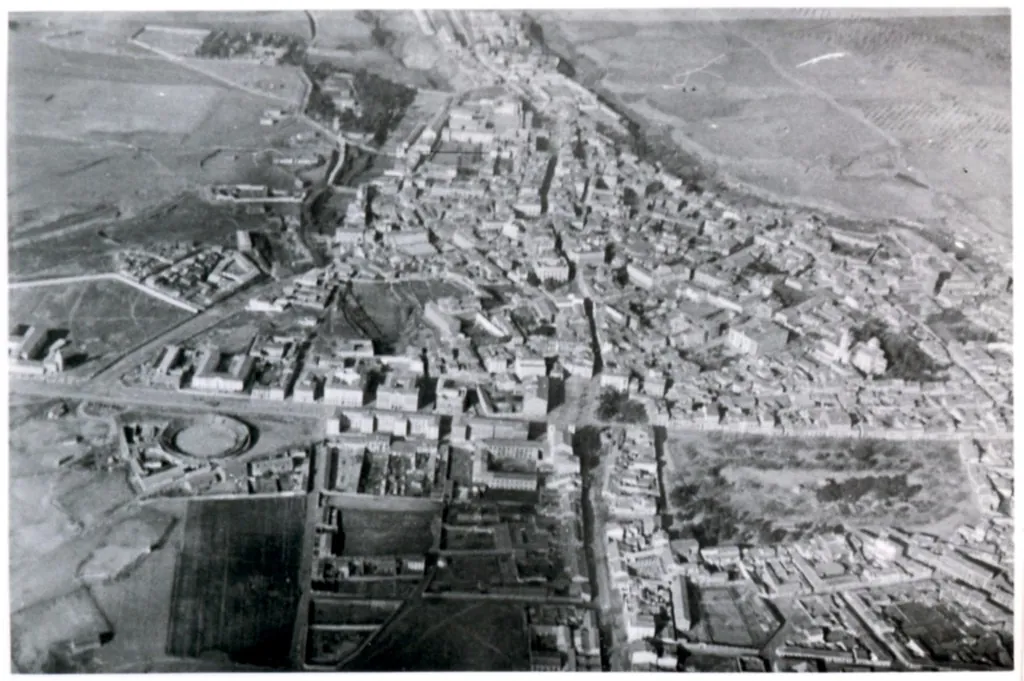
Tendilla perches 900 m above sea level on the northern lip of La Alcarria, a high, wind-scrubbed plateau an hour east of Guadalajara. The landscape rolls rather than soars: wheat fields the colour of dried parchment, sudden red-earth gullies, and the occasional stone hut whose roof collapsed decades ago. Come February the fields are still bleached; by late April they fluoresce green long enough to make you reach for sunglasses, then burn back to gold by June. Winters bite—night temperatures dip below zero and the road from the A-2 can glaze over—while July afternoons regularly top 35 °C, though the altitude keeps nights bearable.
Most of the year the village ticks along with about 300 permanent residents, a number that feels generous once you notice how quickly footsteps echo along Calle Real. There are two bar-cafés, a bakery that opens when the owner wakes up, and a tiny pharmacy that doubles as the newspaper kiosk. Both bars serve decent cañas for €1.20 and will fry eggs and torreznos on request; the crisply puffed pork rinds taste lighter than British scratchings and arrive in paper cones that turn translucent from the fat. Ask for a free cloth bag at the counter—locals press them on visitors like grandmothers force biscuits.
If Tendilla sounds sleepy, that’s because you haven’t hit the last weekend of February. The Feria Medieval turns the place into a pop-up town of 5,000, the human equivalent of a murmuration. Traffic wardens wave cars into waterlogged meadows before 10 a.m.; after that you walk. Costumed merchants hawk honey sealed with wax discs, pottery fired in nearby Sacedón, and whole lamb shoulders that rotate over oak until the fat drips onto hot coals. A pair of knights might clank past on horseback, but more likely you’ll queue for twenty minutes in drizzle for a paper plate of migas—fried breadcrumbs speckled with chorizo—handed out free by the town hall. The queue is half the fun: Spanish families swap jokes, someone produces a metal flask of tinto, and a farmer invites you to photograph his prize mule so you can “show England what a real arse looks like”.
Rain is part of the deal. February on the plateau can be indistinguishable from a British country fair: mud-splattered wellies, steaming paper cups, and a wind that finds every gap in your coat. Bring waterproof shoes and you’ll be fine; forget them and you’ll spend the day envying the locals’ calf-length leather boots. Phone signal collapses under the weight of selfies, so download an offline map before leaving the main road. Cash is equally essential—there isn’t an ATM for 20 km—and stalls don’t take cards.
Outside fair weekend the village reverts to its default hush, which is when walking works best. A lattice of agricultural tracks radiates south towards the Ruta de las Fuentes, a 7 km loop that links natural springs once used by shepherds. The path isn’t way-marked, but Google Earth shows it clearly and you’re unlikely to meet anyone save a tractor driver raising two fingers from the steering wheel in silent greeting. Spring brings poppies splashed between wheat rows; autumn smells of wild thyme and wood-smoke from someone pruning olive trees. Stout shoes are advisable after rain: the clay sticks to soles like wet concrete and adds half a kilo to each foot within a hundred metres.
There’s no souvenir shop, and that includes postcards. If you want evidence of the trip you’ll have to photograph the half-built tower at dusk when swifts cartwheel through the gaps, or frame a field of barley against a storm cloud the colour of bruised plums. Landscape photographers like the place precisely because it refuses to perform; the drama comes from weather and light, not from picturesque corners.
Food beyond the bars means a ten-minute drive to Casa Lucas in Hiendelaencina, where roast suckling lamb is charged by the quarter (€18) and arrives with a jacket of crackling so thin it shatters under a fork. Closer to home, the bakery sells bizcocho de Alcarria, a sponge heavy with lemon zest and local eggs; buy one on Friday because it won’t last the weekend. If you’re self-catering, the Saturday market in nearby Sigüenza—25 minutes north—brings together cheese makers whose raw-manchego wheels have the buttery tang British shoppers associate with proper farmhouse Cheddar.
Accommodation is thin on the ground. The medieval fair sets up a handful of bell-tent glampers on the sports field (€60 a night, shared compost loo), but otherwise you’re looking at rural B&Bs scattered among the wheat. La Casa de los Parrales has three doubles overlooking a vine-covered courtyard and charges €70 including breakfast of thick hot chocolate and churros that taste faintly of olive oil. Book early for fair weekend; by January most rooms within a 20 km radius have gone.
Leaving can take longer than arriving. Sunday-night traffic back towards Madrid is a slow crawl from 6 p.m. onwards; stay the night, or set off before lunch and stop at the ghost village of Mirabueno on the way back to the A-2. Its empty stone houses make Tendilla feel positively metropolitan.
Tendilla doesn’t do Instagram moments. It offers instead the chance to watch Spain function without stage make-up: a queue for free fried breadcrumbs, a church that ran out of money, and a landscape that changes colour the way Britain changes government—gradually, then all at once. Turn up with waterproof shoes and a pocketful of euros and you’ll witness a place that measures time in harvests, not hashtags.