Full Article
about Torre del Burgo
Town in the Badiel valley; noted for its Sopetrán monastery.
Hide article Read full article
A village shaped by the land
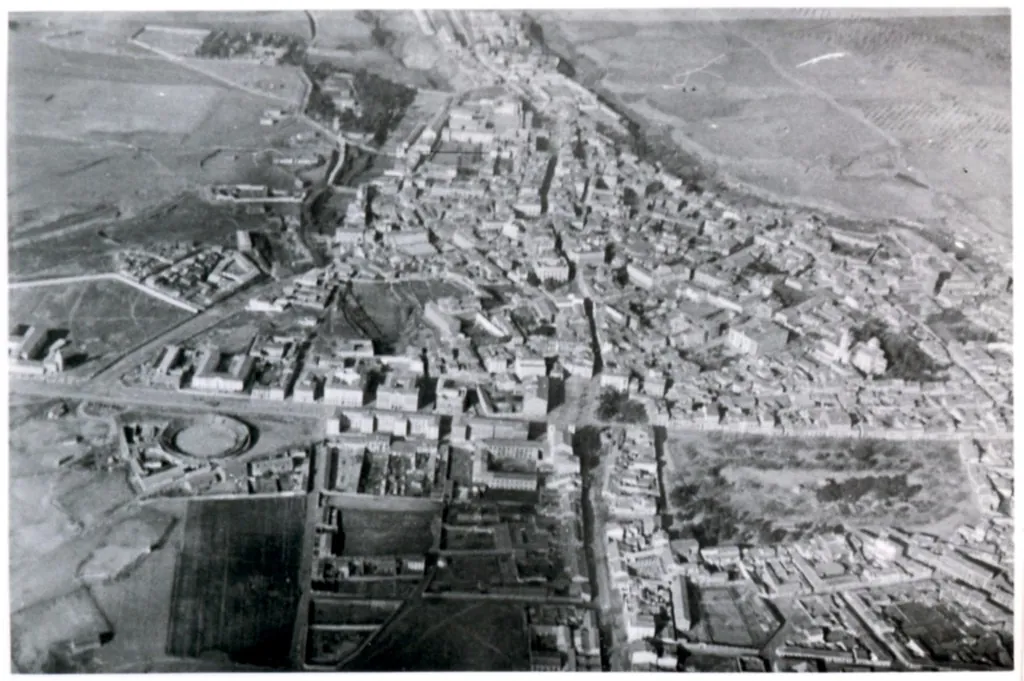
Early in the day, when the sun is still low, the road that crosses the countryside of Guadalajara begins to warm up and Torre del Burgo comes into view among cereal fields. The air often carries the scent of dry earth and straw, especially in late spring when the wheat is already well grown. The village is small, with around 500 residents, and sits on the open plain of La Alcarria, where the horizon is usually clear and uninterrupted.
Life here remains closely tied to the land. By mid-morning it is common to hear a tractor moving across the fields or to see cars heading out towards the plots. The church bells still mark the hours, more out of habit than necessity.
The name of the village points back to a defensive tower that once stood here centuries ago, at a time when this area lay between different territories. There are no major visible remains today, yet the medieval origin appears in documents and in the place name itself.
The architecture follows the pattern seen in many villages in this part of Guadalajara. Houses tend to be one or two storeys high, with whitewashed walls, wooden gates and interior courtyards where tools or small kitchen gardens are kept. There are no grand monuments or streets designed for display. These are homes built for everyday use, still adapted to the routines of local life.
Streets and surroundings
The most recognisable building is the parish church of Nuestra Señora de la Asunción, located in a central area of the village. Its tower rises above the rooftops and acts as a reference point when approaching by road. Inside, the space is simple, with elements that suggest changes and additions from different periods.
Walking through the streets around the church gives a clear sense of how Torre del Burgo has developed over time. Older houses stand alongside more recent constructions, while some yards still have large gates once used for carts. In places, stone façades can be seen beneath layers of whitewash.
In several courtyards, old ploughs, trailers or farming tools are still visible, resting against the walls. They are not there for display. They remain part of working life and are used when needed.
Once outside the village centre, the landscape quickly returns to agriculture. Cereal fields dominate the surrounding land, broken only by occasional lines of olive trees and straight dirt tracks stretching towards the horizon. In spring, green tones cover almost everything. By early summer, the colour shifts to strong golds, and a fine dust rises into the air as agricultural vehicles pass.
These open fields also attract bird species typical of cereal-growing areas. Activity tends to be greater early in the morning or towards evening, when the light softens and the temperature drops.
Walking through La Alcarria
Torre del Burgo can be explored in a short amount of time. A relaxed walk around the village rarely takes more than an hour, even allowing for pauses to notice small details such as old iron window grilles, corners rounded by years of use or doorways with benches where neighbours sit when the heat fades.
The main square is simple, more a place people pass through than a formal focal point. A stone fountain stands there, which for many years supplied water to the village.
The tracks leading out into the countryside are wide agricultural paths and generally flat. They are suitable for walking or cycling without much difficulty. In summer, it is better to head out early or wait until later in the day. Shade is limited and the heat can build quickly in this part of La Alcarria.
Food rooted in the area
The local cooking is straightforward and closely linked to what has been grown or raised nearby. In winter, hearty stews made with pulses and pork are still common, dishes designed for long working days.
For celebrations or family gatherings, roasted lamb or suckling pig are prepared in ovens. Olive oil from the surrounding area accompanies crusty breads, cured meats and aged cheeses that are often found in local homes.
Honey produced in the province of Guadalajara is also a regular feature. It appears in homemade desserts or simply spread over bread.
Festivities and everyday rhythm
The main local festivals usually take place in summer, when many residents who live elsewhere return for a few days. The atmosphere shifts noticeably. There is music at night, gatherings in the squares and religious events that remain part of the local calendar.
During the rest of the year, life is much quieter. Some religious celebrations continue, including Holy Week processions and Marian festivities, organised with the participation of the community.
Beyond these dates, Torre del Burgo follows the steady rhythm typical of agricultural villages in La Alcarria. Mornings are spent in the fields, streets grow quiet at midday, and as evening approaches, conversations stretch out at doorways while the light softens over the rooftops.