Full Article
about Valdarachas
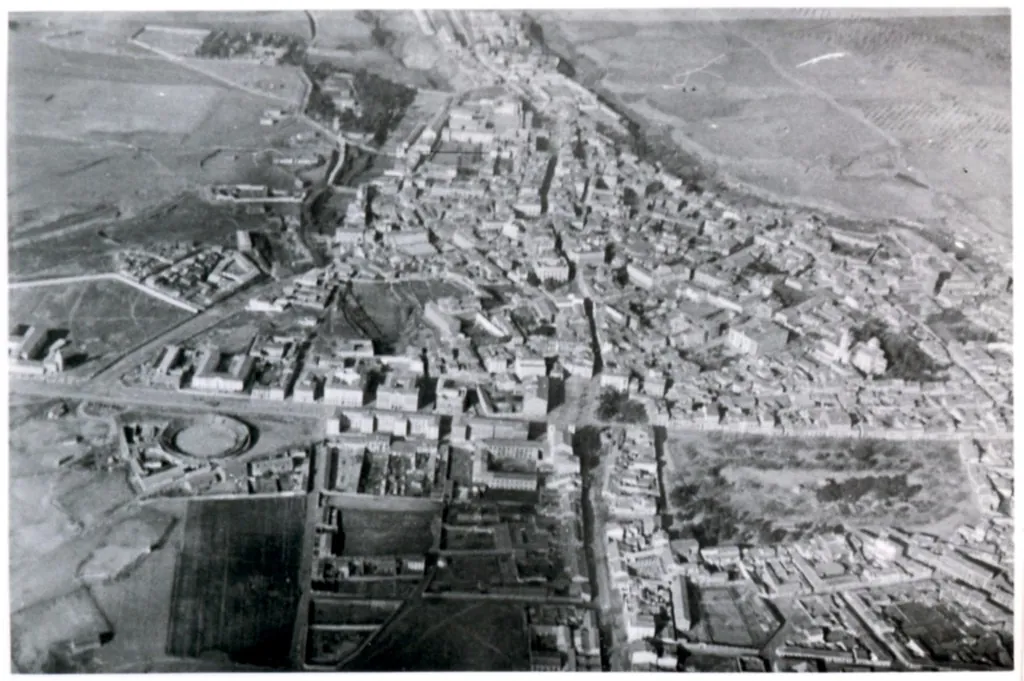
Small town near the capital; surrounded by scrubland.
Ocultar artículo Leer artículo completo
The church bell strikes eleven and every dog in Valdarachas starts howling. Not the hysterical urban yapping you might know from British high streets, but the long, rolling lament of animals that have space to develop proper lungs. From the plaza—really just a widening in the single road—you can see why they're exercised about it: at 783 metres, sound carries clean across the stone roofs and out over the cereal plains that stretch, biscuit-coloured in late May, all the way to the Guadalajara skyline.
Fifty residents, give or take a university student, remain in this wedge of Castilla-La Mancha that guidebooks forgot. They keep the till in the grocery open three mornings a week, haul water when the upland pipes freeze, and still harvest wheat with combines that pre-date the Common Agricultural Policy. Visitors expecting a polished rural idyll will be disappointed. Those prepared for cracked render, siesta silence and the smell of diesel drifting from a barn workshop will find Valdarachas teaches a useful lesson: Spain's famed emptiness isn't romantic—it's simply arithmetic.
The Arithmetic of Absence
Every second house is boarded up. Wooden balconies sag; iron grills bloom with rust. Yet the village refuses ghost-town status. Someone has whitewashed the street corner where elderly men park their walking frames each evening. Geraniums in olive-oil tins line the windows of the one permanently inhabited terrace. These touches matter because they signal endurance rather than municipal marketing. Valdarachas never had a tourist office and still doesn't. What it offers instead is a chance to watch how ordinary Castilians live when nobody is looking.
The parish church, locked except for Sunday mass, squats at the highest point like a brown toad. Inside, the paint is blistered by centuries of incense and the temperature drops a full five degrees—welcome in July, less so in February. There are no frescoes, only a polychrome Virgin whose robes have been repainted so often the folds look like cardboard. Drop a coin in the box and the sacristan, if he's about, will switch on a single fluorescent tube so you can see her properly. That is the sum total of curated heritage on offer. The rest is ambience, free of charge.
Walking the Ring of Nothing Much
Three gravel tracks radiate from the cemetery and re-join two kilometres later, forming a perfect triangle across the steppe. Marked only by the occasional concrete post, they serve farmers reaching their plots rather than hikers hunting Instagram trophies. Bring water; there is no bar at the junction, no vending machine, indeed no shade except a lone holm oak that has survived because its trunk is too twisted for timber. The reward is horizon in every direction, a sight increasingly rare in crowded Europe, and the realisation that cereal can be beautiful when the wind turns it into moving water.
Spring brings colour: crimson poppies, mauve flax, the acid yellow of charlock. By late June the palette has burnt to bronze; threshing dust hangs in the air like talcum powder. Autumn smells of wet stubble and partridge; winter is simply cold. At 783 m, night temperatures regularly dip below freezing while Madrid, an hour away, stays mild. Snow is infrequent but lethal when it arrives—the approach road, GU-906, is cleared only after the regional plough finishes the bigger villages. If you must visit between December and March, pack chains and don't trust the hire-car sat-nav: the tarmac simply stops when the council budget ran out.
Where to Eat, Sleep and Accept Limitations
Accommodation options can be counted on one hand. Casa Rural La Solana has three doubles, wi-fi that flickers whenever the wind shifts the antenna, and a wood-burning stove that the owner demonstrates with the solemnity of a launch procedure. £70 a night gets you the house, not the room, which makes economic sense only if you fill it. Breakfast is whatever you carried in from Guadalajara—there is no bakery. The nearest restaurant open year-round is in Humanes, 14 km west, where Mesón el Cazador serves roast lamb at €14 a quarter. Book ahead; they buy the meat only when they have orders.
If self-catering, shop before you leave the A2 motorway. The village grocery stocks tinned tomatoes, UHT milk, excellent local honey and little else. Fresh fish arrives frozen in a white van every Tuesday at 11:30; within twenty minutes the queue has dispersed and silence returns. Vegetarians should note that the regional speciality is cordero chilindrón—lamb stewed with peppers and enough chorizo to alarm a cardiologist. Even the vegetable paella is usually cooked in meat stock; ask, then accept the blank stare when you explain veganism.
What You Actually Came For
Silence, mostly. Not the theatrical hush of a spa, but the practical absence of engines once the farmer parks his tractor for lunch. Pair it with darkness so complete that the Milky Way looks like cloud and you understand why astro-tourists are beginning to sniff around. They bring star trackers and red-filtered torches, then spoil the effect by arguing over camera settings in voices that carry across the plateau. The village response is pragmatic: leave them to it, but don't expect the street lights to be switched off—they were never switched on in the first place.
Birdwatchers fare better. Lesser kestrels nest in the church tower; stone curlews wail across the fields at dusk. Bring a scope and patience—raptors here hunt on territory measured in square kilometres, so a distant speck may be the only entertainment for an hour. The local list tops 120 species, respectable for farmland, but remember this is working country. You will share the track with a shepherd on a moped who views binoculars with the suspicion reserved for tax inspectors.
Leaving Without the T-shirt
There is no souvenir shop. No artisanal pottery, no fridge magnet shaped like Don Quixote. The single commercial enterprise is the apiary on the eastern edge whose owner, Julián, will sell you a kilo of thyme honey for €8 if you catch him between hive inspections. He refuses credit cards—"the signal doesn't reach the bees"—but provides a handwritten receipt that works better than any postcard. Stick it in your suitcase and months later the scent of beeswax and dry rosemary will still stall you mid-afternoon.
Drive away slowly; the road is narrow and the elderly gentleman walking two sheepdogs has right of way. In the rear-view mirror Valdarachas shrinks to a brown line against yellow, indistinguishable from the soil that created it. You will not have ticked a Unesco site or filled a memory card with selfies. Instead you will have spent time in a place that continues to exist because a handful of people refuse to abandon their ancestors' fields. That, rather than any monument, is what Spain stands to lose if the emptiness wins.