Full Article
about Valdearenas
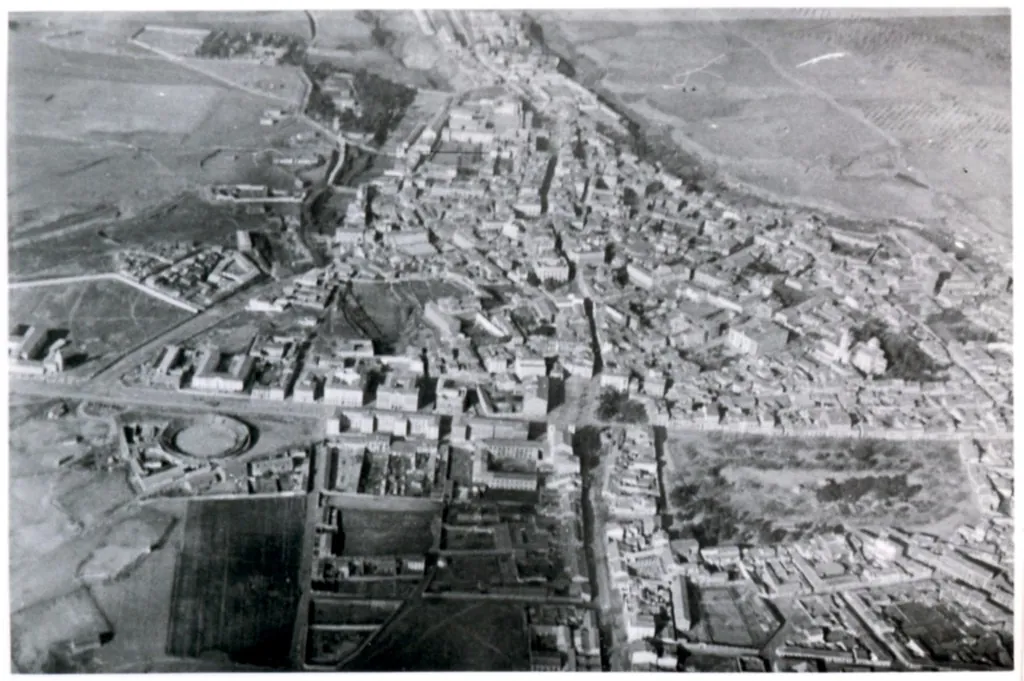
Town in the Badiel valley; church ruins and green surroundings
Ocultar artículo Leer artículo completo
The thermometer reads 964 metres above sea level as you turn off the CM-2000, and the air already feels thinner. Valdearenas sits at this altitude like an afterthought—four streets, a handful of stone houses, and silence that stretches across the ochre plains of La Alcarria. From here, Madrid lies 130 kilometres west; the nearest proper shop, 25 kilometres east in Cifuentes. This is Spain's high plateau stripped bare of pretence, where geography dictates everything from the temperature swing (15°C between noon and midnight is normal) to the fact that nobody has ever opened a restaurant here.
The architecture of absence
What passes for a centre amounts to a church with a weathered stone bell-tower and a concrete bench that catches the morning sun. The parish door is usually locked; locals collect the key from the house opposite if mass is planned. Walk the 300-metre radius anyway: the reward is a crash course in rural building logic. Adobe walls two-feet thick keep interiors cool in July and warm in January; timber doors are sized for mules, not SUVs. Many corrales—stone animal pens—stand empty, their beams sagging like old ribs. A few have been patched up as weekend refuges by families from Guadalajara; look for the giveaway satellite dishes.
Outside the village the land folds into gentle barrancos dry enough to crack in August. Wheat and barley alternate with patches of holm oak; wild thyme releases scent when stepped on. There are no signed footpaths, but any farm track heading south will deliver you, within forty minutes, to a ridge that drops away toward the River Tajo. Take water: the combination of altitude and sun is deceptive, and the only fountain is back in the plaza.
When the fields dictate the clock
Visit in late April and you’ll meet more tractors than people. Sowing starts once the soil temperature creeps above 10°C; by late June the same fields blush gold. Harvest brings a brief population spike—contract drivers bed down in grain stores, and the evening air smells of diesel and straw. August reverses the flow: former residents return for the fiestas patronales, a long weekend of open-air dancing and processions that finishes with a communal paella cooked in a pan two metres wide. Dates shift each year; ask at the ayuntamiento in July for the exact timetable.
Winter is the quietest season. Night frosts can linger until ten in the morning; snow arrives perhaps twice a winter and closes the final 12 km of county road within an hour. The village is not picturesque under snow—roofs leak, pipes freeze, the lone elderly shopkeeper shuts early. If you insist on coming, bring chains and a thermos. The compensation is darkness so complete that Orion feels within arm’s reach; light pollution registers zero on the Bortle scale, making star photography possible without filters.
Eating where there are no menus
There is no café, no bakery, no Saturday market. Self-catering is mandatory unless you’ve booked half-board at a village house through Ruralidays or similar platforms. Stock up in Cifuentes (Consum supermarket on the bypass) or in Sigüenza’s Mercadona before you leave the A-2. Once here, knock on doors displaying hand-written “Miel” signs: local honey sells for €8 a kilo, rugged with pollen from lavender and rosemary. A retired shepherd on the north edge still slaughters one pig each December; if you arrive in January you might leave with morcilla frozen into a neat coil—accept it, because refusing is taken as insult.
Serious dining requires a 35-minute drive to Mandayona, where Asador la Alcarria fires lamb in a wood oven at €22 a portion. Closer, the Venta de San José on the CM-2000 serves migas—fried breadcrumbs streaked with chorizo—for €9, but only at weekends. Book ahead; they close early if the bread runs out.
Walking without waymarks
Navigation is old-school: download the 1:50,000 Guadalajara provincial map or follow the drystone walls that radiate like spokes. A gentle circuit east to the abandoned hamlet of Valdelagua takes 90 minutes; the reward is a stone sheep dip carved in 1923 and views back toward Valdearenas that make the village look like a pile of dice on a brown table. Serious hikers can link a series of cattle tracks into a 16-km loop via the Ermita de la Soledad, but carry GPS—phone signal dies in every ravine.
Wildlife is present rather than abundant. Booted eagles drift overhead; nightjars churr at dusk. The real spectacle is botanical: autumn squill, bee orchid, and the occasional stand of apothecary’s rose escape from long-gone gardens. Pick nothing; collectors have already wiped out several cistus colonies.
Getting here—and away
Public transport stops at the turn-off on the CM-2000, six kilometres short of the village. Buses from Madrid’s Estación del Sur reach Cifuentes twice daily (€11.40, 2 h 15 min); from there a taxi costs €35 if you can persuade one to make the return journey. Hiring a car at Guadalajara rail station remains the sensible option: take the A-2 east to km 91, peel off on the CM-2000 past Embalse de Entrepeñas, then follow signs for Valdearenas after the bridge at Durón. Fuel up first; the last petrol pump is in Arcos de Jalón, 40 km distant.
Road conditions deteriorate fast after rain. A downpour in September 2019 washed the asphalt edge into the barranco; repairs took three months. If the sky turns slate-grey during your stay, head back to the main road immediately—tow trucks charge €200 from Sigüenza.
What you won’t find—and might not miss
There are no souvenir shops, no interpretive panels, no flamenco nights. Wi-Fi arrives via a single 4G mast that struggles when more than twenty devices log on during fiestas. The village does not exist for tourists; it tolerates them provided they adapt to its rhythm. Bring cash, a phrasebook, and a sense of temporal elasticity—the baker from neighbouring Zaorejas turns up “around Thursday” with fresh loaves.
Leave with your rubbish. The council collects bins once a week; if you miss the lorry, your crisp packets will blow across the plateau for months. That wind, incidentally, is the only constant companion: it whistles up the slope from the Tajo valley, carrying the scent of thyme and the faint reminder that, at this height, civilisation is a reversible concept.